Story code: ST-000314
Part 2: She Would Not Let Go of the Burden She Claimed to Carry
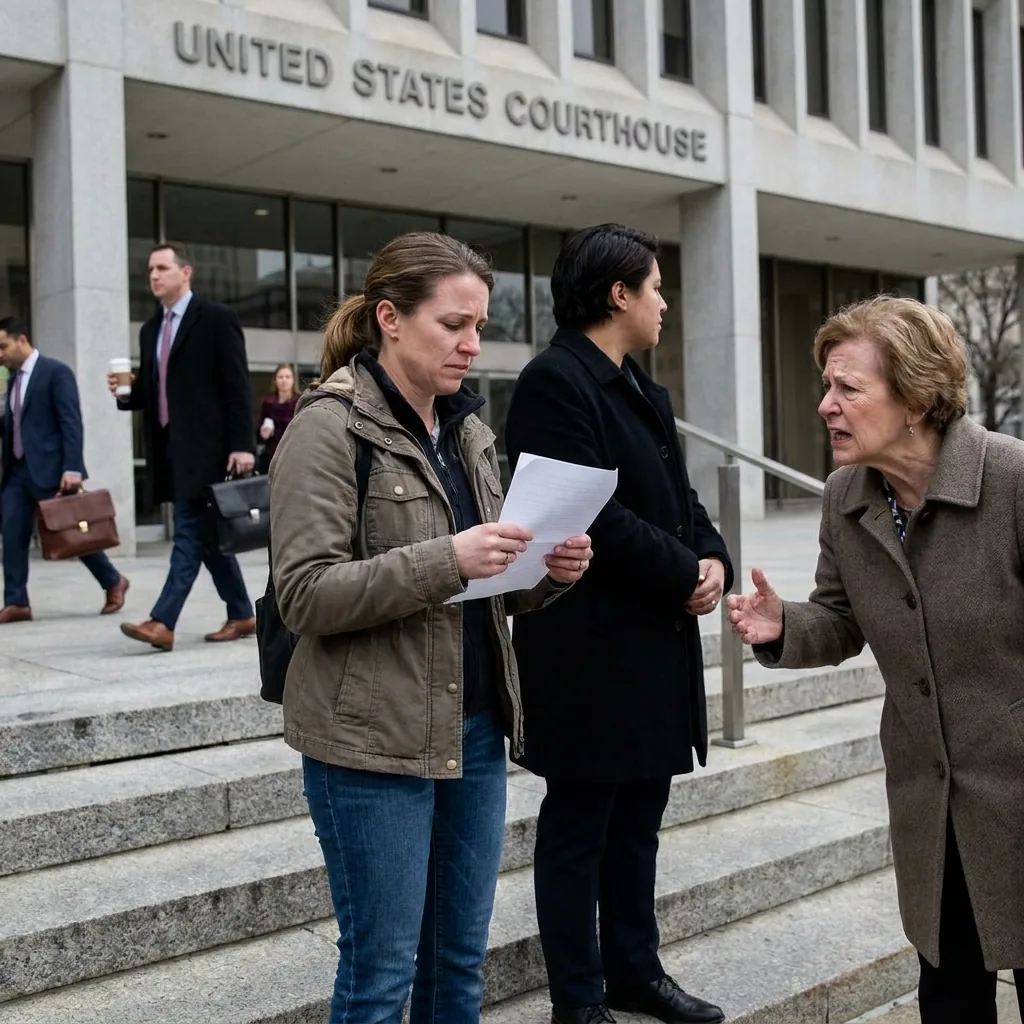
When my mother called it a burden, I gave her the easiest exit she was ever going to get, and she still would not take it. That was the moment I stopped hearing sacrifice and started hearing leverage. We were still on the courthouse steps with the marriage license in my hand, Tanya watching from the railing, Evan beside me, and my mother had just announced to half the exterior that she had carried something for me she should never have had to carry. So I said, very plainly, “Then you can put it down.” She frowned like she had not heard me right. “What?” “Whatever you mean,” I said. “Put it down. Right now. If this has been so heavy, you do not have to carry it another minute because of me.” Tanya looked up fast at that. Evan did too, though he stayed quiet. My mother’s mouth opened, then closed. She had expected me to apologize or negotiate. She had not expected me to agree that the thing she kept naming as proof of love should end. “Do not twist my words,” she said. “I am not twisting anything. You said burden. You said sacrifice. You said I owed you because of it. So I am telling you I am not asking you to keep doing any of that.” Her shoulders went stiff under her cardigan. “That is not how family works.” “Then how does it work?” I asked. “Because from where I am standing, it sounds like you are saying your help only counts if it buys control over what I do next.” She looked past me toward the courthouse doors, where two women in low heels were coming out laughing over something on a phone. Then she lowered her voice, which always meant the next part was supposed to sound especially reasonable. “Maya, I am trying to save you from making a mistake in a rush.” I held up the marriage license between two fingers. “We did not rush this. We applied, we waited, we came back, and we made the choice.” Her eyes dropped to the paper again. Not to my face. To the license. “A paper does not make someone your family,” she said. “No,” I said. “And it also does not make me your property.” That landed. Tanya shifted again and looked away toward the street. A bus hissed at the curb. Somebody farther up the steps coughed into a napkin. The ordinary sounds made the whole thing feel sharper, not softer. My mother folded her arms. “You always do this. You take one thing I say and make me sound cruel. I have stood in front of things for you that you never even knew were there.” “Then why bring them up now?” I asked. She answered too quickly. “Because clearly you forgot.” There it was again. Not release. Not concern. Reminder. I looked at Tanya. “Did you know this was about some burden she says she carried for me?” Tanya hesitated. “I knew Aunt Denise was upset,” she said. “I did not know it was… like this.” My mother cut in before I could answer. “Because it should never have had to be said out loud. That is what mothers do. They cover things. They protect their daughters and then get discarded for it.” She kept saying daughter like it was a role, not me. Evan finally spoke again, careful and even. “If you want her to feel loved, this isn’t doing it.” My mother turned on him fully this time. “You do not get to explain my daughter to me on the day you are taking her out of my house.” I said, “I am not being taken. I am leaving.” She ignored that too. “You came along at the exact moment she started acting like history did not matter,” she said to him. “That is very convenient.” Evan did not rise to it. He only said, “Maya can answer for herself.” He was right, and my mother hated that most when there was an audience. She liked speaking for me, over me, around me. She liked having other people nod along before I got a full sentence out. I kept my eyes on her and asked the question again, slower this time. “If this burden is so real and so unfair, why won’t you let it end? Why is the only acceptable answer me going home with you?” She stared at me. Her jaw worked once. Then she reached for the safest line she had left. “Because if you leave like this, after all I have done, you are telling everyone exactly what kind of daughter you are.” That sentence cleared the fog better than anything else had. Not what kind of choice I was making. Not whether I was safe. Not whether I was loved. What kind of daughter I looked like in public if I did not keep paying. Tanya’s face changed at that. She did not say anything, but she stopped nodding entirely. I glanced down at the marriage license in my hand. The corner was bent from how tightly I had been holding it. It was such a small thing, just official paper with our names and a date, but it kept pulling the argument back to one fact my mother could not talk around: I was not asking permission. I was making a legal choice she could witness but not own. My mother saw me look at it and stepped closer. Not enough to touch me. Just enough to crowd the space. “If you walk in there with that after what I carried for you,” she said, each word clipped, “do not expect my door to stay open like nothing happened.” That should have sounded like a warning. Instead it gave me my first clean answer of the day. Because five minutes earlier she had been telling everyone she had sacrificed so much to keep me secure at home. Now, with one sentence, she.