Story code: ST-000314
Part 3: She Only Wanted the Burden if It Kept Me in Place
She had just threatened to close her door the second I used my own marriage license, and that made every word before it sound different.
I looked at her and said, “So it was never about protecting me at home. It was about making sure home stayed something you could hold over me.”
“That is not what I said.” Her voice came out fast, then she slowed it down. “Do not stand here twisting a mother’s pain into something ugly because you want to feel justified.”
I almost answered. Then I stopped.
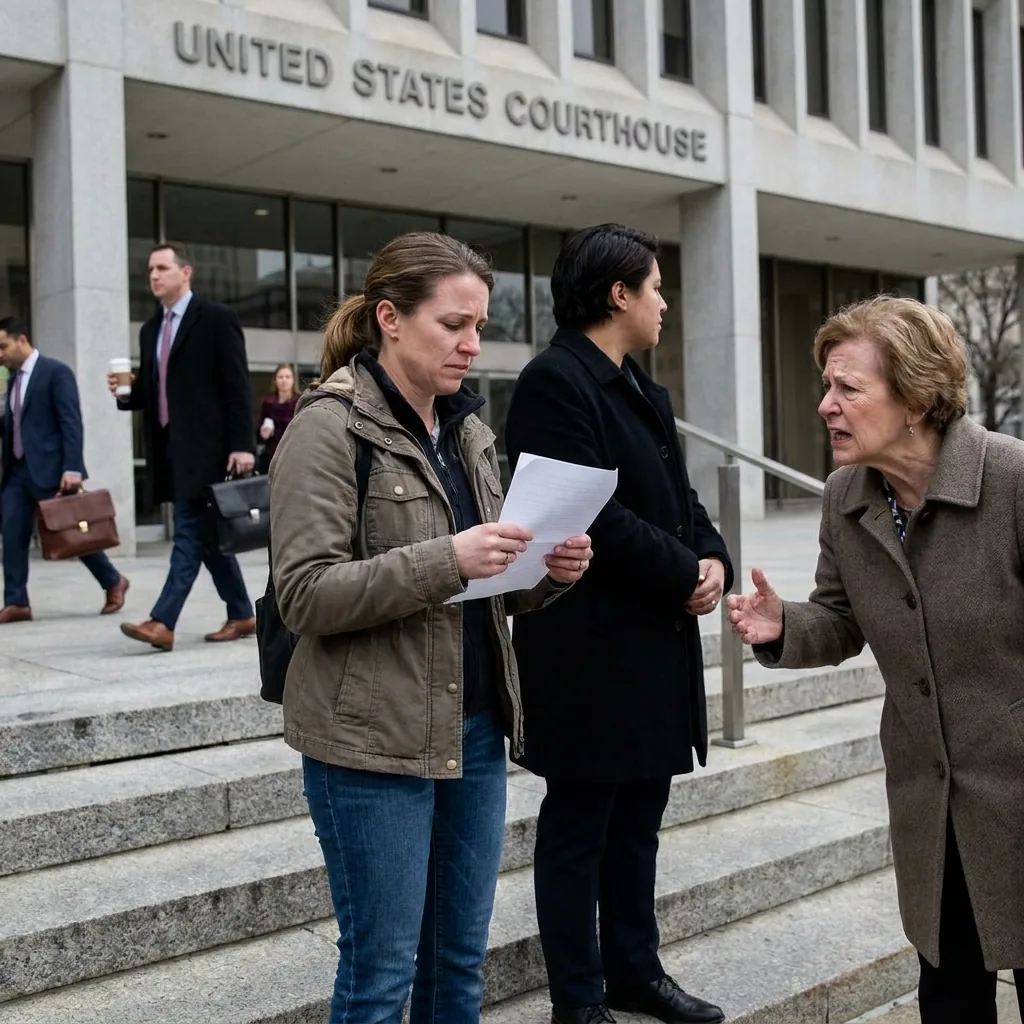
That was the pattern. She would throw something huge into the air, I would rush to disprove it, and by the end of the conversation I would be defending myself from words she had chosen on purpose. The courthouse steps, the strangers passing with envelopes, Tanya still by the railing, Evan quiet beside me, the bent corner of the marriage license in my hand-it all snapped into focus in a way it had not a minute earlier.
The burden was only useful to her if I kept acting like I owed for it.
I said, “You keep saying sacrifice like I am supposed to drop everything and come back with you. I offered to let it end. You said no.”
My mother gave a sharp shake of her head. “Because that is not how this works. You do not get to erase what people have done for you just because it is inconvenient today.”
“I am not erasing it,” I said. “I am refusing to be managed by it.”
Tanya let out a breath through her nose. It was small, but in the pause that followed, everybody heard it. My mother turned toward her at once.
“You know exactly how much I have held together,” she said.
Tanya’s fingers tightened around her purse strap. “I know you do a lot,” she said carefully. “But she’s right about one thing. If you keep calling it a burden and won’t let it go, it doesn’t sound like help.”
My mother’s head snapped back toward me, but Tanya had changed something just by saying it out loud. The scene was no longer just my mother telling a story and me standing under it.
She laughed once, short and hard. “Of course. So now I am the villain because I don’t clap while my daughter throws her life away on courthouse steps.”
Evan said, “Nobody asked you to clap.”
“I wasn’t speaking to you.”
He nodded once and looked at me again. He did not step in front of me. He did not try to win the argument for me. He just stayed there, exactly where he had been all morning, like he meant it when he said I could answer for myself.
That steadied me more than any speech would have.
I unfolded the marriage license enough to see our names and the date. I did not hold it up for anyone else. I only looked at it for a second, then folded it closed again.
“This is the part you keep trying to turn into an insult,” I said. “But it’s just a choice. Mine. You can hate it. You can be angry. What you don’t get to do is call your own help love and then demand repayment at the exact moment I use it to leave.”
Her mouth tightened. “So that’s what he taught you to say?”
“No,” I said. “That’s what you taught me by saying it over and over.”
For the first time all morning, she did not come back immediately. She looked at the courthouse doors, then at the street, then at Tanya, as if there might still be a version of this where someone else put me back in line for her.
Nobody did.
When she spoke again, her voice had gone softer, which was always more dangerous than yelling. “Maya, if you walk in there after speaking to me like this, do not expect to come back later and act like nothing changed. I mean that. I am not going to be used when it suits you and ignored when it doesn’t.”
I believed she meant it because she wanted me to hear the cost before I moved.
I also heard something else in it now. Not pain. Terms.
“Nothing was going to stay the same anyway,” I said.
She stared at me.
I reached into my bag with my free hand and pulled out the small brass key she had insisted I keep for her house. It sat cold in my palm for half a second before I held it out.
Tanya looked at the key, then at my face.
My mother’s expression changed so quickly I almost missed the first part of it. She had been ready to threaten distance. She had not been ready for me to accept it.
“What is this supposed to mean?” she asked.
“It means if your door is only open when I obey you, then it isn’t a home I can trust,” I said. “Take your key.”
She did not put out her hand.
That was the clearest answer she had given me all day.
I kept the key between my fingers and said, very quietly, “You don’t want release. You want the debt.”
Her face went red, and she stepped down hard onto the next stair. “Do not you dare make me sound like I wanted this.”
I closed my hand around the key and the marriage license together. For a second the edges pressed into my skin like two opposite choices. Then I looked at the courthouse doors and understood that Part 4 was not going to be about proving anything else to her. It was going to be about whether I walked in carrying her key or left it behind forever.