Story code: ST-000967
Part 1: The Thirty-Second Choice
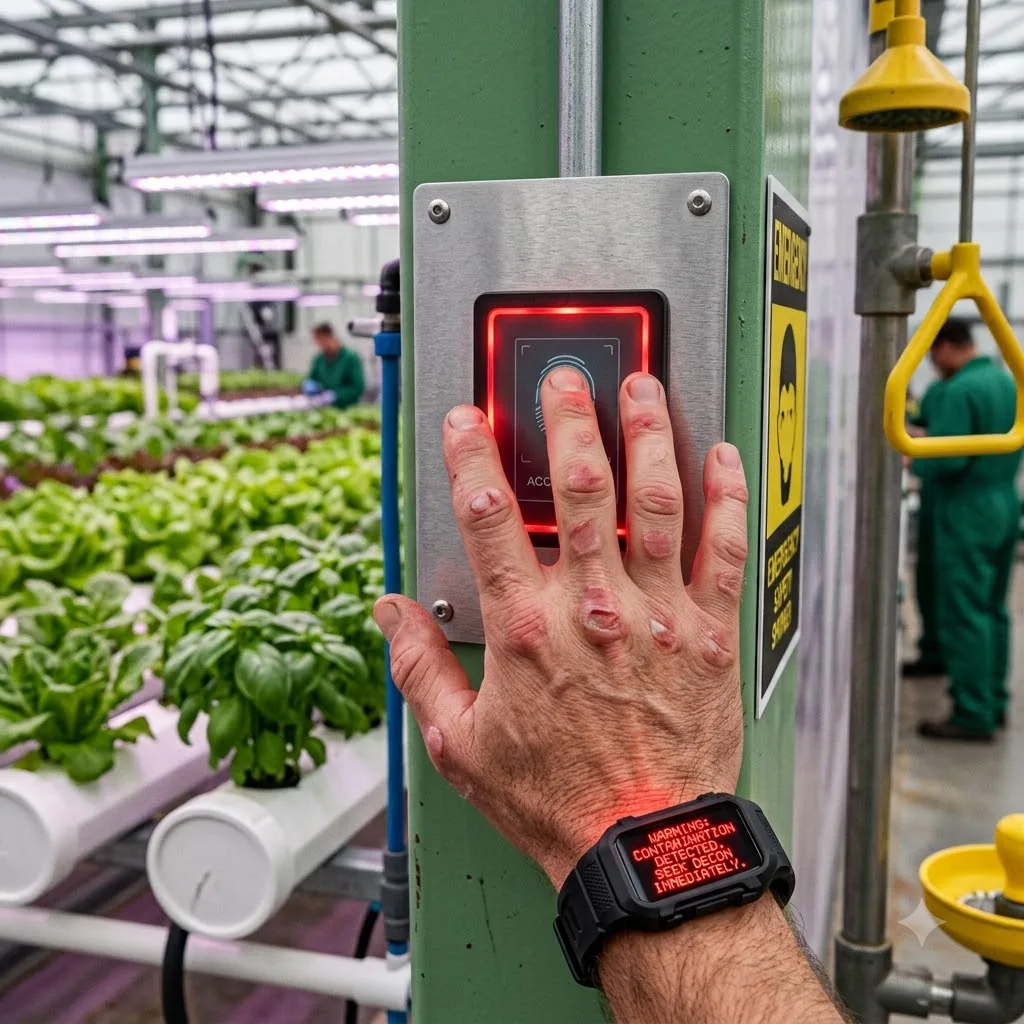
The yellow warning light on the wash station pulsed in time with the throbbing in Mateo’s forearm. A thick, corrosive paste clung to his skin like wet cement, dropped by the massive agricultural drone currently retreating into the greenhouse rafters. The chemical smelled of rotting copper and sulfur. It was already eating through his long-sleeved work shirt, turning the heavy cotton fabric into a smoking black sludge. A few feet away, the emergency shower stood pristine and completely dry behind a thick plexiglass guard. To turn on the water, he had to press his biometric wristband against the terminal. The terminal screen displayed a stark, unblinking warning message in block letters.
SCANNING FOR FIRST AID WILL INITIATE AN AUTOMATIC STATUS REVIEW.
A Status Review meant the federal database. It meant ICE.
The drone that sprayed him settled onto its charging cradle with a mechanized click, entirely indifferent to the damage it had just done to a human worker. It was just a machine following an algorithm, dispensing pesticide wherever the sensors detected a blight. Mateo had simply been standing in the wrong place when the nozzle malfunctioned. He gripped his left wrist with his right hand, trying to keep the burning arm away from his torso. The greenhouse heat, maintained at a steady eighty-five degrees for the delicate hybrid hydrangeas, baked the chemical deeper into his open pores. He tried to scrape the thick paste off with the edge of a plastic planting tray. The plastic snapped in his frantic grip. The friction only spread the liquid fire further down his skin.
The flesh underneath the dissolved fabric was turning a violently angry purple. The pain was no longer a dull ache. It was a sharp, biting agony, like holding a lit match directly against the bone.
He looked frantically down the endless rows of blooming flowers for another source of water. The irrigation lines were suspended above, but they were strictly regulated by the central AI. They would not cycle on for another three hours. The soil beneath the metal grates was damp, but pressing greenhouse dirt into an open chemical burn would guarantee a lethal infection. The throbbing escalated into a blinding white heat.
Mateo staggered toward the emergency station. His heavy work boots slipped on a puddle of spilled pesticide, the exact same compound currently dissolving his epidermis. He caught himself on the metal railing, leaving a smear of melted synthetic fabric and blood on the galvanized steel. His breath came in short, ragged gasps. Every time his heart beat, a fresh wave of fire washed up his arm and into his shoulder joint.
The terminal screen at the shower station shifted from its static warning to a proximity alert, sensing his wristband within range. A new countdown appeared on the glass.
UNAUTHORIZED WORK STOPPAGE DETECTED. RETURN TO ASSIGNED ROW IN 30 SECONDS.
He had thirty seconds to go back to tending the hydrangeas with a melting arm, or he could use the shower. The shower meant the scan. The scan meant the system flagged his biometric signature, instantly checking it against the federal registry. The men in the green uniforms would be at the farm gate before the end of the shift. He knew exactly what happened to the workers who triggered a Status Review. They were pulled from the transport buses and never seen again. He had a life here, fragile and carefully hidden, entirely dependent on never pinging the central servers for anything out of the ordinary.
Twenty-five seconds.
The skin on his forearm began to aggressively blister. The blisters swelled with terrifying speed, weeping clear fluid that mixed with the corrosive paste to create an even more toxic reaction. He clamped his jaw shut, refusing to scream out loud, perfectly aware that the security microphones in the ceiling recorded everything above a certain decibel level. Screaming was an anomaly. Anomalies required immediate algorithmic review. He leaned against the plexiglass guard of the shower. The cool surface felt like a cruel mockery against his burning flesh. He imagined the cold, clean water rushing from the overhead nozzle. He imagined the profound relief of it.
Fifteen seconds.
The pain traveled up his neck, causing his peripheral vision to swim with dark, jagged spots. His knees buckled under him, sending him sliding down the plexiglass to the grated floor. He forced himself back up using his good arm. He could not pass out here. If he lost consciousness, the overhead drone would eventually register a biological obstruction in the aisle and trigger a medical response anyway. There was no escaping the system. There was only the brutal choice of how he faced it. The chemical reached a new layer of tissue, and a sudden, violent muscle spasm wracked his entire body.
Ten seconds.
He stared at the terminal. The screen cast a pale, unforgiving white light on his sweating face. He thought of the federal agents. He thought of the holding cells. He thought of the absolute certainty of deportation, or worse, the corporate detention centers where off-the-books workers were sent to pay off their rescue debts. Then he looked at his arm, where the paste was now actively eating away at the muscle. Survival instinct, raw and undeniable, finally drowned out the cold calculation of risk. If he lost the arm, he could not work anyway. A man with one arm was useless to the harvest.
Five seconds.
Mateo squeezed his eyes shut to block out the blinding pain. He raised his trembling left arm and slammed his biometric wristband directly against the glass reader of the terminal. The machine let out a sharp, high-pitched electronic chime. The countdown vanished, instantly replaced by a solid block of color across the entire display.
The terminal turned a deep, saturated red.
The heavy overhead shower valve snapped open.
The yellow warning light on the wash station pulsed in time with the throbbing in Mateo’s forearm. A thick, corrosive paste clung to his skin like wet cement, dropped by the massive agricultural drone currently retreating into the greenhouse rafters. The chemical smelled of rotting copper and sulfur. It was already eating through his long-sleeved work shirt, turning the heavy cotton fabric into a smoking black sludge. A few feet away, the emergency shower stood pristine and completely dry behind a thick plexiglass guard. To turn on the water, he had to press his biometric wristband against the terminal. The terminal screen displayed a stark, unblinking warning message in block letters.
SCANNING FOR FIRST AID WILL INITIATE AN AUTOMATIC STATUS REVIEW.
A Status Review meant the federal database. It meant ICE.
The drone that sprayed him settled onto its charging cradle with a mechanized click, entirely indifferent to the damage it had just done to a human worker. It was just a machine following an algorithm, dispensing pesticide wherever the sensors detected a blight. Mateo had simply been standing in the wrong place when the nozzle malfunctioned. He gripped his left wrist with his right hand, trying to keep the burning arm away from his torso. The greenhouse heat, maintained at a steady eighty-five degrees for the delicate hybrid hydrangeas, baked the chemical deeper into his open pores. He tried to scrape the thick paste off with the edge of a plastic planting tray. The plastic snapped in his frantic grip. The friction only spread the liquid fire further down his skin.
The flesh underneath the dissolved fabric was turning a violently angry purple. The pain was no longer a dull ache. It was a sharp, biting agony, like holding a lit match directly against the bone.
He looked frantically down the endless rows of blooming flowers for another source of water. The irrigation lines were suspended above, but they were strictly regulated by the central AI. They would not cycle on for another three hours. The soil beneath the metal grates was damp, but pressing greenhouse dirt into an open chemical burn would guarantee a lethal infection. The throbbing escalated into a blinding white heat.
Mateo staggered toward the emergency station. His heavy work boots slipped on a puddle of spilled pesticide, the exact same compound currently dissolving his epidermis. He caught himself on the metal railing, leaving a smear of melted synthetic fabric and blood on the galvanized steel. His breath came in short, ragged gasps. Every time his heart beat, a fresh wave of fire washed up his arm and into his shoulder joint.
The terminal screen at the shower station shifted from its static warning to a proximity alert, sensing his wristband within range. A new countdown appeared on the glass.
UNAUTHORIZED WORK STOPPAGE DETECTED. RETURN TO ASSIGNED ROW IN 30 SECONDS.
He had thirty seconds to go back to tending the hydrangeas with a melting arm, or he could use the shower. The shower meant the scan. The scan meant the system flagged his biometric signature, instantly checking it against the federal registry. The men in the green uniforms would be at the farm gate before the end of the shift. He knew exactly what happened to the workers who triggered a Status Review. They were pulled from the transport buses and never seen again. He had a life here, fragile and carefully hidden, entirely dependent on never pinging the central servers for anything out of the ordinary.
Twenty-five seconds.
The skin on his forearm began to aggressively blister. The blisters swelled with terrifying speed, weeping clear fluid that mixed with the corrosive paste to create an even more toxic reaction. He clamped his jaw shut, refusing to scream out loud, perfectly aware that the security microphones in the ceiling recorded everything above a certain decibel level. Screaming was an anomaly. Anomalies required immediate algorithmic review. He leaned against the plexiglass guard of the shower. The cool surface felt like a cruel mockery against his burning flesh. He imagined the cold, clean water rushing from the overhead nozzle. He imagined the profound relief of it.
Fifteen seconds.
The pain traveled up his neck, causing his peripheral vision to swim with dark, jagged spots. His knees buckled under him, sending him sliding down the plexiglass to the grated floor. He forced himself back up using his good arm. He could not pass out here. If he lost consciousness, the overhead drone would eventually register a biological obstruction in the aisle and trigger a medical response anyway. There was no escaping the system. There was only the brutal choice of how he faced it. The chemical reached a new layer of tissue, and a sudden, violent muscle spasm wracked his entire body.
Ten seconds.
He stared at the terminal. The screen cast a pale, unforgiving white light on his sweating face. He thought of the federal agents. He thought of the holding cells. He thought of the absolute certainty of deportation, or worse, the corporate detention centers where off-the-books workers were sent to pay off their rescue debts. Then he looked at his arm, where the paste was now actively eating away at the muscle. Survival instinct, raw and undeniable, finally drowned out the cold calculation of risk. If he lost the arm, he could not work anyway. A man with one arm was useless to the harvest.
Five seconds.
Mateo squeezed his eyes shut to block out the blinding pain. He raised his trembling left arm and slammed his biometric wristband directly against the glass reader of the terminal. The machine let out a sharp, high-pitched electronic chime. The countdown vanished, instantly replaced by a solid block of color across the entire display.
The terminal turned a deep, saturated red.
The heavy overhead shower valve snapped open.