Story code: ST-000994
Part 1: The Silent Crew
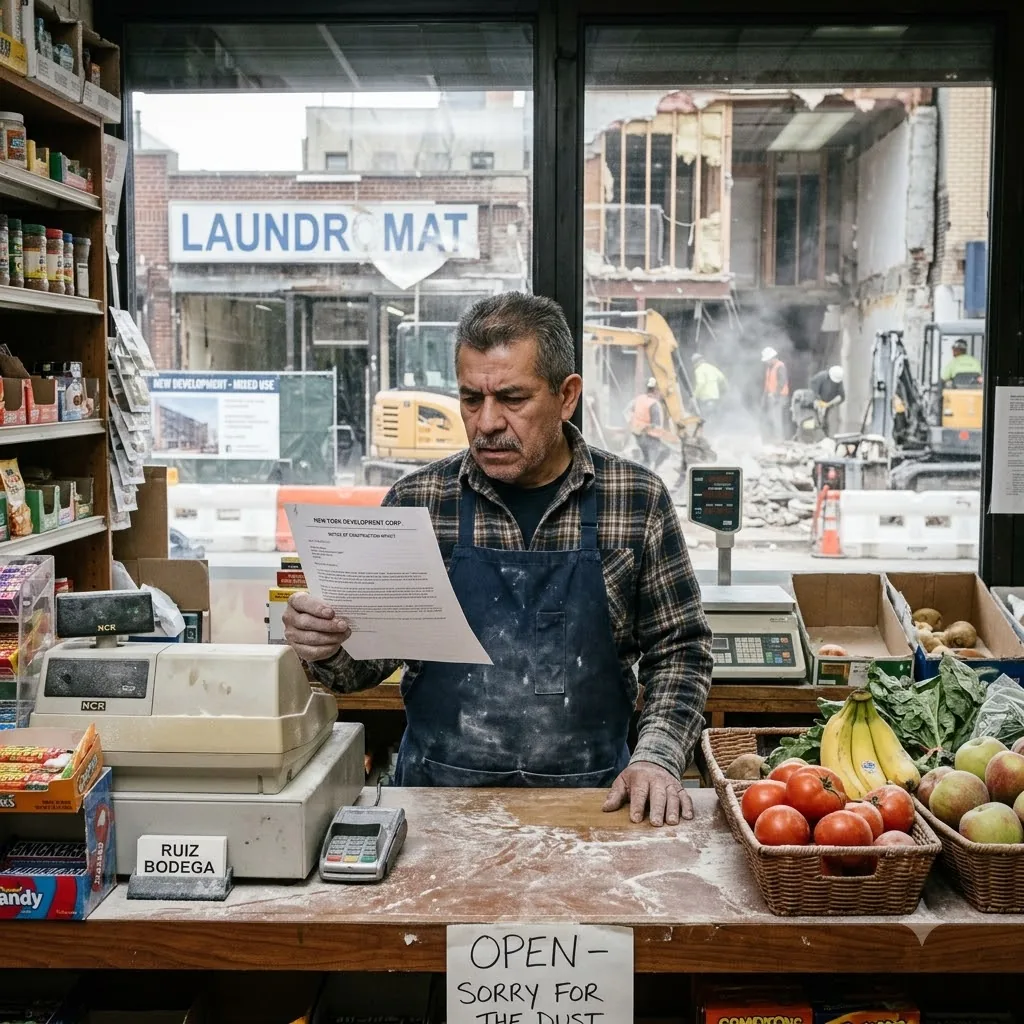
Mateo wiped another layer of chalky, bitter drywall dust off the bruised skin of a mango. The fine white powder coated everything in the small bodega, settling over the neat rows of canned black beans, the brightly colored bags of plantain chips, and the glass of the deli case. It hung thick in the stagnant air, tasting like crushed chalk and old decay in the back of his throat. He crumpled the crisp, heavy-stock paper of the eviction notice in his left hand, feeling the sharp edges dig into his palm. The numbers printed on the pristine letterhead refused to change, mocking him in stark black ink. It was a three hundred percent commercial rent increase, effective on the first of the month.
The muffled, rhythmic impact of heavy tools striking the shared eastern wall shook another cloud of plaster dust from the acoustic ceiling tiles. Mateo threw the ruined mango into the plastic waste bin behind the counter. His father had built this store from nothing, sweeping these same floors for thirty years, and this new tech developer was going to bury that legacy in less than thirty days. The dust was a tactic, a physical invasion designed to drive away his remaining foot traffic and ruin his perishable inventory.
Mateo untied his stained apron, threw it over the register, and shoved his way out the heavy glass front door into the sweltering afternoon heat. He marched down the cracked sidewalk toward the adjacent storefront. The space, formerly a neighborhood laundromat, had been entirely gutted over the weekend. The familiar brick facade was gone, replaced by a jagged temporary plywood tunnel meant to shield pedestrians from falling debris. Mateo kicked a discarded zip tie out of his path, rehearsing the commercial tenant rights his cousin had texted him that morning. He was ready to shout, ready to threaten injunctions and health department violations until his throat bled.
He braced himself for the chaotic, deafening roar of a commercial job site. He expected the high-pitched whine of circular saws, the heavy, vibrating bass of a radio blasting over the noise, and the loud, overlapping shouts of foremen coordinating material deliveries.
Instead, as he stepped past the heavy plastic sheeting into the cavernous, unfinished interior of the building, a suffocating silence hit him.
It was the complete absence of human noise that stopped his momentum. There were at least fifteen men working inside the gutted space, moving with a frantic, unnatural speed. They hauled massive stacks of steel framing studs, carried heavy buckets of wet joint compound, and dragged thick coils of electrical wire across the bare concrete floor. Yet no one spoke. Not a single voice echoed against the exposed brick walls. The only sounds in the massive room were the metallic scraping of tools, the wet slap of mud against drywall, and the heavy, ragged breathing of men pushing their physical limits.
The anger burning in Mateo’s chest immediately twisted into a cold, heavy knot of primal unease. He stepped out of the entryway, the soles of his boots crunching loudly on loose screws and plaster chips.
None of the workers turned to look at him.
Mateo watched a heavily built man near the front struggle to lift an oversized sheet of drywall by himself, his thick arms trembling under the awkward weight. The worker’s face was slick with sweat, his eyes wide and fixed firmly on the ground in front of his boots. Mateo instinctively took a step forward to offer a hand.
The worker flinched violently at Mateo’s approach. He shrank back against the aluminum framing, curling his shoulders inward as if bracing for a physical blow from a heavy object. The man never made eye contact. He just adjusted his slipping grip and scrambled toward the back corridor, his steel-toed boots dragging desperately against the floor.
Mateo scanned the room. Every single worker kept their head down, their movements robotic and driven by a silent, palpable terror. On the unfinished mezzanine level, a foreman in a pristine white hard hat stood perfectly still. He tapped silently on an electronic tablet, his dark sunglasses sweeping over the laboring men below like a prison warden monitoring a yard.
Mateo raised his voice, demanding to know who was running the site.
The foreman on the mezzanine didn’t flinch, but every laborer on the ground floor froze for a fraction of a second before violently doubling their pace. The frantic scraping of trowels and the thud of dropped lumber grew louder, masking the sound of footsteps approaching from the rear field office.
A man wearing a tailored charcoal suit stepped out of the makeshift plywood office, his polished leather shoes immaculate despite the hazardous floor. He held a duplicate copy of the rent increase letter in a manila folder, tapping the edge against his palm. The developer wore a thin, calculated smile that completely failed to reach his flat, dead eyes.
Mateo stepped forward, pointing an accusing finger at the ruined shared wall, pulling in a deep breath to unleash his furious speech about the ruined inventory and the hostile rent hike.
Then his gaze dropped to the nearest worker, a young man kneeling in the dust to secure a floorboard. The laborer’s frayed denim jeans were hiked up past his work boots, revealing thick, bulky black plastic bands locked tight around both of his ankles, a small red indicator light pulsing steadily in the dim, dust-choked air.
Mateo wiped another layer of chalky, bitter drywall dust off the bruised skin of a mango. The fine white powder coated everything in the small bodega, settling over the neat rows of canned black beans, the brightly colored bags of plantain chips, and the glass of the deli case. It hung thick in the stagnant air, tasting like crushed chalk and old decay in the back of his throat. He crumpled the crisp, heavy-stock paper of the eviction notice in his left hand, feeling the sharp edges dig into his palm. The numbers printed on the pristine letterhead refused to change, mocking him in stark black ink. It was a three hundred percent commercial rent increase, effective on the first of the month.
The muffled, rhythmic impact of heavy tools striking the shared eastern wall shook another cloud of plaster dust from the acoustic ceiling tiles. Mateo threw the ruined mango into the plastic waste bin behind the counter. His father had built this store from nothing, sweeping these same floors for thirty years, and this new tech developer was going to bury that legacy in less than thirty days. The dust was a tactic, a physical invasion designed to drive away his remaining foot traffic and ruin his perishable inventory.
Mateo untied his stained apron, threw it over the register, and shoved his way out the heavy glass front door into the sweltering afternoon heat. He marched down the cracked sidewalk toward the adjacent storefront. The space, formerly a neighborhood laundromat, had been entirely gutted over the weekend. The familiar brick facade was gone, replaced by a jagged temporary plywood tunnel meant to shield pedestrians from falling debris. Mateo kicked a discarded zip tie out of his path, rehearsing the commercial tenant rights his cousin had texted him that morning. He was ready to shout, ready to threaten injunctions and health department violations until his throat bled.
He braced himself for the chaotic, deafening roar of a commercial job site. He expected the high-pitched whine of circular saws, the heavy, vibrating bass of a radio blasting over the noise, and the loud, overlapping shouts of foremen coordinating material deliveries.
Instead, as he stepped past the heavy plastic sheeting into the cavernous, unfinished interior of the building, a suffocating silence hit him.
It was the complete absence of human noise that stopped his momentum. There were at least fifteen men working inside the gutted space, moving with a frantic, unnatural speed. They hauled massive stacks of steel framing studs, carried heavy buckets of wet joint compound, and dragged thick coils of electrical wire across the bare concrete floor. Yet no one spoke. Not a single voice echoed against the exposed brick walls. The only sounds in the massive room were the metallic scraping of tools, the wet slap of mud against drywall, and the heavy, ragged breathing of men pushing their physical limits.
The anger burning in Mateo’s chest immediately twisted into a cold, heavy knot of primal unease. He stepped out of the entryway, the soles of his boots crunching loudly on loose screws and plaster chips.
None of the workers turned to look at him.
Mateo watched a heavily built man near the front struggle to lift an oversized sheet of drywall by himself, his thick arms trembling under the awkward weight. The worker’s face was slick with sweat, his eyes wide and fixed firmly on the ground in front of his boots. Mateo instinctively took a step forward to offer a hand.
The worker flinched violently at Mateo’s approach. He shrank back against the aluminum framing, curling his shoulders inward as if bracing for a physical blow from a heavy object. The man never made eye contact. He just adjusted his slipping grip and scrambled toward the back corridor, his steel-toed boots dragging desperately against the floor.
Mateo scanned the room. Every single worker kept their head down, their movements robotic and driven by a silent, palpable terror. On the unfinished mezzanine level, a foreman in a pristine white hard hat stood perfectly still. He tapped silently on an electronic tablet, his dark sunglasses sweeping over the laboring men below like a prison warden monitoring a yard.
Mateo raised his voice, demanding to know who was running the site.
The foreman on the mezzanine didn’t flinch, but every laborer on the ground floor froze for a fraction of a second before violently doubling their pace. The frantic scraping of trowels and the thud of dropped lumber grew louder, masking the sound of footsteps approaching from the rear field office.
A man wearing a tailored charcoal suit stepped out of the makeshift plywood office, his polished leather shoes immaculate despite the hazardous floor. He held a duplicate copy of the rent increase letter in a manila folder, tapping the edge against his palm. The developer wore a thin, calculated smile that completely failed to reach his flat, dead eyes.
Mateo stepped forward, pointing an accusing finger at the ruined shared wall, pulling in a deep breath to unleash his furious speech about the ruined inventory and the hostile rent hike.
Then his gaze dropped to the nearest worker, a young man kneeling in the dust to secure a floorboard. The laborer’s frayed denim jeans were hiked up past his work boots, revealing thick, bulky black plastic bands locked tight around both of his ankles, a small red indicator light pulsing steadily in the dim, dust-choked air.