Story code: ST-001458
Part 1: The Orange Seal
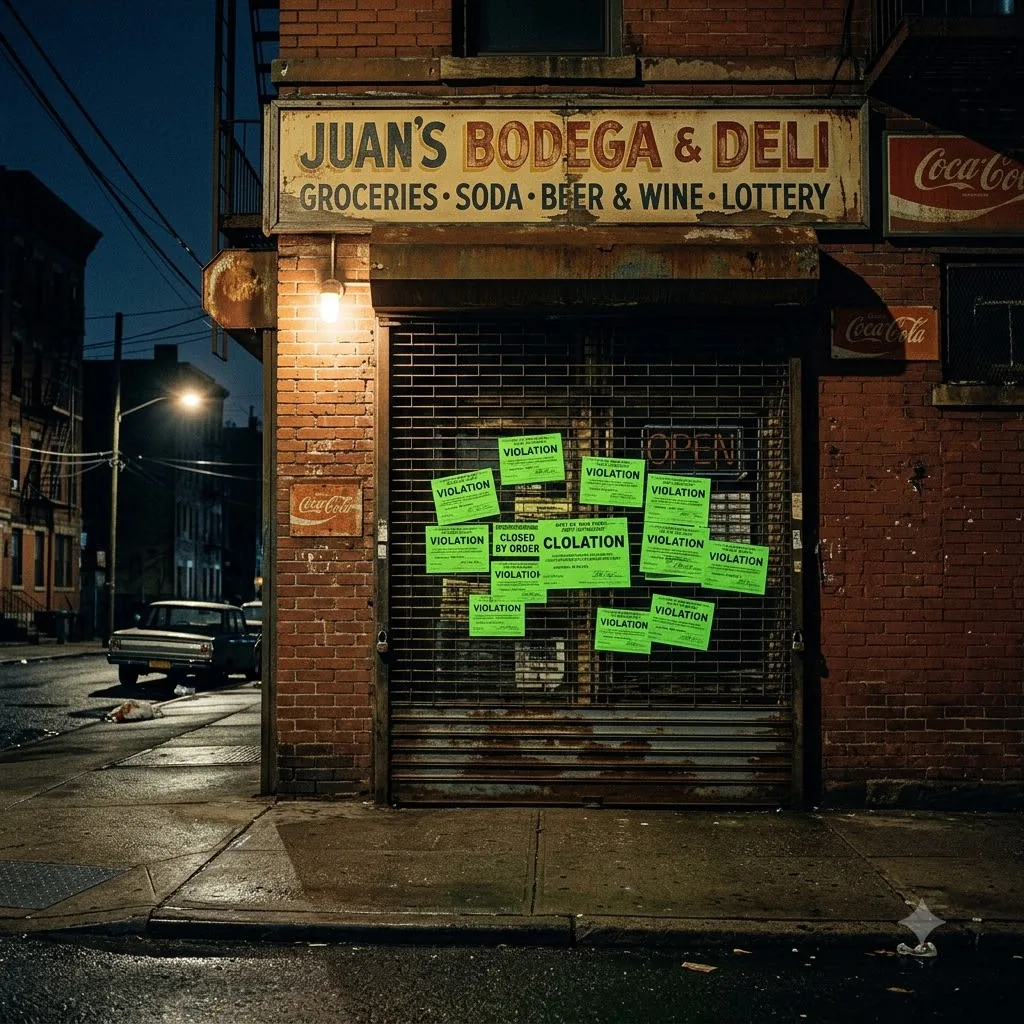
Hector’s brass key slid only halfway into the cylinder of the roll-down grate before hitting an obstruction, stopped dead by an unfamiliar, heavy padlock that did not belong to him. He stepped back onto the freezing pavement, his eyes adjusting to the harsh glare of a dozen fluorescent orange stickers plastered over his grandfather’s hand-painted storefront window. The 4 AM wind bit through his thin jacket, but the cold barely registered against the sudden, hollow drop in his stomach.
The stickers were massive, thick squares of neon vinyl bonded to the glass with industrial adhesive. They covered the fading cursive of Santiago & Sons Grocery like a rash. Hector set his thermos on the sidewalk and scratched at the corner of one sticker with his thumbnail. It did not flake or tear. It was designed to be permanent. He leaned in close to read the block text printed beneath a sterile barcode.
The language was a bureaucratic maze. The top sticker cited Violation 402-B: Non-compliant Luminescence. Below that, another declared Infraction 119: Temporal Visual Disturbance. A third cited Citation 88-A: Aesthetic Disharmony in a Heritage Zone. Hector dragged his fingers over the cold glass, tracing the absurd accusations. The awning was the same faded red it had been for twenty years. The neon beer signs in the window had buzzed with the exact same hum since 1998. The neighborhood had no heritage zone, no historical society, and certainly no Aesthetic Board. Yet, according to the laminated tag dangling from the strange padlock on his grate, this fictitious board had sealed his livelihood.
He grabbed the brass padlock and yanked. The metal was pristine, heavy, and completely unyielding. The tag slapped against the steel grate. Sealed pending remittance. He looked back at the orange stickers to find the penalty amounts. Five hundred dollars for the luminescence. Eight hundred for the temporal disturbance. Twelve hundred for the aesthetic disharmony. The math piled up in his head, crushing his chest. The total demanded on the front glass was more than his entire profit margin for the last three months. Accruing daily.
Hector backed away to look at the whole building. The brick facade above the shop held his small apartment, covered by the same master lease his grandfather had signed sixty years ago. That lease was an ironclad relic of a forgotten era, locking his rent at a rate that made the new developers in the area gnash their teeth. They could not evict him. They could not raise his rent.
Now they had found another way.
He pulled his phone from his pocket to check the time. Four-fifteen. The bread truck would arrive in twenty minutes. The milk delivery right after. If he could not roll up that grate, the perishables would sit on the sidewalk and spoil. If he lost a day of sales, the electric bill would bounce. He walked to the alley beside the shop, his boots crunching on the frost. He needed leverage. He found the heavy iron pry bar he kept near the back door to crack the ice in the winter. The iron was freezing, leaching the warmth from his bare hands.
He carried the bar back to the front grate. He jammed the wedge of the iron under the shackle of the brass lock and pulled down with his entire body weight. The padlock ground against the steel grate, but the shackle held fast. He adjusted his grip, panting in the frigid air, and threw his weight against it again. The iron bar slipped, sending him stumbling against the glass. His shoulder hit the window right on a fresh sticker.
He noticed the fine print at the bottom of the vinyl decal. Warning. Forced removal of Aesthetic Board seals constitutes a breach of leasehold covenant, resulting in immediate forfeiture of the premises.
He dropped the iron bar. It clanged loudly against the concrete. They wanted him to cut the lock. They were baiting him into a technical breach of the sixty-year lease. If he cut the lock, he lost the store. If he left the lock, the fines would drain his bank account until he was bankrupt. He stared at the barcode on the nearest sticker, feeling the invisible weight of a massive corporate entity pressing down on his small patch of concrete. The language of the citations was sterile, weaponized, completely devoid of a human author. There was no phone number to call, no address to visit, only a PO Box listed in a neighboring state.
He stood there in the silence of the early morning, the neon orange glowing violently under the streetlamps. His breath plumed in the cold air as he reached down and picked up his thermos. He poured the coffee directly onto the concrete, no longer needing the caffeine to stay awake. The sheer volume of the fines meant they had been documenting his store for weeks, building a massive portfolio of fabricated violations just waiting for the right moment to strike.
A pair of headlights swept around the corner, breaking the darkness.
It was not the boxy silhouette of the bread truck. A sleek, black town car pulled to a smooth stop directly in front of the bodega, idling silently at the curb. The rear passenger door clicked open. A man in a tailored charcoal overcoat stepped out onto the sidewalk, holding a silver clipboard stacked thick with another dozen fluorescent orange stickers. Hector gripped the iron pry bar tight against his side as the man walked purposefully toward the storefront, uncapping a permanent marker.
Hector’s brass key slid only halfway into the cylinder of the roll-down grate before hitting an obstruction, stopped dead by an unfamiliar, heavy padlock that did not belong to him. He stepped back onto the freezing pavement, his eyes adjusting to the harsh glare of a dozen fluorescent orange stickers plastered over his grandfather’s hand-painted storefront window. The 4 AM wind bit through his thin jacket, but the cold barely registered against the sudden, hollow drop in his stomach.
The stickers were massive, thick squares of neon vinyl bonded to the glass with industrial adhesive. They covered the fading cursive of Santiago & Sons Grocery like a rash. Hector set his thermos on the sidewalk and scratched at the corner of one sticker with his thumbnail. It did not flake or tear. It was designed to be permanent. He leaned in close to read the block text printed beneath a sterile barcode.
The language was a bureaucratic maze. The top sticker cited Violation 402-B: Non-compliant Luminescence. Below that, another declared Infraction 119: Temporal Visual Disturbance. A third cited Citation 88-A: Aesthetic Disharmony in a Heritage Zone. Hector dragged his fingers over the cold glass, tracing the absurd accusations. The awning was the same faded red it had been for twenty years. The neon beer signs in the window had buzzed with the exact same hum since 1998. The neighborhood had no heritage zone, no historical society, and certainly no Aesthetic Board. Yet, according to the laminated tag dangling from the strange padlock on his grate, this fictitious board had sealed his livelihood.
He grabbed the brass padlock and yanked. The metal was pristine, heavy, and completely unyielding. The tag slapped against the steel grate. Sealed pending remittance. He looked back at the orange stickers to find the penalty amounts. Five hundred dollars for the luminescence. Eight hundred for the temporal disturbance. Twelve hundred for the aesthetic disharmony. The math piled up in his head, crushing his chest. The total demanded on the front glass was more than his entire profit margin for the last three months. Accruing daily.
Hector backed away to look at the whole building. The brick facade above the shop held his small apartment, covered by the same master lease his grandfather had signed sixty years ago. That lease was an ironclad relic of a forgotten era, locking his rent at a rate that made the new developers in the area gnash their teeth. They could not evict him. They could not raise his rent.
Now they had found another way.
He pulled his phone from his pocket to check the time. Four-fifteen. The bread truck would arrive in twenty minutes. The milk delivery right after. If he could not roll up that grate, the perishables would sit on the sidewalk and spoil. If he lost a day of sales, the electric bill would bounce. He walked to the alley beside the shop, his boots crunching on the frost. He needed leverage. He found the heavy iron pry bar he kept near the back door to crack the ice in the winter. The iron was freezing, leaching the warmth from his bare hands.
He carried the bar back to the front grate. He jammed the wedge of the iron under the shackle of the brass lock and pulled down with his entire body weight. The padlock ground against the steel grate, but the shackle held fast. He adjusted his grip, panting in the frigid air, and threw his weight against it again. The iron bar slipped, sending him stumbling against the glass. His shoulder hit the window right on a fresh sticker.
He noticed the fine print at the bottom of the vinyl decal. Warning. Forced removal of Aesthetic Board seals constitutes a breach of leasehold covenant, resulting in immediate forfeiture of the premises.
He dropped the iron bar. It clanged loudly against the concrete. They wanted him to cut the lock. They were baiting him into a technical breach of the sixty-year lease. If he cut the lock, he lost the store. If he left the lock, the fines would drain his bank account until he was bankrupt. He stared at the barcode on the nearest sticker, feeling the invisible weight of a massive corporate entity pressing down on his small patch of concrete. The language of the citations was sterile, weaponized, completely devoid of a human author. There was no phone number to call, no address to visit, only a PO Box listed in a neighboring state.
He stood there in the silence of the early morning, the neon orange glowing violently under the streetlamps. His breath plumed in the cold air as he reached down and picked up his thermos. He poured the coffee directly onto the concrete, no longer needing the caffeine to stay awake. The sheer volume of the fines meant they had been documenting his store for weeks, building a massive portfolio of fabricated violations just waiting for the right moment to strike.
A pair of headlights swept around the corner, breaking the darkness.
It was not the boxy silhouette of the bread truck. A sleek, black town car pulled to a smooth stop directly in front of the bodega, idling silently at the curb. The rear passenger door clicked open. A man in a tailored charcoal overcoat stepped out onto the sidewalk, holding a silver clipboard stacked thick with another dozen fluorescent orange stickers. Hector gripped the iron pry bar tight against his side as the man walked purposefully toward the storefront, uncapping a permanent marker.