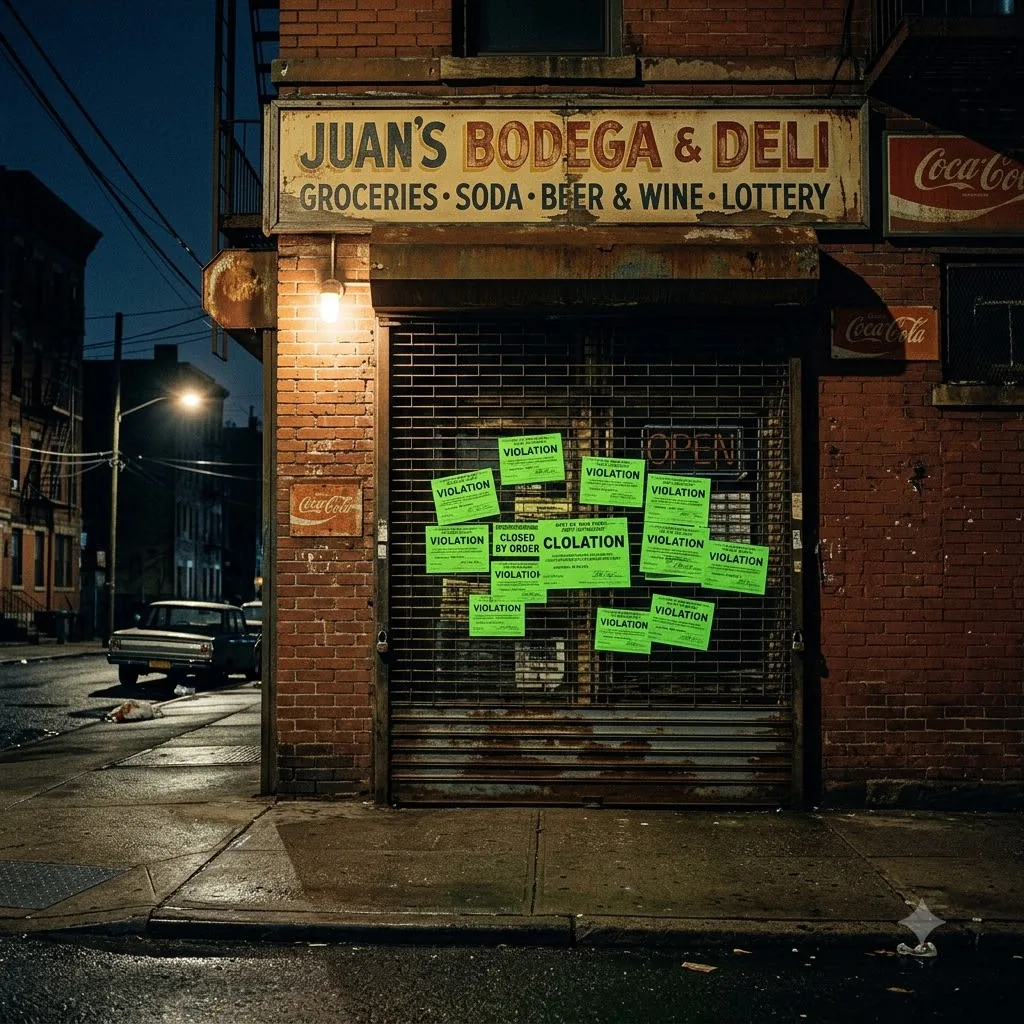
Story code: ST-001458
Part 3: The 1974 Covenants
The heavy metal drawers of his grandfather’s filing cabinet shrieked as Hector pulled them open. The spare bedroom of his apartment above the bodega smelled of stale tobacco and decaying paper. It was 6:15 AM. Downstairs, the milk delivery had already come and gone, the driver leaving a frustrated, apologetic voicemail. Hector ignored his phone. He sat cross-legged on the faded carpet, surrounded by towering stacks of manila folders.
Santiago Sr. had been a man who trusted no one and discarded nothing. Every tax return, every receipt, and every piece of neighborhood correspondence from 1964 onward was crammed into the rusted steel drawers. Hector’s fingers were black with dust as he flipped through a massive, heavy-duty binder labeled *Local Merchant Covenants*.
If Apex Development had resurrected a dormant merchant charter to weaponize the Aesthetic Board against his lease, they had to have pulled it from the original municipal filings. Hector just had to find out what else was buried in that dead charter.
At 7:30 AM, his bleeding cuticles caught on a thick, bound packet of mimeographed paper. The cover page read: *Bylaws and Zoning Amendments of the 8th Avenue Merchant Association, 1974*.
Hector turned the brittle pages carefully. He skimmed past the absurd aesthetic guidelines they had used to fine him, digging deeper into the structural ordinances. His eyes locked onto Section 4, a heavy-plumbing ordinance drafted during a brief period when a local slaughterhouse had attempted to open a meatpacking annex on the block. The ordinance mandated strict, industrial-grade cast-iron effluent plumbing and independent biowaste traps for any commercial space housing more than three live animals.
Hector read the penalty clause twice. Then he thought about the massive, multi-million-dollar flagship project Apex Development had just opened two blocks away: *The Hound & Hearth*, a sprawling luxury dog cafe and grooming spa. It was built in a gutted retail shell. Hector had watched the contractors lay the plumbing from the sidewalk last year. They had used standard, white commercial PVC.
He looked at the kitchen clock. 8:10 AM. He grabbed a reinforced cardboard banker’s box, dumped its contents on the floor, and started loading the heavy stacks of 1970s municipal documents inside.
At 8:55 AM, Hector stepped off the elevator onto the fourteenth floor of the Apex Development tower. The contrast to his freezing, locked bodega was jarring. The air here was heavily climate-controlled, smelling of expensive white tea and ozone. He carried the heavy banker’s box on his shoulder, his work boots leaving faint scuffs on the polished marble floor.
A receptionist tried to stop him, but he bypassed the desk, following the frosted glass walls until he found the room number listed on his notice of impending lien. He pushed the heavy glass door open.
The conference room was immaculate, dominated by a long slab of white quartz. Sitting at the far end was the auditor in the charcoal coat, his silver clipboard resting next to a steaming espresso. Next to him sat a woman in a sharply tailored navy suit, tapping manicured fingernails against the screen of a tablet.
“Mr. Santiago,” the woman said, looking up without a trace of surprise. She glanced at the digital clock on the wall. 8:58 AM. “I am Ms. Sterling, regional director for Apex. You’re cutting it close. I trust you brought the twenty-six hundred dollars in certified funds?”
Hector didn’t answer. He walked the length of the room and hoisted the heavy cardboard box. He slammed it down onto the pristine white quartz table. The impact echoed like a gunshot in the quiet room. A cloud of sixty-year-old dust puffed into the filtered air, raining down on the auditor’s espresso.
The auditor coughed, waving a hand in front of his face. “What is this?”
“My appeal,” Hector said, his voice dropping into a steady, hard cadence. He reached into the box and pulled out the thick packet of mimeographed paper, dropping it onto the table between them. “You didn’t just buy the Aesthetic Board. You bought the entire 1974 8th Avenue Merchant Association charter.”
“We are aware of what we purchased, Mr. Santiago,” Ms. Sterling said, her tone dripping with polite condescension. “If you are attempting to argue the legality of the citations, this is not a courtroom. The filing fee is required to initiate-”
“I’m not arguing the citations,” Hector interrupted, leaning heavily on the table. “I’m enforcing the charter. Under the mutual enforcement clause, any active member of the association can cite any other member for a breach of the bylaws.”
Ms. Sterling paused, her fingers hovering over her tablet. “We are in full compliance with city code.”
“No, you’re not,” Hector said. He flipped the brittle document open to the page he had dog-eared, turning it to face her. “Section 4, Ordinance 81-C. Commercial Animal Husbandry and Effluent Management. Any facility housing live animals on the premises must be retrofitted with three-inch cast-iron drainage lines and an independent biowaste trap to prevent municipal contamination.”
The auditor frowned, leaning over to read the faded type. “That’s a dead ordinance for old meatpackers.”
“It’s a bylaw in the charter you resurrected last week,” Hector corrected, his eyes locking onto Ms. Sterling. “You woke it up. Which means it applies to *The Hound & Hearth*. You have forty dogs a day in there. It’s an animal husbandry facility under the 1974 definition. And I watched your contractors lay standard commercial PVC plumbing six months ago.”
Ms. Sterling’s manicured hand slowly lowered to the table. The smug, polished mask of corporate superiority began to slip, revealing a tight, rigid calculation beneath.
Hector reached into the box again and pulled out a stack of blank, neon orange stickers he had managed to peel off his own window. He tossed them onto the quartz table. They scattered over the 1974 bylaws.
“The penalty for a heavy-plumbing violation under the charter is five thousand dollars a day,” Hector said softly, the math flowing out of him as easily as his morning inventory counts. “Accruing from the moment the charter was reactivated. Plus, a mandatory report to the city water authority, which requires an immediate revocation of the certificate of occupancy until the concrete foundation is torn up and the pipes are replaced.”
The silence in the conference room was absolute, save for the faint, steady hum of the climate control. The auditor looked at Ms. Sterling, waiting for her to deliver the scripted legal countermeasure.
Ms. Sterling didn’t speak. She just stared at the yellowed ordinance, the vibrant orange stickers resting on top of it, and the heavy banker’s box that held sixty years of municipal landmines they had blindly stepped into.