Story code: ST-001758
Part 2: Blight and Ruin
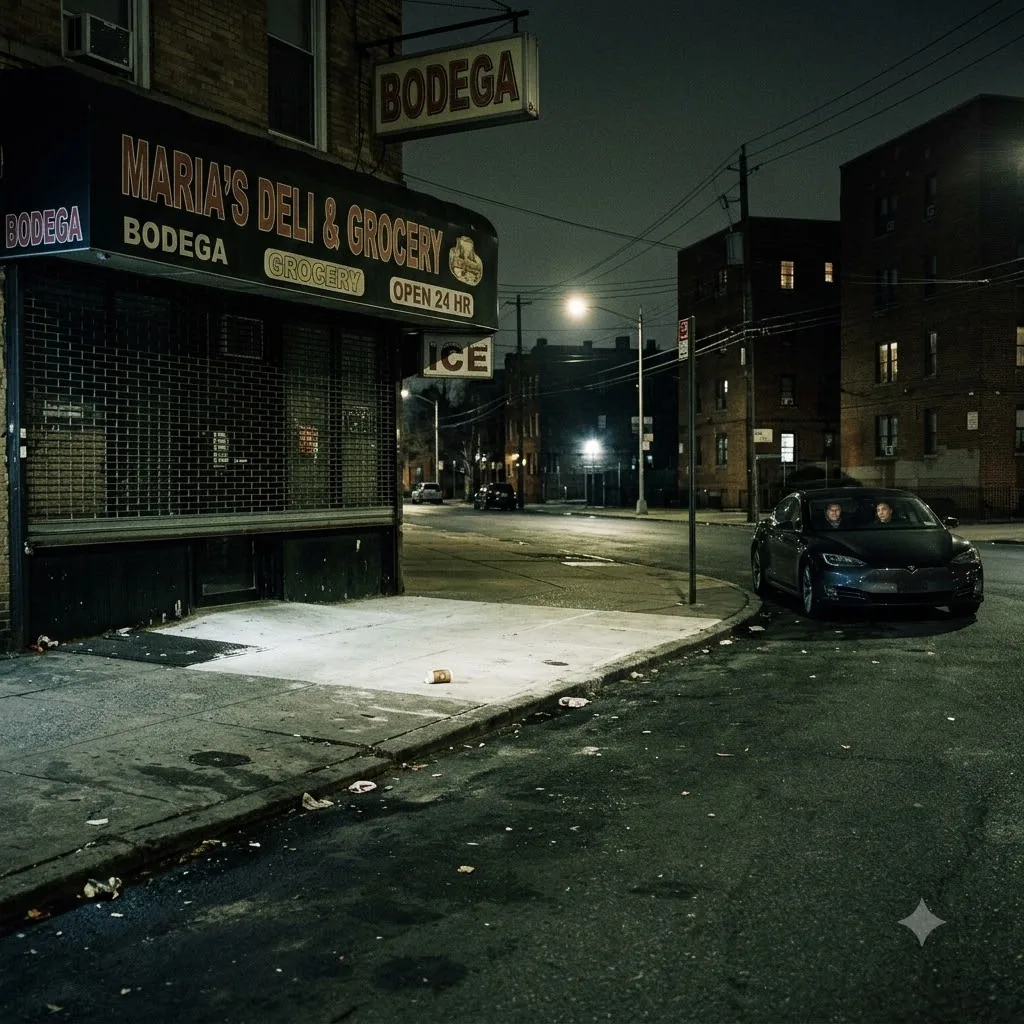
Mateo closed the distance to the idling Tesla in five long, heavy strides. The driver’s side window slid down the rest of the way with a quiet mechanical whir, releasing a wave of warm, climate-controlled air that smelled faintly of expensive leather and peppermint. The stark contrast between the pristine cabin of the electric vehicle and the harsh, chemical-soaked freezing air of the street made Mateo’s stomach turn. The cafe owner didn’t flinch. He kept his hands resting lightly on the steering wheel, his expression an infuriating mask of mild, polite curiosity, as if he were watching a stray dog react to a loud noise.
Mateo slapped the thick stack of legal papers against the sleek black door frame of the car. The loud, flat smack of the dense paper echoed down the empty street, momentarily drowning out the hum of the engine.
“Where is my equipment?” Mateo demanded. His voice was tight, vibrating in his chest as he fought to keep the tremor of raw rage out of his throat.
The man leaned slightly toward the window, his pristine quarter-zip sweater rustling softly. He didn’t bother looking up at Mateo’s face; his pale eyes simply dropped to the crushed legal document pinned under Mateo’s hand. “You should read the order carefully, Mr. Vargas. The block association was forced to take emergency action overnight. Your exterior footprint was classified as an unmitigated environmental hazard.”
Mateo pulled the document back, holding it up in the dim orange light of the streetlamp to stare at the bold, capitalized text he had just skimmed. *NOTICE OF IMMEDIATE ABATEMENT AND SEIZURE OF PUBLIC NUISANCE*. Beneath it, a secondary heading was stamped in thick red ink: *Notice of Lien – Unpaid Remediation Fees*.
“You stole my ice machine,” Mateo said, the utter absurdity of the sterile legal jargon clashing violently with the reality of his empty, scrubbed sidewalk. “You cut my heavy chains and stole my property in the middle of the night.”
“It was impounded by a licensed biohazard disposal firm,” the neighbor corrected. His tone was as smooth and sterile as the bleached concrete behind them. “Your refrigeration unit was dripping unidentified fluids onto the public right-of-way. Your garbage receptacles lacked compliant pest-seals. Since you ignored the preliminary warnings mailed to you last week, the city authorized the Business Improvement District to rectify the blight before it contaminated my new patio space next door.”
Mateo’s mind raced, trying to keep up with the onslaught of bureaucratic terminology. There had been no warnings. Just glossy junk mail from the newly formed ‘Historic District Board’ that he had tossed directly in the recycling bin because he hadn’t recognized the sender. He flipped to the second page of the dense packet, his calloused thumb smudging the crisp white paper. The numbers leaped off the page and punched him in the gut. The overnight ‘remediation’ service-the aggressive power-washing, the theft and disposal of his equipment, the destruction of his grandfather’s vintage signage-came with an itemized invoice for eighteen thousand dollars.
“This is a bill,” Mateo whispered, the damp morning air suddenly biting deeply into his lungs.
“It’s a lien against your commercial deed,” the neighbor said, calmly adjusting his grip on the steering wheel. “Payable immediately to the district board. Furthermore, until the site passes a comprehensive structural and environmental inspection, any commercial operation on these premises is legally suspended. If you unlock those double doors today, the daily fines will double.”
Mateo looked from the paralyzing stack of papers in his shaking hand to the barren, chemical-soaked sidewalk. The man hadn’t just cleaned the concrete; he had engineered a devastating financial trap designed to bankrupt the bodega in a matter of days. The erasure wasn’t just aesthetic-it was a highly calculated, legally sanctioned eviction disguised as community improvement.
Before Mateo could form a response or pull out his phone to dial his lawyer, the low, grinding rumble of a heavy diesel engine turned onto the avenue. The familiar, battered box truck of Mateo’s primary produce and dairy supplier lumbered down the foggy street. It was his crucial Tuesday delivery, packed with the highly perishable milk, eggs, and fresh greens that accounted for more than half of his weekly foot traffic. Without that inventory, his store was as good as dead.
The truck’s air brakes hissed loudly as it pulled toward the curb directly in front of the bodega.
The neighbor finally moved. He reached down to the sleek center console of his car and tapped a digital button.
Instantly, a white, unmarked SUV that had been parked out of sight around the dark corner ripped into the intersection. It accelerated rapidly, cutting sharply in front of the delivery truck and boxing it out of the commercial loading zone. Two broad-shouldered men wearing tactical vests over dark windbreakers stepped out of the SUV, carrying heavy orange plastic barricades. They immediately began setting up a physical wall along the freshly bleached curb, effectively sealing off the bodega’s entrance from the street.
Mateo dropped the heavy legal packet to his side, his heart hammering violently against his ribs. The delivery driver, a burly man named Hector, rolled down his window and yelled at the men in the vests, asking what the hell was going on. One of the security men simply pointed a high-beam flashlight directly into the cab of the delivery truck, commanding Hector to keep moving and citing an active environmental quarantine zone.
“You can’t do this,” Mateo said, stepping away from the car and moving toward the barricade. “I have thousands of dollars of fresh food on that truck. It needs to get into my walk-in coolers right now.”
“Your coolers are located inside a legally suspended structure,” the neighbor replied, finally rolling his window up an inch to block out the noise of the truck. “If that food touches this sidewalk, my security team has authorization to confiscate it as contaminated waste. I suggest you tell your driver to turn around, Mr. Vargas. Unless you have eighteen thousand dollars in your pocket right now to lift the injunction.”
Mateo stood frozen on the damp pavement. He could hear Hector yelling furiously from the cab of the truck, the frantic, rising honking of early commuter traffic beginning to back up behind the blocked avenue, and the steady, unyielding electric hum of the neighbor’s Tesla. The heavy brass store keys in his pocket felt entirely useless. If he backed down and sent the truck away, he lost his vital inventory and essentially surrendered his grandfather’s store without a fight. But if he stepped across those orange barriers to grab his milk crates, he was walking blindly into the neighbor’s legal trap, with two heavy-set security guards waiting to spring the jaws shut.