Story code: ST-001758
Part 4: The Empty Graveyard
The heavy brass keys felt like lead in Mateo’s trembling hand. He fumbled with the padlock on the rolling metal gate, his knuckles swollen and stiff with a deep, persistent ache that had settled securely into his joints over the last three years. The cold morning air no longer energized him; it just made his chest rattle with a dry, shallow cough he couldn’t afford to have a doctor examine. He had ignored the mounting physical symptoms for so long that the exhaustion was now simply a permanent part of his biology.
He finally managed to turn the key. The gate groaned violently as he shoved it upward, the grating metallic sound echoing hollowly down the quiet avenue. He didn’t push it all the way to the top. He just didn’t have the shoulder strength anymore, settling for a clearance just high enough for him to duck under.
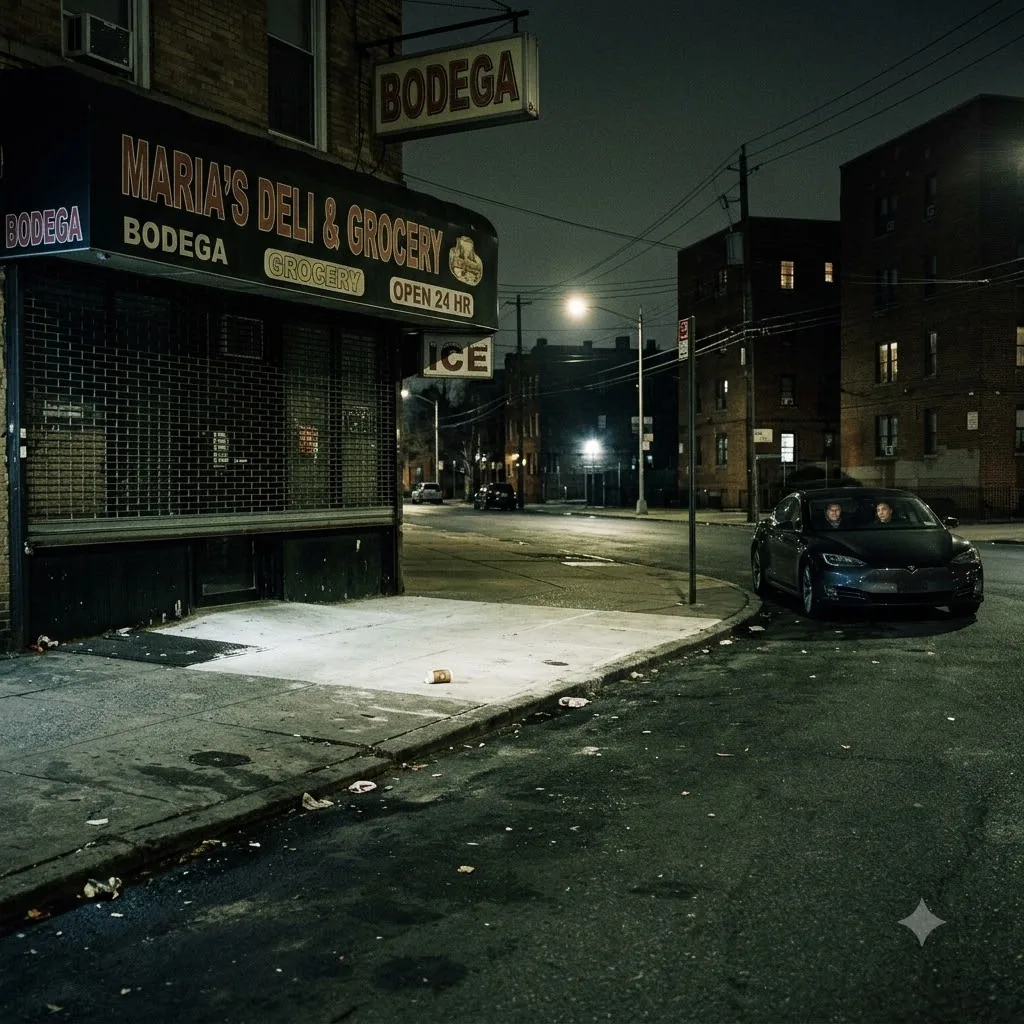
Mateo stepped onto the perfectly clear, heavily protected square of concrete outside his front door. A brand-new commercial ice machine sat firmly on the pavement, a shiny, state-of-the-art model mandated by the appellate court judge who had finally, definitively ruled in Mateo’s favor. Julian had been forced to purchase it to replace the stolen one before fleeing the neighborhood. It was a beautiful, stainless-steel piece of equipment, but it was currently unplugged. Mateo couldn’t afford the electricity to run the compressor, let alone the wholesale cost of the bagged ice to fill it.
He walked through the glass double doors, pausing to look at the center pane. His grandfather’s hand-painted logo was still there, permanently missing the large, jagged flake of gold and red paint ripped away by Julian’s industrial tape. Right below it, taped carefully to the inside of the glass, was the final court decree. It legally cemented the bodega’s exterior rights and shielded the store from eviction or aesthetic ordinances for the next decade.
Mateo had won. He had stood his ground against Julian’s weaponized wealth, enduring an agonizing barrage of endless legal motions, retaliatory city health inspections, and frivolous appeals. Julian had kept his promise to bleed the corner store dry. The cafe owner had eventually sold his pristine commercial space at a massive loss and moved away, disgusted by his inability to build his patio, but not before dragging Mateo through thirty-six months of relentless, suffocating litigation designed specifically to break him.
Mateo flipped the main breaker switch behind the counter. Only half the fluorescent tubes flickered to life, buzzing with a weak, sickly yellow light. He walked down the first aisle, his worn work boots scuffing against the dull linoleum. The shelves were a vast, terrifying expanse of empty white metal. Where there used to be vibrant, towering rows of canned goods, imported spices, and brightly colored cereal boxes, there were now only a few scattered cans of dusty soup and single rolls of paper towels, spaced far apart to make the glaring gaps look slightly less severe.
Without the daily foot traffic, the perishable inventory had slowly expired. Without fresh inventory, the neighborhood customers had quietly stopped coming. Every single dollar the store had generated over the past three years had been siphoned directly into survival. Diane had charged him a fraction of her usual corporate rate, but the sheer volume of filing fees, expert historical witnesses, and structural engineering reports required to defeat Julian’s high-priced legal team had entirely hollowed out Mateo’s life savings. He had mortgaged his house, emptied his grandfather’s retirement account, and eventually stopped paying his suppliers entirely.
Hector’s familiar, battered produce truck hadn’t rumbled down this street in fourteen months. There was nothing left for him to deliver.
Mateo leaned heavily against the edge of the dark deli counter, closing his eyes as he waited for a sharp, dizzying pain in his chest to subside. His clothes hung loosely off his thinning frame. The chronic stress of waiting for the next legal blow, the sleepless nights staring at court summons on his kitchen table, and the skipped meals to pay for printing fees had aged him two decades in three years. His doctor had warned him about his blood pressure, about the severe warning signs his heart was sending him, but court dates and injunction deadlines didn’t wait for cardiology appointments.
He pushed himself off the cold glass of the empty meat display and walked slowly back to the front door, staring out through the glass. The sidewalk was his. The commercial right of way was completely unrestricted. The city could never touch his exterior equipment, and no neighborhood block association could ever fine him for a smudge on the pavement. He had successfully defended his grandfather’s legacy and secured the physical ground the store stood on for the next generation.
But as he looked out at the barren, silent street, he realized the legal victory was entirely hollow. The soul of the bodega-the chaotic, vibrant morning rushes, the warm smell of fresh coffee, the neighbors arguing and laughing by the newspaper rack-was gone, buried permanently under a mountain of legal briefs and court transcripts. Mateo slowly lowered himself onto an overturned plastic milk crate near the door, wrapping his thin arms around his chest to ward off the chill. He sat alone in the dim, flickering light, the undisputed king of an empty, bankrupt graveyard, waiting for customers he knew would never arrive.