Story code: ST-000574
Part 1: The Forty-Seventh Notice
The heavy envelope dropped through the mail slot, hitting the hardwood floor with a thick, authoritative smack. Elias stood in the hallway, his breathing shallow, staring at the crisp white rectangle. He did not want to pick it up. He already knew the contents. He crouched, his knees popping in the quiet house, and retrieved the letter. His fingers fumbled with the flap, tearing the edge raggedly to reveal the gold-embossed seal of the Oakridge Estates Homeowners Association.
Notice of Violation Forty-Seven.
The bold red ink seemed to vibrate on the page. The accumulating balance sat exactly one hundred dollars higher than yesterday, resting now at a staggering four thousand seven hundred dollars. Below the balance, a new paragraph had been added in aggressive, underlined type. The association legal counsel had been authorized to begin foreclosure proceedings on the property by the end of the week if the exterior elevation was not immediately brought into compliance.
Elias felt a cold sweat break across his forehead. A sharp, radiating pain shot up his jaw from weeks of unconsciously grinding his teeth. He pressed the heels of his hands hard against his eyes, trying to force back the dizzying wave of panic. They were going to take his house over a shade of paint.
He pushed the front door open and walked out into the blinding midday sun. He stood on the concrete walkway, staring at the front of his single-story ranch. Six weeks ago, he had painstakingly painted the entire exterior. He had followed the community guidelines to the letter, selecting a pre-approved neutral tone named Desert Sand.
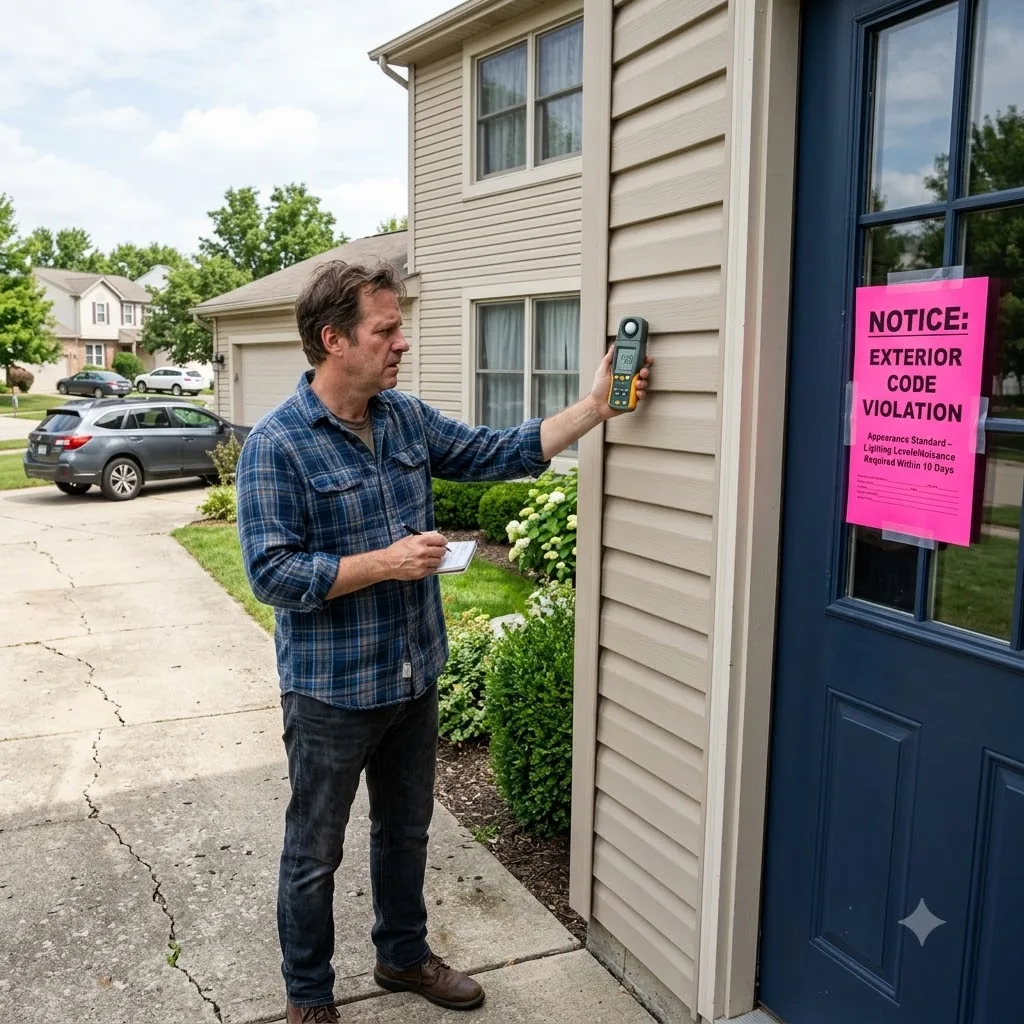
He walked into the garage and retrieved a rented handheld spectrophotometer from his workbench. The heavy, industrial-grade device cost him seventy dollars a day, a desperate expense to prove his compliance. He carried it to the front wall, pressing the sensor flat against the textured stucco beside the bay window. He squeezed the trigger. The digital screen flashed, processing the optical data before displaying the Light Reflectance Value.
It read 45.2.
Elias pulled a crumpled printout of the community architectural guidelines from his back pocket. The text clearly mandated that all exterior wall surfaces must maintain a Light Reflectance Value between forty and fifty. His house was perfectly, mathematically situated in the dead center of the acceptable range. He moved to the other side of the door, pressing the sensor against the wall again. 45.1. He checked the side of the garage. 45.3.
There was no deviation. The Desert Sand paint was exactly what he had submitted for approval. Yet, the HOA President had unilaterally declared that the paint carried an unauthorized undertone in the late afternoon light, a subjective ruling that immediately triggered the daily fines. Elias rubbed his thumb over the digital readout of the spectrophotometer. Science and geometry meant nothing to a petty tyrant with a clipboard.
He walked back into the garage and stared at the stack of five-gallon buckets huddled in the corner. Repainting the house would cost him another three thousand dollars in materials and labor, money he simply did not have. Worse, there was absolutely no guarantee the President would not invent a new violation for whatever color he chose next. The foreclosure notice was not a warning. It was a mechanism of forced removal.
Elias walked back into the house, leaving the spectrophotometer on the kitchen counter. He went into his small office and knelt beside the heavy metal filing cabinet in the corner. He bypassed the top drawer containing the recent, endlessly revised rulebooks and yanked open the bottom drawer. He reached past his tax returns and pulled out a massive, dust-covered binder.
It was the foundational 1998 Oakridge Estates Charter. This was the original document, drafted by the developers when the neighborhood was just dirt roads and surveyor stakes.
He hauled the binder onto his desk, the metal rings clanking as he opened it. The pages were yellowed at the edges, filled with the dense, uncompromising legalese of a bygone era. Elias sat down and began to read. He skipped past the zoning definitions and the landscaping easements, his eyes tracking down columns of text. He needed something, anything, to halt the foreclosure.
Hours ticked by. The sunlight creeping across his desk faded into long, gray shadows. He flipped to page forty-two, a section titled Material Alterations and Original Surfaces.
His eyes scanned the third paragraph. His finger slowed, then stopped completely.
He leaned closer to the page, his breath catching in his throat. He read the dense block of text again. He reached for a yellow highlighter in his pen cup, uncapped it with his thumb, and dragged the fluorescent tip across a single, buried sentence. The ink bled slightly into the old paper, illuminating the words in bright yellow.
Elias did not look back at the letter from the lawyers. He did not look at the spectrophotometer resting in the kitchen. He stood up from his desk and walked straight out to the garage. He bypassed the stacks of Desert Sand paint buckets entirely. Instead, he reached into the far corner and grabbed the heavy, coiled black hose of his industrial power washer, dragging the massive machine out onto the driveway.
The heavy envelope dropped through the mail slot, hitting the hardwood floor with a thick, authoritative smack. Elias stood in the hallway, his breathing shallow, staring at the crisp white rectangle. He did not want to pick it up. He already knew the contents. He crouched, his knees popping in the quiet house, and retrieved the letter. His fingers fumbled with the flap, tearing the edge raggedly to reveal the gold-embossed seal of the Oakridge Estates Homeowners Association.
Notice of Violation Forty-Seven.
The bold red ink seemed to vibrate on the page. The accumulating balance sat exactly one hundred dollars higher than yesterday, resting now at a staggering four thousand seven hundred dollars. Below the balance, a new paragraph had been added in aggressive, underlined type. The association legal counsel had been authorized to begin foreclosure proceedings on the property by the end of the week if the exterior elevation was not immediately brought into compliance.
Elias felt a cold sweat break across his forehead. A sharp, radiating pain shot up his jaw from weeks of unconsciously grinding his teeth. He pressed the heels of his hands hard against his eyes, trying to force back the dizzying wave of panic. They were going to take his house over a shade of paint.
He pushed the front door open and walked out into the blinding midday sun. He stood on the concrete walkway, staring at the front of his single-story ranch. Six weeks ago, he had painstakingly painted the entire exterior. He had followed the community guidelines to the letter, selecting a pre-approved neutral tone named Desert Sand.
He walked into the garage and retrieved a rented handheld spectrophotometer from his workbench. The heavy, industrial-grade device cost him seventy dollars a day, a desperate expense to prove his compliance. He carried it to the front wall, pressing the sensor flat against the textured stucco beside the bay window. He squeezed the trigger. The digital screen flashed, processing the optical data before displaying the Light Reflectance Value.
It read 45.2.
Elias pulled a crumpled printout of the community architectural guidelines from his back pocket. The text clearly mandated that all exterior wall surfaces must maintain a Light Reflectance Value between forty and fifty. His house was perfectly, mathematically situated in the dead center of the acceptable range. He moved to the other side of the door, pressing the sensor against the wall again. 45.1. He checked the side of the garage. 45.3.
There was no deviation. The Desert Sand paint was exactly what he had submitted for approval. Yet, the HOA President had unilaterally declared that the paint carried an unauthorized undertone in the late afternoon light, a subjective ruling that immediately triggered the daily fines. Elias rubbed his thumb over the digital readout of the spectrophotometer. Science and geometry meant nothing to a petty tyrant with a clipboard.
He walked back into the garage and stared at the stack of five-gallon buckets huddled in the corner. Repainting the house would cost him another three thousand dollars in materials and labor, money he simply did not have. Worse, there was absolutely no guarantee the President would not invent a new violation for whatever color he chose next. The foreclosure notice was not a warning. It was a mechanism of forced removal.
Elias walked back into the house, leaving the spectrophotometer on the kitchen counter. He went into his small office and knelt beside the heavy metal filing cabinet in the corner. He bypassed the top drawer containing the recent, endlessly revised rulebooks and yanked open the bottom drawer. He reached past his tax returns and pulled out a massive, dust-covered binder.
It was the foundational 1998 Oakridge Estates Charter. This was the original document, drafted by the developers when the neighborhood was just dirt roads and surveyor stakes.
He hauled the binder onto his desk, the metal rings clanking as he opened it. The pages were yellowed at the edges, filled with the dense, uncompromising legalese of a bygone era. Elias sat down and began to read. He skipped past the zoning definitions and the landscaping easements, his eyes tracking down columns of text. He needed something, anything, to halt the foreclosure.
Hours ticked by. The sunlight creeping across his desk faded into long, gray shadows. He flipped to page forty-two, a section titled Material Alterations and Original Surfaces.
His eyes scanned the third paragraph. His finger slowed, then stopped completely.
He leaned closer to the page, his breath catching in his throat. He read the dense block of text again. He reached for a yellow highlighter in his pen cup, uncapped it with his thumb, and dragged the fluorescent tip across a single, buried sentence. The ink bled slightly into the old paper, illuminating the words in bright yellow.
Elias did not look back at the letter from the lawyers. He did not look at the spectrophotometer resting in the kitchen. He stood up from his desk and walked straight out to the garage. He bypassed the stacks of Desert Sand paint buckets entirely. Instead, he reached into the far corner and grabbed the heavy, coiled black hose of his industrial power washer, dragging the massive machine out onto the driveway.