Story code: ST-000574
Part 4: The Sanctuary Defeated
The heavy envelope dropped through the mail slot, hitting the hardwood floor with a soft, sliding hiss rather than an authoritative smack. Elias sat in his armchair in the dim living room, staring at the white rectangle for twenty minutes before his body allowed him to move. His right shoulder burned with a deep, electric ache, a lingering souvenir from hours of fighting the four-thousand-pound recoil of the industrial power washer. His jaw popped, misaligned and sore from weeks of nocturnal grinding.
He took a slow breath, forced himself upright, and shuffled to the hallway. His boots felt like they were filled with wet cement.
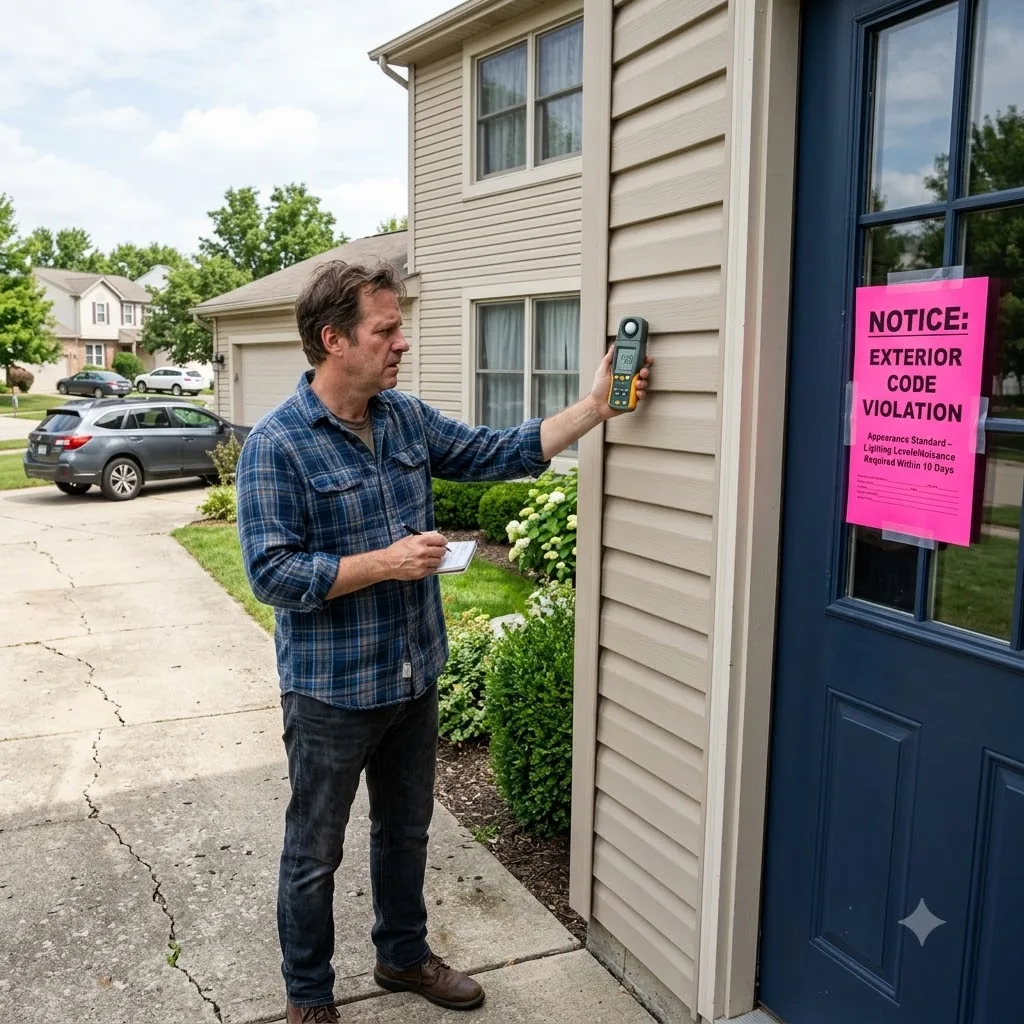
When his trembling fingers tore the flap, the paper inside lacked the aggressive red ink of Notice Forty-Seven. It was a standard, black-and-white memorandum from the Oakridge Estates Homeowners Association, signed by the Vice President.
Effective immediately, Arthur Pendelton had resigned from the board due to “unforeseen personal health priorities.” Furthermore, a special emergency executive session had resulted in the unilateral dismissal of all outstanding compliance fines, liens, and injunctions against Elias’s property. The board cited a “clerical reevaluation of foundational aesthetic mandates.”
Elias’s balance was zero. The foreclosure was canceled. He was keeping his house.
He let the paper flutter to the kitchen counter. There was no surge of triumph, no rush of vindication. There was only a hollow, ringing exhaustion. He walked to the sink and gripped the edge of the granite, waiting for the violent tremors in his forearms to subside. The adrenaline that had fueled his frantic, manic plunge into the 1998 charter had completely evaporated, leaving behind a profound physical crash. He felt brittle, as if his bones were made of chalk and his tendons of frayed wire. He fumbled with a bottle of ibuprofen, managing to swallow three pills dry because his hands were shaking too violently to fill a glass of water without dropping it.
He walked to the front window and pulled back the curtain.
His house was a grotesque patchwork in the morning light. The bottom half of the garage and a jagged section beneath the bay window were the stark, weathered limestone gray of the original 1998 builder-grade stucco. The rest of the facade clung to the smooth, pristine Desert Sand paint he had painstakingly applied six weeks ago. It looked like a rotting tooth in a row of perfect porcelain veneers.
But he was legally immune. He didn’t even have to finish washing it if he didn’t want to. The board was so terrified of him initiating a class-action enforcement of the bankrupt Vanguard Chemical clause that they wouldn’t dare send him another piece of mail for the rest of his natural life.
Elias opened the front door and stepped out onto the concrete walkway. The sun was bright, reflecting harshly off the dried, muddy stains the runoff had left all over his driveway.
Across the street, Mrs. Gable was watering her petunias. She had lived in Oakridge Estates for twelve years. Last Christmas, she had brought Elias a tin of snickerdoodles when she noticed he was spending the holidays alone. Elias raised a heavy, aching arm to wave.
Mrs. Gable froze. Her eyes darted from Elias to the jagged, half-stripped wall of his house. She didn’t wave back. Instead, she dropped her plastic watering can on the grass, spun on her heel, and hurried inside, pulling her heavy front door shut with a definitive click. A moment later, the front window blinds snapped completely shut.
Elias slowly lowered his hand. The silence of the cul-de-sac felt entirely different today. It wasn’t the quiet of a peaceful suburban morning; it was the tense, breathless silence of a perimeter watch.
A man jogging with a golden retriever approached the corner. Elias recognized him instantly-David, the board secretary who had nearly drafted the final lien. The moment David saw Elias standing on his walkway, he yanked the dog’s leash, crossing abruptly to the opposite side of the street and turning his head to stare intently at the pavement, increasing his pace to a near-sprint until he was safely past the property line.
Elias understood then. He hadn’t just defeated Arthur. He had shattered the illusion of the entire community. He had weaponized the very rules they used to protect their pristine, manufactured paradise, and in doing so, he had become the monster at the end of the street. To them, he wasn’t a desperate homeowner who had fought off an unjust foreclosure. He was the unstable man with an industrial power washer and a spectrophotometer who possessed the mathematical proof to bankrupt any of them at a moment’s notice. He was a walking fifty-four-thousand-dollar liability.
They didn’t respect his victory. They were terrified of him.
Elias turned back to face his house. The physical effort to strip the rest of the paint seemed utterly impossible now. The rented power washer still sat on the driveway, its black hose coiled like a dead snake. He would have to return it by noon to avoid another seventy-dollar fee. He didn’t have the energy to start the engine, let alone brace against the brutal pressure for another six hours to finish the job.
He walked inside and closed the door, sliding the deadbolt into place. He looked at the heavy, dust-covered 1998 binder still sitting on his kitchen counter, right next to the notice of his zeroed balance. He had saved his property, but the sanctuary he had fought so desperately to protect was gone forever. He was marooned in an ugly house he could barely look at, surrounded by neighbors who wished he would just disappear.