Story code: ST-000594
Part 1: The Neon Threat
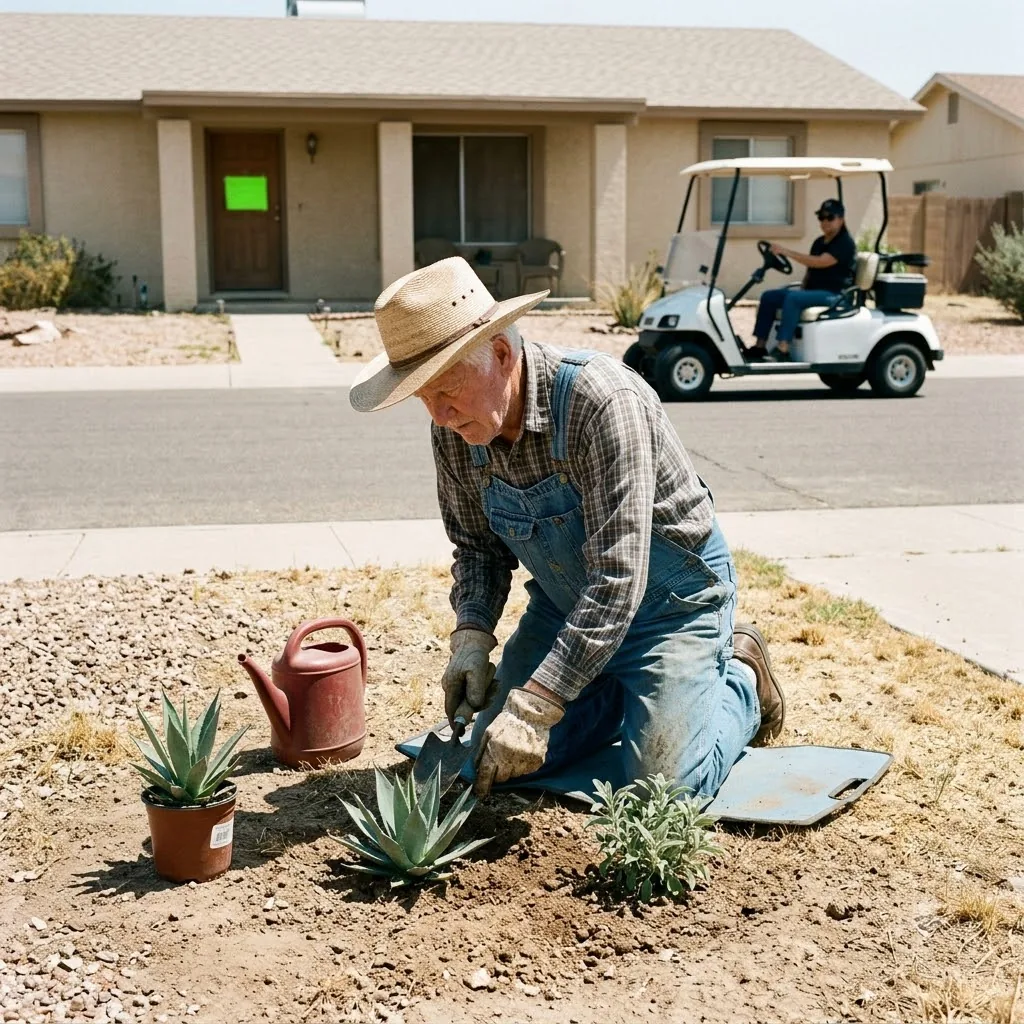
Elias drove the shovel into the baked clay, his shoulders screaming in protest as the metal edge scraped against hidden rocks. Sweat stung his eyes, blurring the patch of dead, yellowed turf he was trying to tear away. He leaned his entire weight onto the shovel handle, forcing the blade deep enough to uproot the stubborn, brittle roots of the dying lawn. The August heat radiated from the soil, but he kept working, dropping another bundle of native sage into the freshly turned earth. This drought-resistant brush was the only way to stop the bleeding. Last month’s water bill had drained the final remnants of his emergency savings, leaving him with a stark choice between keeping the lawn green or keeping the electricity on. The sage required almost no water, a permanent fix to a financial leak that threatened to wash away the home he and his late wife had built.
He wiped his forehead with the back of a grit-covered glove, surveying the front yard. Half of it was still a wasteland of scorched Bermuda grass, but the right side was now lined with the pale, dusty green of the new native plants. It was pure survival. He tamped down the dirt around the latest root ball, his lungs burning with every breath. He gathered his empty nursery pots, stacking them mechanically. The physical pain was a relief compared to the crushing anxiety of the past few months. He dragged his tools toward the garage, intent on getting a glass of ice water and resting his back for ten minutes.
As Elias approached the small concrete porch, a flash of unnatural color caught his eye.
A neon-green envelope was taped perfectly over the glass peephole of his front door.
Elias stopped on the bottom step. His stomach dropped, a familiar dread spiking through his chest. He knew exactly what that bright, acidic shade of paper meant. He dropped the plastic pots on the concrete, not caring as they scattered across the porch. He stepped up and peeled the heavy packing tape off the wood, the adhesive pulling a tiny fleck of white paint with it. The envelope felt heavy in his dirt-caked hands.
He tore the flap open, pulling out the single sheet of thick cardstock. The header bore the embossed crest of the Oakridge Homeowners Association. Below it, typed in rigid black ink, was a citation for unauthorized landscaping modifications and failure to maintain an approved turf standard.
At the bottom, bolded and underlined, was the penalty amount. Five hundred dollars.
Elias stared at the number, his thumb smudging the ink with sweat and soil. It was the third neon-green notice this week. Monday brought a fine for dead patches in the lawn. Wednesday brought a fine for leaving a shovel visible near the side gate. Now, Friday, another five hundred dollars for trying to fix the very problem they cited him for on Monday. That made fifteen hundred dollars in five days. The bylaws he had skimmed in a panic on Wednesday night stated that any balance over two thousand dollars was grounds for the HOA to initiate foreclosure proceedings. They were bleeding him out deliberately, stacking the violations faster than any retired man on a fixed income could ever hope to pay them.
He crushed the thick paper in his fist. The injustice of it choked him, tight and suffocating in the humid afternoon air. He had lived in this house for thirty years. He paid his dues on time, kept quietly to himself, and bothered no one. Now, because he refused to bankrupt himself watering a doomed lawn, they were manufacturing a paper trail to take his home.
The hairs on the back of his neck prickled. The quiet of the street suddenly felt heavy, charged with an unseen tension.
Elias turned slowly away from the front door. He looked past his newly planted sage, past the cracked sidewalk, down to the intersection at the end of the cul-de-sac.
A white golf cart sat idling in the shade of a large oak tree.
It was parked half on the asphalt and half on the curb, facing his property. Through the glare of the windshield, Elias could see the rigid posture of the HOA president behind the steering wheel. The man was not looking at a phone. He was not writing on a clipboard. He was sitting in absolute stillness, his head angled directly toward Elias’s porch. The faint, rhythmic hum of the electric motor drifted up the street, a low vibration that seemed to rattle the dry leaves on the pavement. Elias stood paralyzed with his fist wrapped around the crushed citation, locking eyes with the shadow behind the glass as the golf cart held its position.
Elias drove the shovel into the baked clay, his shoulders screaming in protest as the metal edge scraped against hidden rocks. Sweat stung his eyes, blurring the patch of dead, yellowed turf he was trying to tear away. He leaned his entire weight onto the shovel handle, forcing the blade deep enough to uproot the stubborn, brittle roots of the dying lawn. The August heat radiated from the soil, but he kept working, dropping another bundle of native sage into the freshly turned earth. This drought-resistant brush was the only way to stop the bleeding. Last month’s water bill had drained the final remnants of his emergency savings, leaving him with a stark choice between keeping the lawn green or keeping the electricity on. The sage required almost no water, a permanent fix to a financial leak that threatened to wash away the home he and his late wife had built.
He wiped his forehead with the back of a grit-covered glove, surveying the front yard. Half of it was still a wasteland of scorched Bermuda grass, but the right side was now lined with the pale, dusty green of the new native plants. It was pure survival. He tamped down the dirt around the latest root ball, his lungs burning with every breath. He gathered his empty nursery pots, stacking them mechanically. The physical pain was a relief compared to the crushing anxiety of the past few months. He dragged his tools toward the garage, intent on getting a glass of ice water and resting his back for ten minutes.
As Elias approached the small concrete porch, a flash of unnatural color caught his eye.
A neon-green envelope was taped perfectly over the glass peephole of his front door.
Elias stopped on the bottom step. His stomach dropped, a familiar dread spiking through his chest. He knew exactly what that bright, acidic shade of paper meant. He dropped the plastic pots on the concrete, not caring as they scattered across the porch. He stepped up and peeled the heavy packing tape off the wood, the adhesive pulling a tiny fleck of white paint with it. The envelope felt heavy in his dirt-caked hands.
He tore the flap open, pulling out the single sheet of thick cardstock. The header bore the embossed crest of the Oakridge Homeowners Association. Below it, typed in rigid black ink, was a citation for unauthorized landscaping modifications and failure to maintain an approved turf standard.
At the bottom, bolded and underlined, was the penalty amount. Five hundred dollars.
Elias stared at the number, his thumb smudging the ink with sweat and soil. It was the third neon-green notice this week. Monday brought a fine for dead patches in the lawn. Wednesday brought a fine for leaving a shovel visible near the side gate. Now, Friday, another five hundred dollars for trying to fix the very problem they cited him for on Monday. That made fifteen hundred dollars in five days. The bylaws he had skimmed in a panic on Wednesday night stated that any balance over two thousand dollars was grounds for the HOA to initiate foreclosure proceedings. They were bleeding him out deliberately, stacking the violations faster than any retired man on a fixed income could ever hope to pay them.
He crushed the thick paper in his fist. The injustice of it choked him, tight and suffocating in the humid afternoon air. He had lived in this house for thirty years. He paid his dues on time, kept quietly to himself, and bothered no one. Now, because he refused to bankrupt himself watering a doomed lawn, they were manufacturing a paper trail to take his home.
The hairs on the back of his neck prickled. The quiet of the street suddenly felt heavy, charged with an unseen tension.
Elias turned slowly away from the front door. He looked past his newly planted sage, past the cracked sidewalk, down to the intersection at the end of the cul-de-sac.
A white golf cart sat idling in the shade of a large oak tree.
It was parked half on the asphalt and half on the curb, facing his property. Through the glare of the windshield, Elias could see the rigid posture of the HOA president behind the steering wheel. The man was not looking at a phone. He was not writing on a clipboard. He was sitting in absolute stillness, his head angled directly toward Elias’s porch. The faint, rhythmic hum of the electric motor drifted up the street, a low vibration that seemed to rattle the dry leaves on the pavement. Elias stood paralyzed with his fist wrapped around the crushed citation, locking eyes with the shadow behind the glass as the golf cart held its position.