Story code: ST-001784
Part 1: The Stolen Sandbox
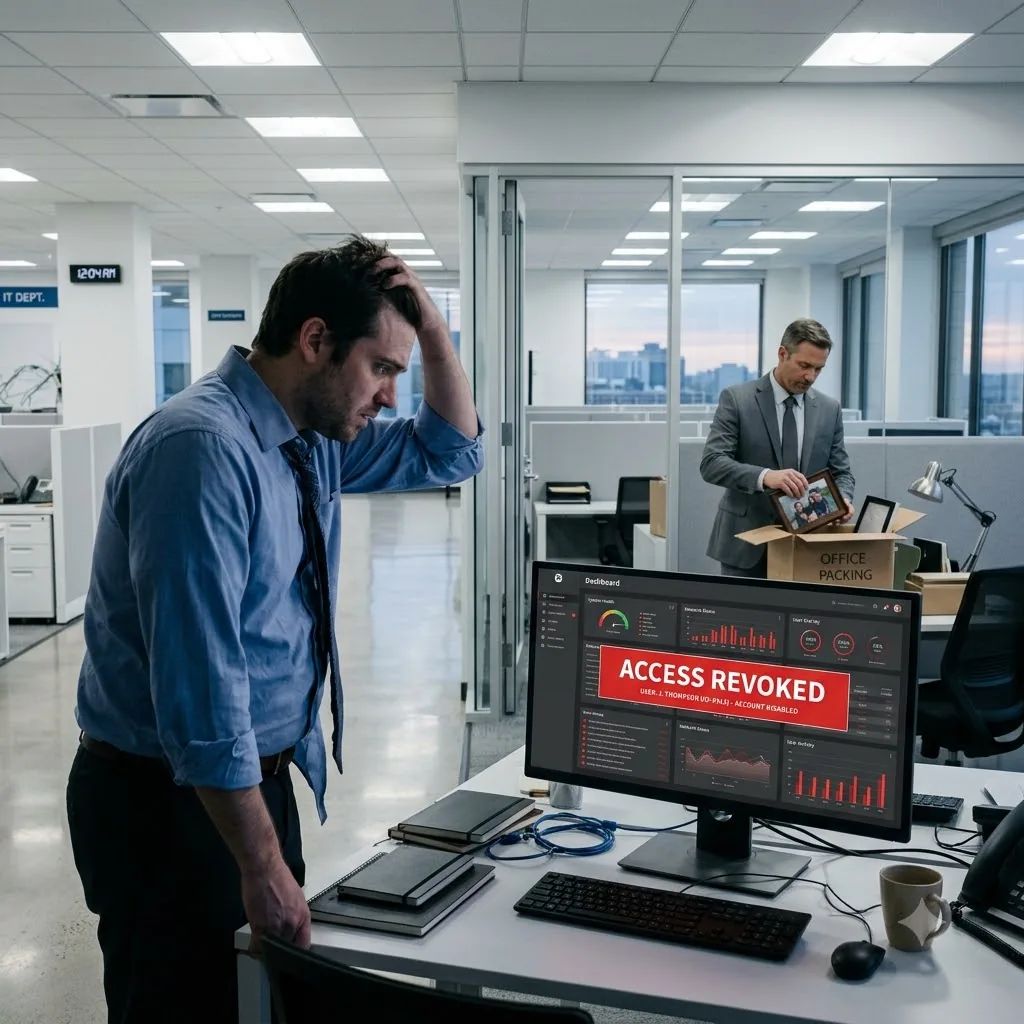
Marcus hit the enter key to execute the final predictive script, the one that had consumed his evenings and weekends for six grueling months, but the terminal threw a bright red text block across his secondary monitor. `ACCESS DENIED. CREDENTIALS REVOKED.` He blinked at the glare of the screen in the fluorescent-lit bullpen. It was six in the morning on a Tuesday. The IT department was not even awake yet. He typed his password again, forcing his fingers to strike each key with deliberate precision, and jammed the enter key a second time. The screen flashed white, bypassing his terminal entirely and forcing a browser window to open in full-screen mode.
A sleek, dark-mode dashboard materialized, stamped with the silver crest of the enterprise’s new multi-million-dollar AI vendor. Marcus stared at the animated charts mapping out the quarterly retention predictions he had been trying to compile manually. The graphics were stunning, miles beyond his own rudimentary Python plots. Then he looked at the raw data tables crawling along the bottom ticker. The lead column header read `pred_valume_q3`.
Marcus leaned so close to the monitor his breath fogged the glass. It said `valume`. With an A. He dragged his cursor over to the secondary axis label. It read `usr_churn_rt_fianl`.
Those were not standard industry terms. Those were his personal, dyslexic typos from a local study directory he had never uploaded to the shared network. He had spent half the night running simulations on his personal laptop at his kitchen table, saving files into a folder labeled ‘sandbox’, and now those exact misspelled variables were hardcoded into the interface of a massive, supposedly proprietary AI suite.
He needed to confirm what he was seeing. Marcus pulled up his network adapter settings. His machine was definitely on the internal corporate LAN, hardwired into the wall. He tried to open his local directory to compare the timestamps, but a sweeping administrator override had locked his physical machine. The sleek dashboard pulsed on the screen, updating in real-time, eating the company data and spitting out perfect forecasts using the exact logic framework he had built by trial and error on his couch.
The AI vendor, Synthetix, had pitched the executive board last month. Marcus had been in the back row taking notes, listening to them promise a bespoke neural network trained on decades of industry data. They had charged seven figures for the deployment. Marcus scrolled down the dashboard, his hands shaking as he spotted `tmp_hld_array_2`. It was a scrap variable he had created at two in the morning three days ago to bypass a stubborn date format parsing error. It was right there, sitting naked in the production environment of a multi-million-dollar software suite.
He yanked his security badge off his belt and slammed it onto the desk. The plastic clattered loudly in the silent office. Someone had taken his code. Not just the logic, but the literal, messy, misspelled keystrokes from his private hard drive, and they had fed it directly into the company’s new flagship automated system. And then they had locked him out of his own workstation.
He needed to find Elias. Elias, the Director of Analytics, had encouraged Marcus to upskill. He was the one who approved the overtime for Marcus to learn predictive modeling so they would not have to outsource their entire department. Elias would know how to pull the network audit logs. Elias would know who authorized the Synthetix deployment overnight and exactly how they had breached Marcus’s personal sandbox.
Marcus shoved his chair back. The wheels caught on the low-pile carpet, nearly tipping him over. He ignored it and sprinted down the main corridor. The lights in the executive wing were motion-activated. They snapped on in rapid succession as he hurried past the glass-walled conference rooms, throwing harsh shadows against the frosted partitions. The silence of the building felt heavier now, oppressive and mechanical, as if the servers humming in the basement were the only things actually working.
Elias always came in at five-thirty to read the overseas market reports. The heavy oak door to his corner office was cracked open, spilling a wedge of warm yellow light into the dim hallway. Marcus did not bother knocking. He pushed the door wide and stepped inside, the words already forming in his throat to explain the stolen variables, the locked terminal, the undeniable typos displayed on the vendor’s dashboard.
The words died in his throat.
Elias was not sitting at his mahogany desk. The massive dual monitors were powered down. Instead, the Director of Analytics was standing by the window in his heavy winter overcoat, folding a framed photograph of his young daughter into a cardboard banker’s box. Three other identical boxes sat on the floor, taped shut and stacked haphazardly against the wall. The bookshelves were completely bare. The industry awards and engraved glass plaques that usually lined the credenza were gone.
Elias froze at the sound of the door. He looked up, his face gray and drawn under the recessed lighting. A heavy roll of packing tape dangled from his right hand. He stared at Marcus, his jaw tight, his eyes darting to the hallway behind Marcus as if expecting security guards to be standing there.
Marcus pointed back toward the bullpen, trying to force his voice past the sudden, suffocating tightness in his chest. He managed to say Elias’s name, stepping forward to explain the massive dashboard running on his computer.
Elias dropped the roll of packing tape into the box and raised a trembling hand to stop him.
Marcus hit the enter key to execute the final predictive script, the one that had consumed his evenings and weekends for six grueling months, but the terminal threw a bright red text block across his secondary monitor. `ACCESS DENIED. CREDENTIALS REVOKED.` He blinked at the glare of the screen in the fluorescent-lit bullpen. It was six in the morning on a Tuesday. The IT department was not even awake yet. He typed his password again, forcing his fingers to strike each key with deliberate precision, and jammed the enter key a second time. The screen flashed white, bypassing his terminal entirely and forcing a browser window to open in full-screen mode.
A sleek, dark-mode dashboard materialized, stamped with the silver crest of the enterprise’s new multi-million-dollar AI vendor. Marcus stared at the animated charts mapping out the quarterly retention predictions he had been trying to compile manually. The graphics were stunning, miles beyond his own rudimentary Python plots. Then he looked at the raw data tables crawling along the bottom ticker. The lead column header read `pred_valume_q3`.
Marcus leaned so close to the monitor his breath fogged the glass. It said `valume`. With an A. He dragged his cursor over to the secondary axis label. It read `usr_churn_rt_fianl`.
Those were not standard industry terms. Those were his personal, dyslexic typos from a local study directory he had never uploaded to the shared network. He had spent half the night running simulations on his personal laptop at his kitchen table, saving files into a folder labeled ‘sandbox’, and now those exact misspelled variables were hardcoded into the interface of a massive, supposedly proprietary AI suite.
He needed to confirm what he was seeing. Marcus pulled up his network adapter settings. His machine was definitely on the internal corporate LAN, hardwired into the wall. He tried to open his local directory to compare the timestamps, but a sweeping administrator override had locked his physical machine. The sleek dashboard pulsed on the screen, updating in real-time, eating the company data and spitting out perfect forecasts using the exact logic framework he had built by trial and error on his couch.
The AI vendor, Synthetix, had pitched the executive board last month. Marcus had been in the back row taking notes, listening to them promise a bespoke neural network trained on decades of industry data. They had charged seven figures for the deployment. Marcus scrolled down the dashboard, his hands shaking as he spotted `tmp_hld_array_2`. It was a scrap variable he had created at two in the morning three days ago to bypass a stubborn date format parsing error. It was right there, sitting naked in the production environment of a multi-million-dollar software suite.
He yanked his security badge off his belt and slammed it onto the desk. The plastic clattered loudly in the silent office. Someone had taken his code. Not just the logic, but the literal, messy, misspelled keystrokes from his private hard drive, and they had fed it directly into the company’s new flagship automated system. And then they had locked him out of his own workstation.
He needed to find Elias. Elias, the Director of Analytics, had encouraged Marcus to upskill. He was the one who approved the overtime for Marcus to learn predictive modeling so they would not have to outsource their entire department. Elias would know how to pull the network audit logs. Elias would know who authorized the Synthetix deployment overnight and exactly how they had breached Marcus’s personal sandbox.
Marcus shoved his chair back. The wheels caught on the low-pile carpet, nearly tipping him over. He ignored it and sprinted down the main corridor. The lights in the executive wing were motion-activated. They snapped on in rapid succession as he hurried past the glass-walled conference rooms, throwing harsh shadows against the frosted partitions. The silence of the building felt heavier now, oppressive and mechanical, as if the servers humming in the basement were the only things actually working.
Elias always came in at five-thirty to read the overseas market reports. The heavy oak door to his corner office was cracked open, spilling a wedge of warm yellow light into the dim hallway. Marcus did not bother knocking. He pushed the door wide and stepped inside, the words already forming in his throat to explain the stolen variables, the locked terminal, the undeniable typos displayed on the vendor’s dashboard.
The words died in his throat.
Elias was not sitting at his mahogany desk. The massive dual monitors were powered down. Instead, the Director of Analytics was standing by the window in his heavy winter overcoat, folding a framed photograph of his young daughter into a cardboard banker’s box. Three other identical boxes sat on the floor, taped shut and stacked haphazardly against the wall. The bookshelves were completely bare. The industry awards and engraved glass plaques that usually lined the credenza were gone.
Elias froze at the sound of the door. He looked up, his face gray and drawn under the recessed lighting. A heavy roll of packing tape dangled from his right hand. He stared at Marcus, his jaw tight, his eyes darting to the hallway behind Marcus as if expecting security guards to be standing there.
Marcus pointed back toward the bullpen, trying to force his voice past the sudden, suffocating tightness in his chest. He managed to say Elias’s name, stepping forward to explain the massive dashboard running on his computer.
Elias dropped the roll of packing tape into the box and raised a trembling hand to stop him.