Story code: ST-000683
Part 1: The Denial Algorithm
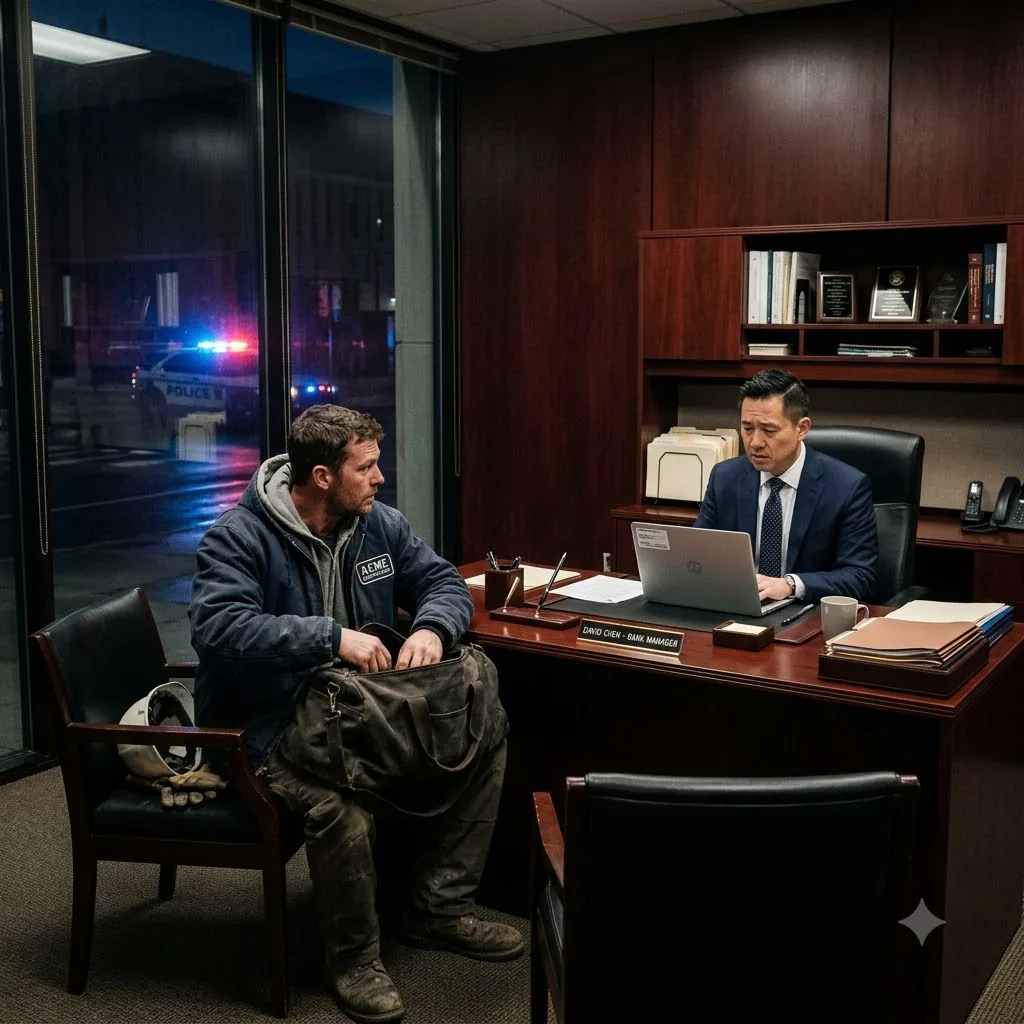
Red and blue strobes sliced through the frosted glass of Sarah’s office, painting the sterile white walls with the frantic rhythm of a lockdown drill. She kept her eyes glued to the dual monitors, letting the algorithmic risk assessment fill the heavy silence between her and the man sitting across the desk. The elementary school across the avenue ran these active threat simulations every quarter. Local police cruisers always parked just close enough to throw their emergency lights directly into the bank’s commercial lending department. The flashing colors washed out the soft, ambient glow of Sarah’s spreadsheets, turning her polished mahogany desk into a chaotic display of crimson and sapphire.
Sarah adjusted her tailored blazer and focused on the glowing red text generated by the proprietary underwriting software. The system had delivered its verdict in a fraction of a second, completely devoid of emotion or human error. She preferred it this way. The algorithm never felt guilt, never hesitated, and never had to look a local business owner in the eye while destroying their livelihood. It simply processed the variables and spat out a binary result.
Mateo sat perfectly still in the leather guest chair. He wore faded denim and a heavy canvas jacket dusted with pale gray powder, looking entirely out of place against the bank’s pristine chrome fixtures. A frayed olive-drab duffel bag rested between his scuffed steel-toe work boots. He had barely spoken since taking a seat, offering only his name and his tax identification number before falling into a stony silence.
Sarah tapped her spacebar to wake the primary monitor and began reciting the exact corporate script she had memorized over five years as a senior lending officer. She informed Mateo that the automated risk model had finished evaluating his commercial expansion application. She stated clearly that the debt-to-income ratio projected for his contracting firm fell entirely outside the acceptable parameters dictated by the regional office. She leaned on words like liability matrix and insufficient collateral thresholds to build an impenetrable wall between herself and the man sitting mere feet away.
It was a clean, objective denial. She pushed a freshly printed sheet of paper across the desk, tapping a manicured finger against the highlighted figure at the absolute bottom of the page. She emphasized that the underwriting algorithm accounted for local market volatility and current supply chain disruptions, leaving absolutely no room for a manual override. The bank could not finance his requested inventory acquisition, and the decision was final.
Usually, rejected applicants argued. They pleaded for an exception, brought up their families, or cited their long history of doing business within the community. Mateo did none of those things. He simply watched the strobe lights reflecting off her silver nameplate. The silence stretched to a point of intense discomfort. A sharp burst of electronic static echoed from a police megaphone across the street, the harsh noise muffled only slightly by the bank’s thick double-paned windows. The flashing lights intensified, catching the hard lines of Mateo’s weathered face.
Sarah interlaced her fingers over her keyboard, trying to project a sense of finality. She reiterated that the regional manager would merely rubber-stamp the system’s decision. She warned him that attempting to reapply immediately would only trigger a hard inquiry and damage his credit score further. She wanted him to stand up, take his duffel bag, and walk out of the glass doors so she could return to the predictable comfort of her spreadsheets.
Mateo finally moved, but he ignored the printed denial letter completely. He leaned forward, reaching down toward the floor. The heavy canvas of his duffel bag scraped harshly against the low-pile carpet. Sarah stiffened immediately. Her right hand drifted downward, hovering a fraction of an inch above the silent panic button mounted discreetly beneath the lip of her desk. The bank had strict protocols for irate customers, though Mateo exhibited none of the usual tells of anger. His expression remained entirely flat, unbothered by the flashing police lights illuminating the room.
The teeth of a heavy brass zipper rasped loudly in the quiet office as he opened the bag. He said nothing about the algorithm, the liability matrix, or the rejection. He simply plunged his bare hand into the dark opening of the canvas tote. Sarah held her breath, her fingers grazing the edge of the alarm button.
Mateo hoisted a dense, blocky object out of the bag and brought it upward with immense effort. He slammed it down onto the center of the pristine mahogany desk. The sheer weight of the impact rattled Sarah’s ceramic coffee mug and knocked her framed university degrees crooked against the drywall. The heavy object sat there between them, wrapped in thick industrial steel, scarred with fresh weld marks, and bristling with exposed, braided wire leads.
Red and blue strobes sliced through the frosted glass of Sarah’s office, painting the sterile white walls with the frantic rhythm of a lockdown drill. She kept her eyes glued to the dual monitors, letting the algorithmic risk assessment fill the heavy silence between her and the man sitting across the desk. The elementary school across the avenue ran these active threat simulations every quarter. Local police cruisers always parked just close enough to throw their emergency lights directly into the bank’s commercial lending department. The flashing colors washed out the soft, ambient glow of Sarah’s spreadsheets, turning her polished mahogany desk into a chaotic display of crimson and sapphire.
Sarah adjusted her tailored blazer and focused on the glowing red text generated by the proprietary underwriting software. The system had delivered its verdict in a fraction of a second, completely devoid of emotion or human error. She preferred it this way. The algorithm never felt guilt, never hesitated, and never had to look a local business owner in the eye while destroying their livelihood. It simply processed the variables and spat out a binary result.
Mateo sat perfectly still in the leather guest chair. He wore faded denim and a heavy canvas jacket dusted with pale gray powder, looking entirely out of place against the bank’s pristine chrome fixtures. A frayed olive-drab duffel bag rested between his scuffed steel-toe work boots. He had barely spoken since taking a seat, offering only his name and his tax identification number before falling into a stony silence.
Sarah tapped her spacebar to wake the primary monitor and began reciting the exact corporate script she had memorized over five years as a senior lending officer. She informed Mateo that the automated risk model had finished evaluating his commercial expansion application. She stated clearly that the debt-to-income ratio projected for his contracting firm fell entirely outside the acceptable parameters dictated by the regional office. She leaned on words like liability matrix and insufficient collateral thresholds to build an impenetrable wall between herself and the man sitting mere feet away.
It was a clean, objective denial. She pushed a freshly printed sheet of paper across the desk, tapping a manicured finger against the highlighted figure at the absolute bottom of the page. She emphasized that the underwriting algorithm accounted for local market volatility and current supply chain disruptions, leaving absolutely no room for a manual override. The bank could not finance his requested inventory acquisition, and the decision was final.
Usually, rejected applicants argued. They pleaded for an exception, brought up their families, or cited their long history of doing business within the community. Mateo did none of those things. He simply watched the strobe lights reflecting off her silver nameplate. The silence stretched to a point of intense discomfort. A sharp burst of electronic static echoed from a police megaphone across the street, the harsh noise muffled only slightly by the bank’s thick double-paned windows. The flashing lights intensified, catching the hard lines of Mateo’s weathered face.
Sarah interlaced her fingers over her keyboard, trying to project a sense of finality. She reiterated that the regional manager would merely rubber-stamp the system’s decision. She warned him that attempting to reapply immediately would only trigger a hard inquiry and damage his credit score further. She wanted him to stand up, take his duffel bag, and walk out of the glass doors so she could return to the predictable comfort of her spreadsheets.
Mateo finally moved, but he ignored the printed denial letter completely. He leaned forward, reaching down toward the floor. The heavy canvas of his duffel bag scraped harshly against the low-pile carpet. Sarah stiffened immediately. Her right hand drifted downward, hovering a fraction of an inch above the silent panic button mounted discreetly beneath the lip of her desk. The bank had strict protocols for irate customers, though Mateo exhibited none of the usual tells of anger. His expression remained entirely flat, unbothered by the flashing police lights illuminating the room.
The teeth of a heavy brass zipper rasped loudly in the quiet office as he opened the bag. He said nothing about the algorithm, the liability matrix, or the rejection. He simply plunged his bare hand into the dark opening of the canvas tote. Sarah held her breath, her fingers grazing the edge of the alarm button.
Mateo hoisted a dense, blocky object out of the bag and brought it upward with immense effort. He slammed it down onto the center of the pristine mahogany desk. The sheer weight of the impact rattled Sarah’s ceramic coffee mug and knocked her framed university degrees crooked against the drywall. The heavy object sat there between them, wrapped in thick industrial steel, scarred with fresh weld marks, and bristling with exposed, braided wire leads.