Story code: ST-001295
Part 1: The Analog Camouflage
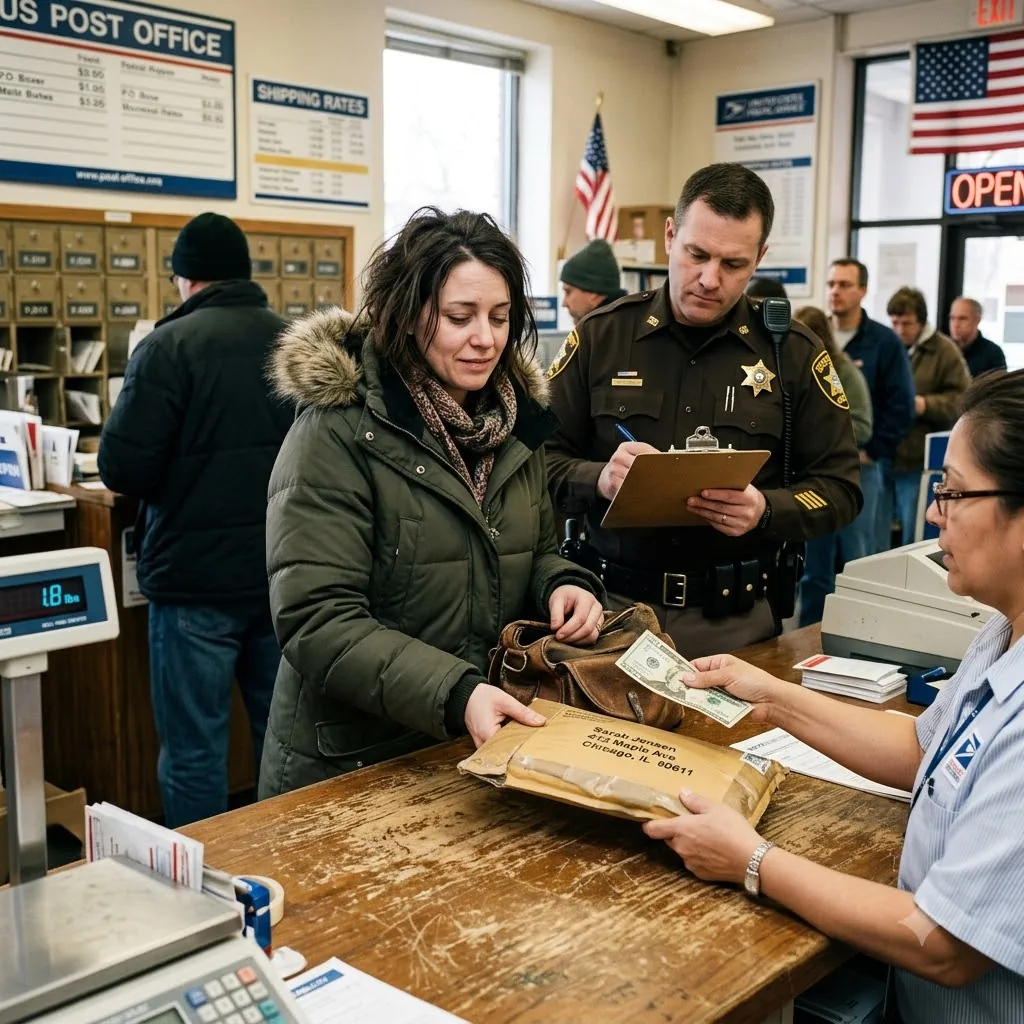
Sarah slid four crisp twenty-dollar bills across the gouged laminate counter of the Oakhaven post office, keeping her eyes fixed on the sheets of 1998 commemorative waterfowl stamps Doris was retrieving from the safe. Six padded manila envelopes rested against Sarah’s hip in a canvas tote bag, their destination labels penned in block letters using a standard-issue ballpoint. She kept her breathing shallow, letting the rhythmic thud of Doris’s date-stamper anchor her in the dusty, fluorescent-lit room.
The brass bell above the front door jingled. Heavy, rubber-soled boots scuffed the linoleum. Sarah did not turn, but the sharp scent of stale coffee and damp wool announced Deputy Miller before he even exhaled his loud, exhausted sigh. He stopped exactly two feet behind her in the single-file line.
Doris pushed her thick glasses up her nose and began tearing the bird stamps into strips. She licked her sponge with agonizing precision. Sarah kept her hands loosely clasped in front of her, resisting the urge to check the tote bag.
Miller shifted his weight, his utility belt creaking. He slapped a thick sheaf of stapled papers against his thigh.
“Taking your sweet time today, Doris,” Miller said, his voice booming in the small space.
“Some of us work for a living, Jim,” Doris muttered, pressing the first vintage stamp onto the top right corner of Sarah’s first envelope.
Miller snorted and stepped half a pace closer, leaning into Sarah’s peripheral vision to complain toward the plexiglass partition. “Tell that to the new District Attorney. Marcus has us running around like tech-support nerds instead of cops. Got this new mandatory tracking software running on our phones.”
Sarah held her gaze steady on the counter. The vintage stamps were a calculated choice. Modern automated postage generated a localized barcode, a digital handshake that logged the exact time, terminal, and routing hub into a searchable database. Commemorative stamps, paid for in untraceable cash, forced the system into manual processing. It was analog camouflage against a digital dragnet.
“Draining my battery to zero by noon,” Miller continued, oblivious to Sarah’s rigid posture. “Geofencing, they call it. Pinging every cell phone that crosses the county line. Tying it to license plate readers on Route 9.”
Doris grabbed the second envelope. The thud of the rubber stamp echoed.
Sarah mentally mapped her drive into town. She had left her smartphone powered down in a lead-lined lockbox hidden under the floorboards of her clinic. She had driven her vintage pickup, the one without a GPS navigation unit or Bluetooth sync. But the license plate readers on Route 9 were a new variable. She had taken the dirt access roads to bypass the highway, but the margin for error was shrinking rapidly.
Miller dropped his stapled papers onto the counter right next to Sarah’s hand. He tapped the top page with a thick, calloused finger.
“Look at this garbage,” Miller said. “Marcus has us manually verifying this list of flagged zip codes. Says the algorithm identified anomalous logistical behavior in these sectors.”
Sarah stared at the paper. It was a printed spreadsheet. The column on the left listed five-digit zip codes. The column on the right listed probability percentages.
Doris reached for the third envelope from Sarah’s tote bag.
Sarah recognized the third zip code on Miller’s list. It was the exact destination written on the envelope currently suspended in Doris’s hand. The ink was still fresh.
“They think someone is bypassing the digital flags,” Miller said, leaning closer. His shoulder radio hissed static. “Moving contraband through the blind spots. So Marcus spent a million dollars on a program that tells me to go stand around the local post offices.”
Sarah kept her expression entirely blank. She needed Doris to process the remaining four envelopes and drop them into the canvas outgoing bin behind the counter. Once they were in the federal bin, they required a federal warrant to retrieve. Until then, they were just unmailed packages in a tote bag.
“Just doing my job, Jim,” Doris said, pressing a mallard stamp onto the third package. She tossed it into the bin. It hit the canvas bottom with a soft thud. Three packages left.
Miller leaned his elbows on the counter, his bulky vest brushing against Sarah’s arm. He looked down at the remaining envelopes in her tote bag.
“Mailing out quite a bit of medical supplies today, Doc,” Miller noted.
Sarah forced a polite, close-lipped smile. She did not confirm or deny the contents. She simply nodded at Doris to continue.
“Shame about the new tracking mandates,” Miller said, his tone shifting from compliant grumbling to something slightly more focused. He reached out and tapped the top envelope sticking out of her bag. “Especially since the DA’s office just sent out a fleet-wide alert about padded envelopes bound for the 902 area code.”
Doris froze, her hand hovering over the wet sponge.
Sarah looked down at the envelope Miller was touching, staring at the numbers 902 written in thick black ink right next to his thumb.
Sarah slid four crisp twenty-dollar bills across the gouged laminate counter of the Oakhaven post office, keeping her eyes fixed on the sheets of 1998 commemorative waterfowl stamps Doris was retrieving from the safe. Six padded manila envelopes rested against Sarah’s hip in a canvas tote bag, their destination labels penned in block letters using a standard-issue ballpoint. She kept her breathing shallow, letting the rhythmic thud of Doris’s date-stamper anchor her in the dusty, fluorescent-lit room.
The brass bell above the front door jingled. Heavy, rubber-soled boots scuffed the linoleum. Sarah did not turn, but the sharp scent of stale coffee and damp wool announced Deputy Miller before he even exhaled his loud, exhausted sigh. He stopped exactly two feet behind her in the single-file line.
Doris pushed her thick glasses up her nose and began tearing the bird stamps into strips. She licked her sponge with agonizing precision. Sarah kept her hands loosely clasped in front of her, resisting the urge to check the tote bag.
Miller shifted his weight, his utility belt creaking. He slapped a thick sheaf of stapled papers against his thigh.
“Taking your sweet time today, Doris,” Miller said, his voice booming in the small space.
“Some of us work for a living, Jim,” Doris muttered, pressing the first vintage stamp onto the top right corner of Sarah’s first envelope.
Miller snorted and stepped half a pace closer, leaning into Sarah’s peripheral vision to complain toward the plexiglass partition. “Tell that to the new District Attorney. Marcus has us running around like tech-support nerds instead of cops. Got this new mandatory tracking software running on our phones.”
Sarah held her gaze steady on the counter. The vintage stamps were a calculated choice. Modern automated postage generated a localized barcode, a digital handshake that logged the exact time, terminal, and routing hub into a searchable database. Commemorative stamps, paid for in untraceable cash, forced the system into manual processing. It was analog camouflage against a digital dragnet.
“Draining my battery to zero by noon,” Miller continued, oblivious to Sarah’s rigid posture. “Geofencing, they call it. Pinging every cell phone that crosses the county line. Tying it to license plate readers on Route 9.”
Doris grabbed the second envelope. The thud of the rubber stamp echoed.
Sarah mentally mapped her drive into town. She had left her smartphone powered down in a lead-lined lockbox hidden under the floorboards of her clinic. She had driven her vintage pickup, the one without a GPS navigation unit or Bluetooth sync. But the license plate readers on Route 9 were a new variable. She had taken the dirt access roads to bypass the highway, but the margin for error was shrinking rapidly.
Miller dropped his stapled papers onto the counter right next to Sarah’s hand. He tapped the top page with a thick, calloused finger.
“Look at this garbage,” Miller said. “Marcus has us manually verifying this list of flagged zip codes. Says the algorithm identified anomalous logistical behavior in these sectors.”
Sarah stared at the paper. It was a printed spreadsheet. The column on the left listed five-digit zip codes. The column on the right listed probability percentages.
Doris reached for the third envelope from Sarah’s tote bag.
Sarah recognized the third zip code on Miller’s list. It was the exact destination written on the envelope currently suspended in Doris’s hand. The ink was still fresh.
“They think someone is bypassing the digital flags,” Miller said, leaning closer. His shoulder radio hissed static. “Moving contraband through the blind spots. So Marcus spent a million dollars on a program that tells me to go stand around the local post offices.”
Sarah kept her expression entirely blank. She needed Doris to process the remaining four envelopes and drop them into the canvas outgoing bin behind the counter. Once they were in the federal bin, they required a federal warrant to retrieve. Until then, they were just unmailed packages in a tote bag.
“Just doing my job, Jim,” Doris said, pressing a mallard stamp onto the third package. She tossed it into the bin. It hit the canvas bottom with a soft thud. Three packages left.
Miller leaned his elbows on the counter, his bulky vest brushing against Sarah’s arm. He looked down at the remaining envelopes in her tote bag.
“Mailing out quite a bit of medical supplies today, Doc,” Miller noted.
Sarah forced a polite, close-lipped smile. She did not confirm or deny the contents. She simply nodded at Doris to continue.
“Shame about the new tracking mandates,” Miller said, his tone shifting from compliant grumbling to something slightly more focused. He reached out and tapped the top envelope sticking out of her bag. “Especially since the DA’s office just sent out a fleet-wide alert about padded envelopes bound for the 902 area code.”
Doris froze, her hand hovering over the wet sponge.
Sarah looked down at the envelope Miller was touching, staring at the numbers 902 written in thick black ink right next to his thumb.