Story code: ST-001925
Part 2: The Alternative
Elara’s fingers hovered over the glossy business card, trembling so violently she had to press her palm flat against the green desk pad to steady herself. Her pulse hammered a frantic, sickening rhythm against her throat. The state medical board’s seal mocked her from beneath the crisp white rectangle of cardstock. Davis hadn’t just snooped through her home office; he had curated a deliberate, theatrical threat. The letter contained the agonizing details of her daughter’s situation-an off-the-books medical decision made to save an uninsured patient, which the state was now preparing to prosecute as unauthorized practice. It was a career-ending, potentially prison-carrying offense if the massive, quiet settlement wasn’t paid by the deadline.
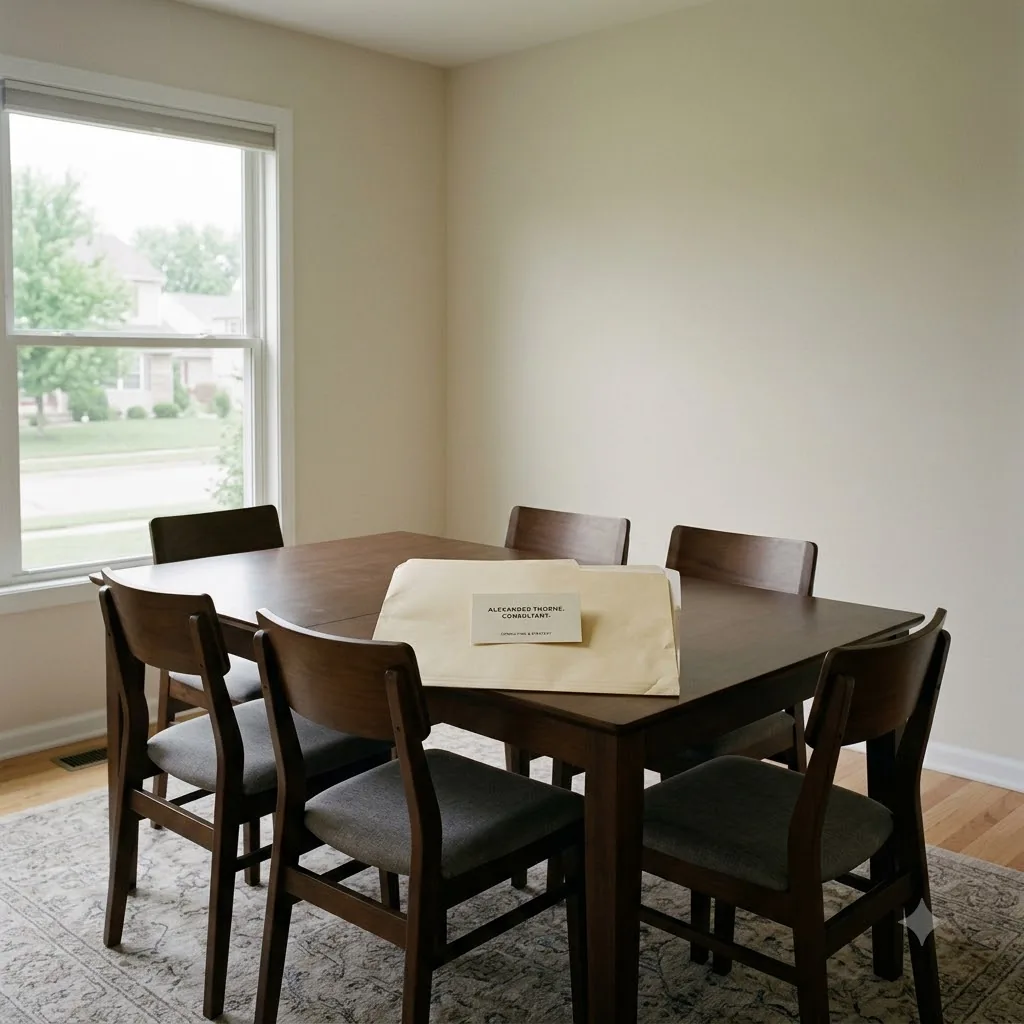
Elara snatched the business card and the blue envelope. She shoved the state medical board letter deep back into the leather tray, hastily burying it beneath a stack of innocuous utility bills just as the front door rattled on its hinges. Marcus walked slowly back inside, the heavy wooden door clicking shut behind him. His face was a mask of exhausted, hollowed-out defeat. The sterile, whitewashed living room around them suddenly felt less like a refuge and more like a prison cell they had painted themselves.
“I’m calling my brother,” Marcus said, his voice flat and drained of all its usual warmth. He didn’t even look at her, his eyes fixed on the empty spot where their family portraits used to hang. “Maybe he can pull from his 401k. Take the early withdrawal penalty.”
“No,” Elara said, her voice snapping out too quickly, too sharp in the empty hall. “We can’t ask him for that kind of money. It would ruin his retirement. The lender’s website said there’s an appeal process. I can fight the comparables Davis used.”
“An appeal takes weeks, Elara,” Marcus rubbed his temples, his shoulders sagging under an invisible weight. “We have nine days before the board refers the settlement to the district attorney. We don’t have weeks.”
“Just… let me handle the appraiser,” she pleaded, her hand gripping the edge of the doorway.
She waited until Marcus dragged his feet up the carpeted stairs, the bedroom door clicking shut above her. Alone in the corridor, Elara looked down at Davis’s card. The front displayed the standard, unassuming logo of a regional appraisal management company. But as she flipped it over, she saw handwriting in sharp blue ink. It was a direct, local phone number, accompanied by a single word: *Alternatives.*
She retreated to her car in the driveway, locking the doors to ensure absolute privacy, and dialed the number. It rang only once.
“I wondered how long it would take you to find my card,” Davis’s voice slid through the speaker, entirely devoid of the sluggish, bored persona he had performed during the walk-through. He sounded alert, sharp, and chillingly amused.
“You went through my private mail,” Elara kept her voice to a furious, shaking whisper. “I have your license number. I’m reporting you to the state real estate commission.”
“I wouldn’t go throwing the word ‘state’ around if I were you,” Davis said smoothly, the threat barely veiled. “Given what’s sitting in the center of your desk. The state medical board takes unauthorized clinical interventions very seriously. It would be a terrible shame if their quiet internal inquiry escalated into a highly public criminal probe because a concerned citizen forwarded them a few missing details about your daughter’s whereabouts.”
Elara closed her eyes. The interior of the car felt like it was tilting, the air turning thin and hot. “What do you want? You already killed our refinance. You took away the only money we had.”
“I didn’t kill it. The bank’s algorithms killed it based on the data points I provided. I simply chose the lowest possible comparables. But I also know you need cash immediately to pay off that settlement, and I know traditional banks are entirely too slow for your nine-day deadline.” A leather chair squeaked on his end of the line. “I represent a private syndicate. We do short-term bridge loans for highly motivated clients. No underwriting. No credit checks. No waiting periods. Two hundred thousand dollars can be wired to your checking account by tomorrow afternoon.”
“A hard-money loan,” Elara said, the bitter taste of bile rising in her throat.
“A liquidity solution,” Davis corrected.
“At what cost?”
“Thirty percent interest. Amortized weekly. And because of the high-risk nature, we don’t place a standard lien on the property, Elara. We require a warranty deed held in escrow. You default on a single payment, the trust automatically files the deed. The house is ours. No foreclosure process, no eviction delays, no legal battles. You just leave. And, in exchange, your daughter’s file remains entirely private.”
Elara gripped the steering wheel until her knuckles turned stark white. Thirty percent interest was financial suicide. Holding the deed in escrow was a predatory trap specifically designed to steal a family’s generational equity. If they missed one payment, they would lose the house they had spent fifteen years paying off, and Davis’s syndicate would acquire a pristine asset at a massive, criminal discount.
“If I say no?” Elara asked, her voice cracking.
“Then I am legally obligated, as a mandated reporter in my capacity as a state-contracted inspector, to report any evidence of illicit activities I observe. The medical board would receive my sworn, time-stamped affidavit by tomorrow morning.”
He wasn’t just an appraiser. He was a predator swimming in the wake of the bank’s automated redlining systems, targeting vulnerable homeowners who had been pushed out of the traditional banking system.
“Send me the paperwork,” she whispered to the dashboard.
“Check your email.” The line went dead.
The email arrived instantly, a notification pinging on her locked screen. Elara opened the encrypted link. The digital contract was twenty pages of dense, suffocating legalese. She scrolled past the exorbitant fee schedules and the brutal default clauses. She had to get the money without triggering the state investigation into her daughter. This dark, extortionate path was the only door Davis had left open.
But as she carefully read through the final property transfer documents, a new, paralyzing detail emerged on page eighteen. The escrow agent listed on the deed transfer wasn’t a standard, anonymous law firm. It was registered to *Apex Medical Holdings LLC*.
Elara stopped breathing. Her daughter’s emergency wasn’t a random accident of fate. The medical board’s aggressive investigation, the massive extortionate fine they had to pay to settle it quietly, and this predatory private loan-they were all connected. Apex was the exact same holding company that owned the private clinic where her daughter had worked.
Davis hadn’t randomly stumbled onto her secret while snooping. He had been sent specifically to find it. They undervalued the house on purpose to force her into this exact contract, a perfectly constructed trap designed to steal her property and silence her family forever.
Marcus tapped on the car window, making her jump. She rolled down the glass. “Did you find his license number to file the appeal?” he asked, a desperate sliver of hope in his eyes.
Elara stared at the glowing screen in her lap. She was about to sign away their home to the very people destroying her daughter. If she didn’t sign, the state would issue an arrest warrant tomorrow.
“Yes,” Elara lied, clicking the digital signature box. “I found a way.”