Story code: ST-000186
Part 1: The Invisible Assessor
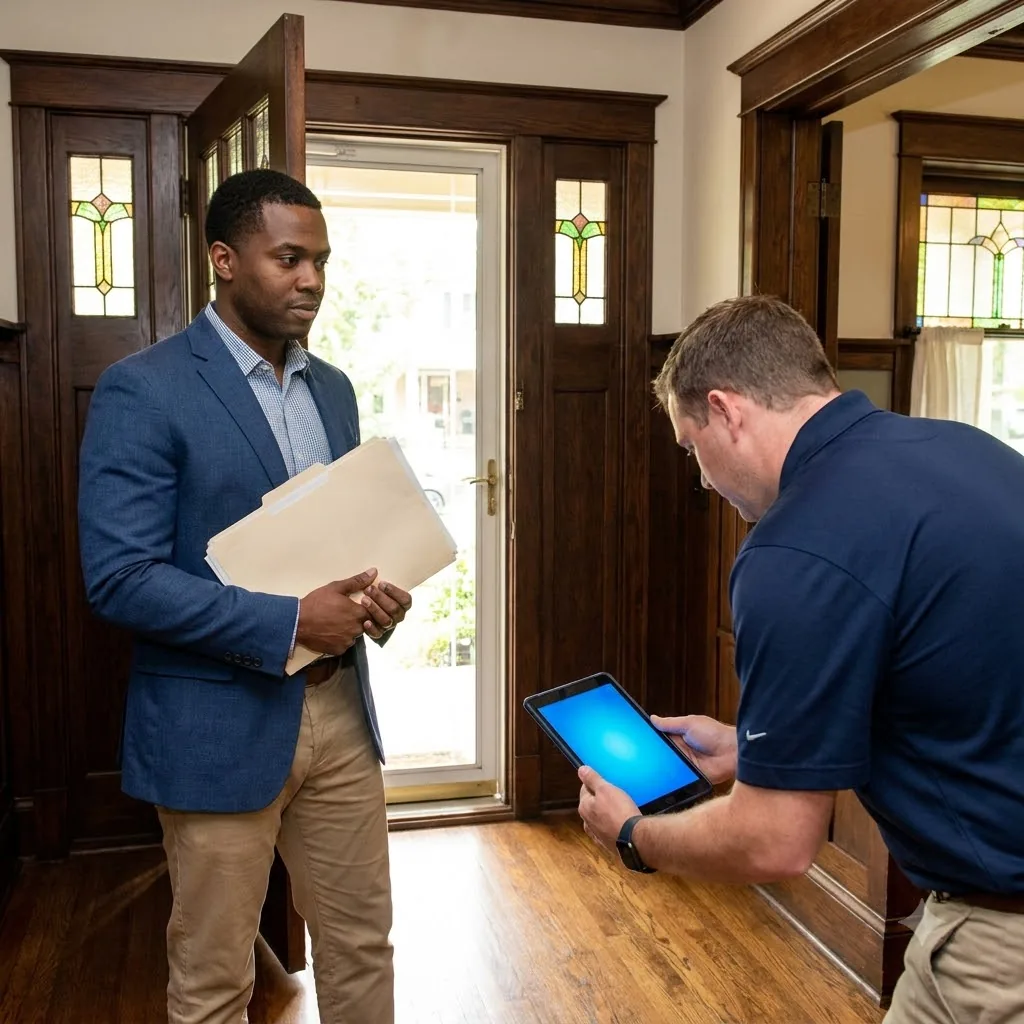
Marcus stood in the foyer of his restored historic Craftsman, extending a thick, leather-bound dossier of receipts and permits toward a man who refused to look up from his tablet. His arm trembled, vibrating with the residual shock of the automated termination email that had severed his fifteen-year executive career just three hours earlier. The appraiser, a man whose digital badge identified him only as Greg, brushed past Marcus’s outstretched hand without breaking stride.
Greg hoisted a sleek, multi-lensed spherical camera attached to a telescoping wand. He marched straight into the living room, sweeping the device in rapid, jagged arcs like a hurried gig-worker racing against a strict delivery timer. Marcus slowly lowered the binder, the weight of the meticulously compiled documents suddenly feeling absurd. He had spent the last five weekends organizing every invoice for the imported mahogany millwork, the copper plumbing retrofits, and the restored stained-glass transoms. He had expected a professional walk-through, a mutual appreciation for architectural preservation between two experts.
Instead, Greg offered only a wall of brusque arrogance. He kept his eyes glued to the tablet mounted on his wand, tapping the screen with frantic, heavy strikes. He treated the physical reality of the house as a minor inconvenience.
“The foundation was completely stabilized in twenty-twenty,” Marcus said, keeping his voice level as he stepped toward the center of the room to force an interaction. “I have the structural engineer’s sign-off right here, along with the city permits for the electrical overhaul. That adds significant baseline value.”
Greg sidestepped him, raising the camera wand higher toward the coffered ceiling. “The system pulls what it needs,” Greg said. His tone was clipped, mechanical, and entirely dismissive. “I just need clear sightlines for the spatial scan. Step to the left, please. You are blocking the mesh mapping.”
Marcus shifted his weight, his frustration mounting into a hard, dense anger. The callous dismissal mirrored the morning’s trauma far too closely. At eight o’clock that morning, Marcus had logged into his corporate enterprise portal to review a quarterly report, only to find his credentials suddenly revoked. A cheerful, unblinking chatbot window had popped up to inform him that an algorithmic restructuring had eliminated his entire division. There had been no human resources representative, no manager to shake his hand, no exit interview to discuss his severance. Just a cold line of code terminating his livelihood. Now, an identical brand of invisible, unaccountable intelligence was invading his sanctuary.
Greg pivoted, sweeping the camera across the original oak floors Marcus had painstakingly sanded and refinished by hand. The appraiser did not pause to examine the tight grain or the seamless transitions between the rooms. He simply followed the blinking green light on his device, entirely deferring to the AI-linked camera. He moved with a stiff, rigid posture, muttering under his breath about upload latency and poor connectivity.
Marcus followed him into the remodeled kitchen. He opened the thick dossier to the heavy cardstock divider marked for custom cabinetry and laid it open on the vast Calacatta marble island. He tapped his index finger against the itemized list of materials and the contractor warranties, demanding attention.
“Look at the documentation,” Marcus said, adopting the firm, commanding tone he had used to run board meetings just yesterday. “You cannot appraise the value of these upgrades without seeing the material costs. This is not builder-grade composite. It is solid, quarter-sawn oak.”
Greg did not even glance at the marble or the paperwork. He walked a tight circle around the perimeter of the kitchen, the camera lens panning blindly over the high-end appliances. To Marcus, the man’s absolute refusal to engage felt like pure, unfiltered disdain. Greg was letting the machine ingest visual data to feed a remote valuation server thousands of miles away, utterly ignoring the human context of the property.
The spherical lens swept past the island, momentarily lingering on a collection of family portraits and a piece of imported African art on the hallway wall before darting toward the back door. The machine was making rapid, opaque calculations. Marcus felt a cold knot tighten in his chest, recognizing the precise danger of a black-box system categorizing his life. The algorithm was going to assign a number to his home based on its own hidden metrics, completely disconnected from the sweat and capital he had poured into the restoration.
Greg lowered the wand and tapped a final command into his tablet. “Scan complete for the first floor,” he announced to the empty air, completely ignoring the homeowner standing two feet away. He turned toward the foyer, his heavy work boots scuffing the bottom tread of the main staircase.
Marcus moved to block the stairs, holding the heavy leather dossier against his chest like a shield. He refused to let another faceless algorithm dictate his worth twice in one day.
“We are going to sit down at that dining table,” Marcus said, his voice dropping to a dangerous, quiet register. “And you are going to review these comparables.”
Greg sighed heavily, finally looking up from his screen with a flash of intense irritation. He reached into his jacket pocket and pulled out a small, metallic calibration tag, slapping it down hard on the pristine mahogany handrail.
Marcus stood in the foyer of his restored historic Craftsman, extending a thick, leather-bound dossier of receipts and permits toward a man who refused to look up from his tablet. His arm trembled, vibrating with the residual shock of the automated termination email that had severed his fifteen-year executive career just three hours earlier. The appraiser, a man whose digital badge identified him only as Greg, brushed past Marcus’s outstretched hand without breaking stride.
Greg hoisted a sleek, multi-lensed spherical camera attached to a telescoping wand. He marched straight into the living room, sweeping the device in rapid, jagged arcs like a hurried gig-worker racing against a strict delivery timer. Marcus slowly lowered the binder, the weight of the meticulously compiled documents suddenly feeling absurd. He had spent the last five weekends organizing every invoice for the imported mahogany millwork, the copper plumbing retrofits, and the restored stained-glass transoms. He had expected a professional walk-through, a mutual appreciation for architectural preservation between two experts.
Instead, Greg offered only a wall of brusque arrogance. He kept his eyes glued to the tablet mounted on his wand, tapping the screen with frantic, heavy strikes. He treated the physical reality of the house as a minor inconvenience.
“The foundation was completely stabilized in twenty-twenty,” Marcus said, keeping his voice level as he stepped toward the center of the room to force an interaction. “I have the structural engineer’s sign-off right here, along with the city permits for the electrical overhaul. That adds significant baseline value.”
Greg sidestepped him, raising the camera wand higher toward the coffered ceiling. “The system pulls what it needs,” Greg said. His tone was clipped, mechanical, and entirely dismissive. “I just need clear sightlines for the spatial scan. Step to the left, please. You are blocking the mesh mapping.”
Marcus shifted his weight, his frustration mounting into a hard, dense anger. The callous dismissal mirrored the morning’s trauma far too closely. At eight o’clock that morning, Marcus had logged into his corporate enterprise portal to review a quarterly report, only to find his credentials suddenly revoked. A cheerful, unblinking chatbot window had popped up to inform him that an algorithmic restructuring had eliminated his entire division. There had been no human resources representative, no manager to shake his hand, no exit interview to discuss his severance. Just a cold line of code terminating his livelihood. Now, an identical brand of invisible, unaccountable intelligence was invading his sanctuary.
Greg pivoted, sweeping the camera across the original oak floors Marcus had painstakingly sanded and refinished by hand. The appraiser did not pause to examine the tight grain or the seamless transitions between the rooms. He simply followed the blinking green light on his device, entirely deferring to the AI-linked camera. He moved with a stiff, rigid posture, muttering under his breath about upload latency and poor connectivity.
Marcus followed him into the remodeled kitchen. He opened the thick dossier to the heavy cardstock divider marked for custom cabinetry and laid it open on the vast Calacatta marble island. He tapped his index finger against the itemized list of materials and the contractor warranties, demanding attention.
“Look at the documentation,” Marcus said, adopting the firm, commanding tone he had used to run board meetings just yesterday. “You cannot appraise the value of these upgrades without seeing the material costs. This is not builder-grade composite. It is solid, quarter-sawn oak.”
Greg did not even glance at the marble or the paperwork. He walked a tight circle around the perimeter of the kitchen, the camera lens panning blindly over the high-end appliances. To Marcus, the man’s absolute refusal to engage felt like pure, unfiltered disdain. Greg was letting the machine ingest visual data to feed a remote valuation server thousands of miles away, utterly ignoring the human context of the property.
The spherical lens swept past the island, momentarily lingering on a collection of family portraits and a piece of imported African art on the hallway wall before darting toward the back door. The machine was making rapid, opaque calculations. Marcus felt a cold knot tighten in his chest, recognizing the precise danger of a black-box system categorizing his life. The algorithm was going to assign a number to his home based on its own hidden metrics, completely disconnected from the sweat and capital he had poured into the restoration.
Greg lowered the wand and tapped a final command into his tablet. “Scan complete for the first floor,” he announced to the empty air, completely ignoring the homeowner standing two feet away. He turned toward the foyer, his heavy work boots scuffing the bottom tread of the main staircase.
Marcus moved to block the stairs, holding the heavy leather dossier against his chest like a shield. He refused to let another faceless algorithm dictate his worth twice in one day.
“We are going to sit down at that dining table,” Marcus said, his voice dropping to a dangerous, quiet register. “And you are going to review these comparables.”
Greg sighed heavily, finally looking up from his screen with a flash of intense irritation. He reached into his jacket pocket and pulled out a small, metallic calibration tag, slapping it down hard on the pristine mahogany handrail.