Story code: ST-000660
Part 1: Three Drops on Leather
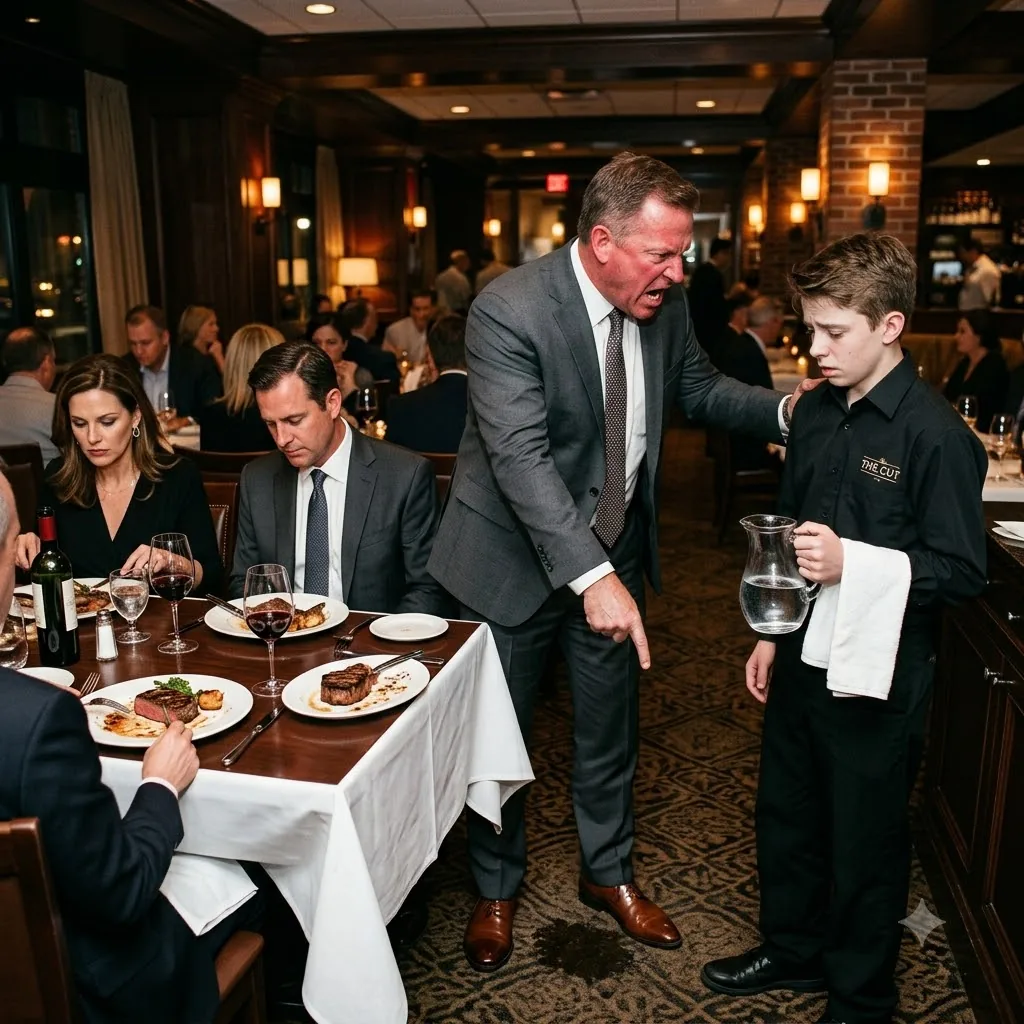
The heavy, sweating pitcher slipped a fraction of an inch in the teenager’s grip. That was all it took. A single, jagged cube of ice and a splash of condensation hit the polished hardwood floor, with three drops ricocheting onto the toe of an Italian leather oxford.
The dining room of Le Ciel was designed to muffle sound, absorbing the clatter of silver and the murmurs of venture capitalists into thick velvet drapery. That acoustic dampening only made the sudden, sharp intake of breath at our table more pronounced.
I watched the teenager freeze. He was wearing a stark white apron that hung too loosely over his narrow shoulders, a kid entirely unequipped for the gravity of the room. He scrambled backward, his face burning a dark, patchy red.
The man wearing the oxfords did not pull his foot away. He stared down at the three tiny beads of water resting on the leather. Then he placed his linen napkin on the table with exaggerated, terrifying slowness.
The five of us sitting around the circular booth stopped moving. The marketing director paused with a forkful of sea bass halfway to her mouth. The lead designer stared fixedly at the rim of his water glass. The silence stretched, thick and suffocating, pulled taut over the heavy mahogany table.
“I need a towel,” the boy muttered, his voice cracking on the second syllable. He knelt, frantically dabbing at the floor with a flimsy cloth from his apron pocket.
“Do not touch my shoe,” the man said.
The volume of his voice was perfectly calibrated. It was not a shout. It was a dense, carrying baritone that cut through the low hum of the restaurant’s ambient noise. Two tables over, a couple stopped their conversation to look.
The boy froze on his knees, staring up. “I am so sorry, sir. It slipped.”
“Get up.” The man did not look at the boy. He raised a hand, snapping his fingers twice in the air. The sharp cracks echoed toward the maître d’s stand. “Get the manager. Now.”
The teenager scrambled to his feet, backing away with his head bowed, nearly colliding with a waiter carrying a tray of champagne flutes.
At our table, the physical discomfort morphed into an almost unbearable pressure. I could hear the designer’s breathing turn shallow and rapid. Someone shifted their weight, the leather booth creaking loudly in the void left by our extinguished conversation. No one made eye contact. We were all trapped in the blast radius of a temper we had been instructed to accommodate.
I looked at the man. His jaw was set, his posture rigid. He was feeding on the raw discomfort of the room, drawing oxygen from the terror of a sixteen-year-old making minimum wage.
A man in a tailored charcoal suit hurried over, his professional smile strained at the corners. He identified himself as the floor manager, bowing his head slightly.
“This busboy,” the man said, pointing a rigid finger at the teenager now hovering near the kitchen doors, “just ruined a twelve-hundred-dollar pair of shoes. He is careless. He is a liability to your establishment.”
The manager glanced down at the completely undamaged shoe, then back up, maintaining his practiced neutrality. “I sincerely apologize, sir. We will gladly cover the cost of any cleaning. I will speak with him immediately.”
“Speaking with him is inadequate.” The man leaned back in his chair, crossing his arms over his chest. “I expect him to be terminated. If he cannot perform the basic function of pouring water without causing property damage, he does not belong in a high-caliber environment. I want him gone.”
The manager’s smile dropped. He looked back at the kitchen doors, then at the man. “Sir, he is in training. It was an accident. We will move him to a different section for the remainder of the evening.”
The man placed both hands flat on the table, leaning forward so the overhead pendant light cast harsh shadows across his face. “You are failing to grasp the situation. I am not asking for a section change. I am telling you that if you accept this level of incompetence, your standards are compromised. People face consequences for incompetence. Fire him, or my entire table is walking out, and my review of this establishment will reflect your refusal to maintain basic standards of service.”
The silence rushed back in, heavier than before. The manager stood paralyzed, weighing the threat of a massive walked tab and a public relations nightmare against the livelihood of a terrified teenager.
The marketing director swallowed hard, shrinking into her chair. The designer looked sick. The man sat victorious, reveling in the absolute power he had manufactured out of three drops of water.
I looked at the teenager by the door, clutching his damp towel, waiting for the verdict. Then I looked at the man dictating the terms of the room.
I reached into my bag and placed my metal corporate keycard perfectly flat on the table, the metallic clink ringing out like a gunshot in the quiet.
The man stopped glaring at the manager and turned his head toward me.
“Consequences for incompetence,” I said, repeating his words in a flat, uninflected tone. “That is an excellent standard to enforce right here.”
The heavy, sweating pitcher slipped a fraction of an inch in the teenager’s grip. That was all it took. A single, jagged cube of ice and a splash of condensation hit the polished hardwood floor, with three drops ricocheting onto the toe of an Italian leather oxford.
The dining room of Le Ciel was designed to muffle sound, absorbing the clatter of silver and the murmurs of venture capitalists into thick velvet drapery. That acoustic dampening only made the sudden, sharp intake of breath at our table more pronounced.
I watched the teenager freeze. He was wearing a stark white apron that hung too loosely over his narrow shoulders, a kid entirely unequipped for the gravity of the room. He scrambled backward, his face burning a dark, patchy red.
The man wearing the oxfords did not pull his foot away. He stared down at the three tiny beads of water resting on the leather. Then he placed his linen napkin on the table with exaggerated, terrifying slowness.
The five of us sitting around the circular booth stopped moving. The marketing director paused with a forkful of sea bass halfway to her mouth. The lead designer stared fixedly at the rim of his water glass. The silence stretched, thick and suffocating, pulled taut over the heavy mahogany table.
“I need a towel,” the boy muttered, his voice cracking on the second syllable. He knelt, frantically dabbing at the floor with a flimsy cloth from his apron pocket.
“Do not touch my shoe,” the man said.
The volume of his voice was perfectly calibrated. It was not a shout. It was a dense, carrying baritone that cut through the low hum of the restaurant’s ambient noise. Two tables over, a couple stopped their conversation to look.
The boy froze on his knees, staring up. “I am so sorry, sir. It slipped.”
“Get up.” The man did not look at the boy. He raised a hand, snapping his fingers twice in the air. The sharp cracks echoed toward the maître d’s stand. “Get the manager. Now.”
The teenager scrambled to his feet, backing away with his head bowed, nearly colliding with a waiter carrying a tray of champagne flutes.
At our table, the physical discomfort morphed into an almost unbearable pressure. I could hear the designer’s breathing turn shallow and rapid. Someone shifted their weight, the leather booth creaking loudly in the void left by our extinguished conversation. No one made eye contact. We were all trapped in the blast radius of a temper we had been instructed to accommodate.
I looked at the man. His jaw was set, his posture rigid. He was feeding on the raw discomfort of the room, drawing oxygen from the terror of a sixteen-year-old making minimum wage.
A man in a tailored charcoal suit hurried over, his professional smile strained at the corners. He identified himself as the floor manager, bowing his head slightly.
“This busboy,” the man said, pointing a rigid finger at the teenager now hovering near the kitchen doors, “just ruined a twelve-hundred-dollar pair of shoes. He is careless. He is a liability to your establishment.”
The manager glanced down at the completely undamaged shoe, then back up, maintaining his practiced neutrality. “I sincerely apologize, sir. We will gladly cover the cost of any cleaning. I will speak with him immediately.”
“Speaking with him is inadequate.” The man leaned back in his chair, crossing his arms over his chest. “I expect him to be terminated. If he cannot perform the basic function of pouring water without causing property damage, he does not belong in a high-caliber environment. I want him gone.”
The manager’s smile dropped. He looked back at the kitchen doors, then at the man. “Sir, he is in training. It was an accident. We will move him to a different section for the remainder of the evening.”
The man placed both hands flat on the table, leaning forward so the overhead pendant light cast harsh shadows across his face. “You are failing to grasp the situation. I am not asking for a section change. I am telling you that if you accept this level of incompetence, your standards are compromised. People face consequences for incompetence. Fire him, or my entire table is walking out, and my review of this establishment will reflect your refusal to maintain basic standards of service.”
The silence rushed back in, heavier than before. The manager stood paralyzed, weighing the threat of a massive walked tab and a public relations nightmare against the livelihood of a terrified teenager.
The marketing director swallowed hard, shrinking into her chair. The designer looked sick. The man sat victorious, reveling in the absolute power he had manufactured out of three drops of water.
I looked at the teenager by the door, clutching his damp towel, waiting for the verdict. Then I looked at the man dictating the terms of the room.
I reached into my bag and placed my metal corporate keycard perfectly flat on the table, the metallic clink ringing out like a gunshot in the quiet.
The man stopped glaring at the manager and turned his head toward me.
“Consequences for incompetence,” I said, repeating his words in a flat, uninflected tone. “That is an excellent standard to enforce right here.”