Story code: ST-001707
Part 2: Standardized Visibility
Sarah stared at the black barrel of the pen in Davis’s outstretched hand. The words *simulated automatic gunfire* blurred into a jagged, unreadable line on the heavy cardstock. She looked from the legal document to Davis’s face. The lines around his mouth were deeply etched, his eyes avoiding hers, fixed instead on a stack of construction paper on the edge of her desk.
“I can’t sign this,” Sarah said. Her voice sounded thin, stripped of the commanding teacher-tone she used to manage twenty-two energetic children. “They are six years old, Paul. Six. Half of them still cry when the fire alarm goes off. If you fire blank rounds in this hallway, you’re going to shatter them.”
Davis sighed, a heavy deflation of his shoulders. He finally looked at her, his expression hardening into an administrative mask. “It’s not my call, Sarah. The school board hired ALICE Tactical last Tuesday. The insurance underwriters demanded an updated active threat protocol, and this is what the tactical group requires to certify the building. Total sensory immersion, they call it.”
“Sensory immersion?” Sarah repeated, the phrase tasting metallic and sour. “It’s a school, not a military training camp. What happens to Leo, who has sensory processing issues? Or Maya, who just moved here from a shelter? We are supposed to keep them safe, not induce PTSD.”
“The waiver,” Davis said, tapping the clipboard again. “It covers the district against psychological liability. The parents are getting a separate opt-in form tonight via the automated email system.”
“And if a parent opts out?”
“Then the student stays home that day as an unexcused absence,” Davis said flatly. “But staff do not have an opt-out clause. You sign, or you are placed on unpaid administrative leave pending a board review for insubordination. We need one hundred percent faculty participation to secure the federal security grant.”
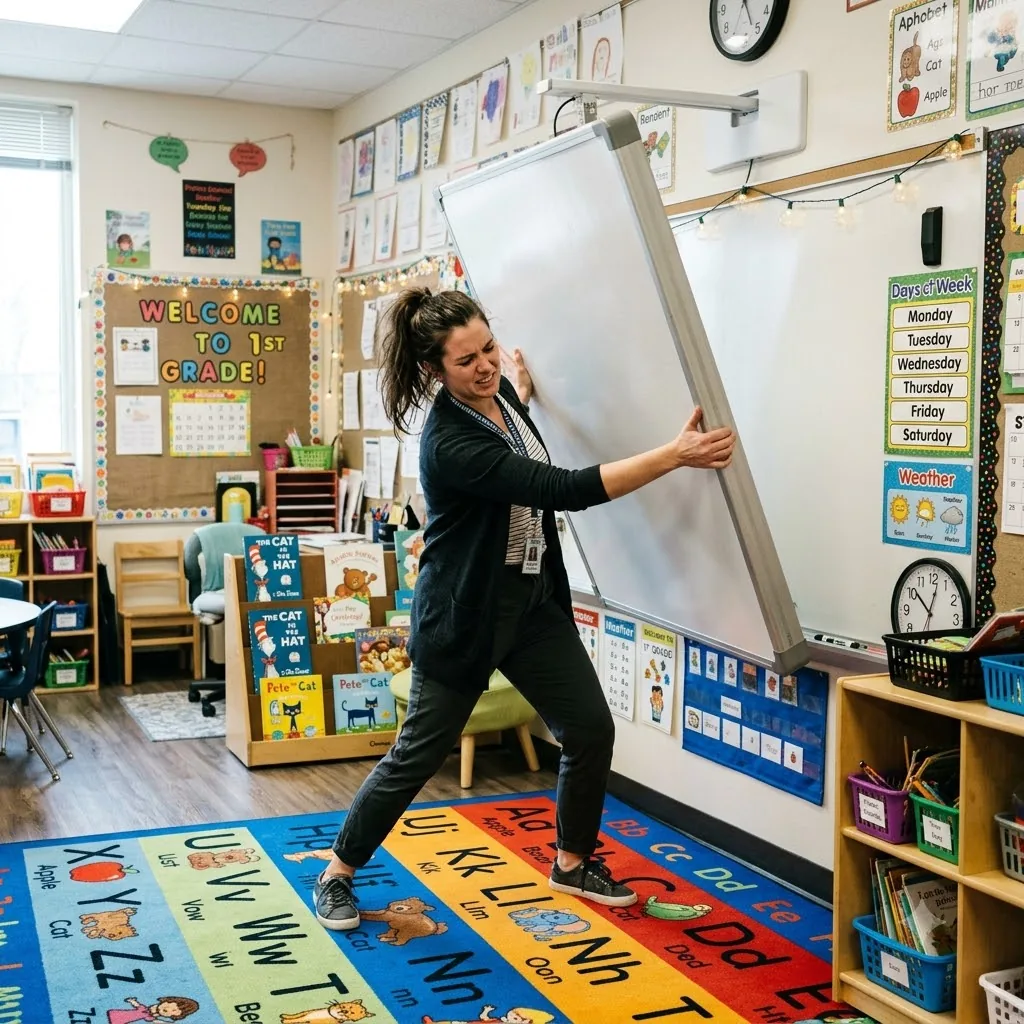
Sarah looked at her canvas tote bag resting on the floor. Inside was the receipt for the ballistic whiteboard. Three thousand, two hundred dollars. Her checking account currently held forty-seven dollars. Rent was due in nine days. If she was suspended, she wouldn’t just lose her apartment; she would lose access to her classroom. She wouldn’t be here to hide them behind the kevlar shield she had sacrificed everything to build. She would be replaced by a substitute teacher who wouldn’t know the blind spots, who wouldn’t know how to keep Leo quiet during a crisis.
Her fingers closed around the cold plastic of the pen. The ink flowed dark and heavy as she scratched her name on the bottom line. It felt like signing a confession.
Davis pulled the document away the second the pen lifted from the paper, slipping it beneath the metal clip. “Thank you. The drill is scheduled for Wednesday at ten-fifteen in the morning.”
“Wednesday?” Sarah’s head snapped up. “That’s three days from now.”
“The consultants want a compressed timeline to prevent over-preparation,” Davis said, already turning toward the door. “Oh, and Sarah? A heads-up. The tactical team is doing a preliminary walkthrough tomorrow morning before the bell. They’ll be inspecting every classroom for non-compliant furniture arrangements and unapproved modifications. They want a clear line of sight from the hallway window to the opposite wall in every room. Standardized visibility.”
Sarah’s blood turned to ice water. She looked past Davis, straight at the massive, glossy white expanse of the new whiteboard bolted over the reading rug. *Standardized visibility.* The whole point of her installation was to completely block the line of sight from the hallway door.
“Clear line of sight?” Sarah managed to ask, her throat tightening. “What does that mean for the reading nooks?”
“It means if a shooter looks through the door glass, the consultants want to ensure there are no large barricades obstructing the room’s geometry,” Davis said, quoting some manual she hadn’t seen yet. “They argue that hiding spots can be used against us if a threat breaches the room. Everything has to be pushed flat against the walls, below the sightline. I know you like your little corners, but make sure the room is stripped back to standard district specs by tomorrow morning. If the tactical guys flag your room, they’ll bring the custodial team in to rip out whatever is in the way.”
Davis didn’t wait for a response. His heavy footsteps receded down the empty corridor, the sound of his clipboard tapping against his thigh echoing in the silence.
Sarah stood completely still, the air in the room suddenly too thin to breathe. She turned slowly to face the reading rug.
The board was immense. It was held into the reinforced studs by three-inch lag screws that had taken her an hour of sweat and trembling muscle to drive into the wall. It jutted out deliberately, breaking the room’s geometry, creating the one safe shadow in a room made entirely of cinderblock and glass.
If the tactical consultants saw it tomorrow morning, they wouldn’t just recognize it as an unauthorized visual obstruction. Anyone with a background in security would immediately recognize the heavy steel frame and the thick, dense profile of NIJ Level IIIA ballistic armor. They would know exactly what she had done, bypassing district procurement and installing military-grade defense equipment in a primary classroom.
She looked at the clock on the wall above the smartboard. It was four-thirty on Sunday afternoon. The sun was already sinking below the playground equipment outside her window, casting long, gray shadows across the linoleum floor. The custodial staff was currently buffering the main hall, meaning they would reach her wing in less than two hours.
She had until morning to figure out how to make a four-hundred-pound slab of bulletproof steel look entirely invisible, or they would tear it down before Wednesday’s gunfire even began.