Story code: ST-000928
Part 1: The Suspect Outside
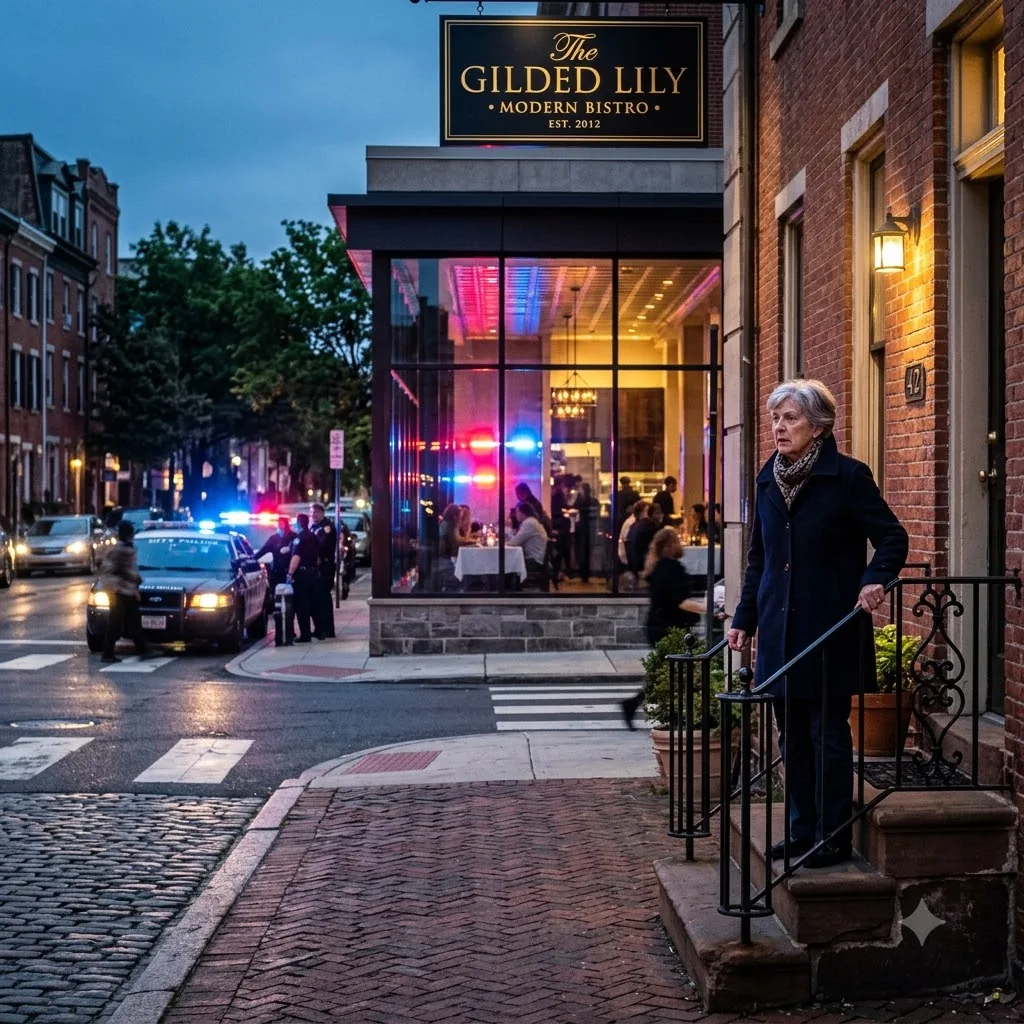
Flashing red and blue lights fractured against the newly installed plate glass of Lumière, the upscale bistro that had recently replaced the neighborhood’s old corner bodega. Alma stood frozen on the top step of her brownstone stoop, her grip white-knuckled on the cold cast-iron railing. Ten yards away, a police officer had sixteen-year-old Marcus shoved hard against the wrought-iron fence of the community garden. The decorative metal spikes dug into the boy’s cheek. Marcus kept his hands splayed flat against the bars, his thin shoulders trembling visibly under the harsh glare of the streetlamp. The officer dragged a heavy, aggressive hand down the teenager’s ribs, barking muffled commands that dissolved into the low rumble of the idling squad car. Inside the bistro, completely safe behind the expensive, soundproofed glare of the window, Bryce stood near his mahogany host stand. The restaurant owner casually polished a wine glass with a pristine white linen cloth, watching the brutal scene he had orchestrated with mild, detached interest.
Alma stepped cautiously down to the sidewalk. The pavement felt painfully uneven under her thin house slippers, and her pulse hammered a frantic, heavy rhythm against her ribs. She knew she had to move with deliberate slowness. Any sudden motion or loud noise might make the tightly wound officer twitch, which could turn a standard harassment stop into an irreversible tragedy. She knew Marcus well. He lived just three doors down the block and spent his afternoons sketching quiet architectural studies in a dog-eared notebook, passing the hours until his mother’s shift at the county hospital ended. He was not a dangerous loiterer or a threat to commerce. He was just a quiet boy standing on his own street. Bryce had arrived three months ago, bringing ninety-dollar steaks and a profound, barely concealed intolerance for the neighborhood’s legacy residents. He had made it abundantly clear he wanted the sidewalk scrubbed clean of anyone who did not match his highly curated aesthetic. Calling the police on a Black teenager for standing too close to his imported decorative planters was his ultimate, cowardly weapon. Alma stopped directly at the edge of the streetlamp’s glow, making absolutely sure both of her empty hands were visible to the officer.
Down the block, the heavy wooden doors of other brownstones began to open. Several neighbors stepped out onto their porches, forming a silent, watchful gallery of witnesses along the perimeter of the scene. The collective breath of the entire block held tight in the crisp night air. The officer jerked Marcus’s left arm much higher up his back. The boy let out a sharp, choked gasp of pain, his worn sneakers scrambling for traction on the slick concrete. Alma forced her voice to remain entirely steady, pitching it loud enough to cut straight through the chaotic static of the police radio. She stated clearly and firmly that she lived right there and could personally vouch for the boy. The officer snapped his head toward her, his hand dropping immediately to rest on his heavy utility belt. He ordered her to step back, turn around, and let him do his job without civilian interference. Alma simply planted her feet wider on the pavement. She did not retreat a single inch. She informed the officer she was simply watching, just observing a public situation from her own property line.
Bryce leaned closer to the bistro window, his face illuminated by a hanging chandelier. He tapped the thick glass with a manicured finger, gesturing emphatically toward Marcus’s oversized denim jacket. The owner had clearly fed the emergency dispatcher a highly specific, escalating narrative, a calculated description explicitly designed to guarantee an aggressive, immediate police response. He had undoubtedly claimed the boy was casing the establishment and had already pocketed something incredibly valuable from the outdoor dining patio. Marcus tried to turn his head just a fraction to look at Alma, his dark eyes wide and bright with unshed, terrified tears. The officer shoved his face roughly back against the unyielding iron. He demanded the boy stop resisting and keep his mouth shut. Alma pulled her smartphone from the deep pocket of her knit cardigan, holding it up like a steady shield with the camera lens pointed directly at the silver badge number on the officer’s chest. The red recording light blinked in perfect time with the squad car’s relentless flashers.
The officer glared at the glowing phone, his jaw tightening into a hard, angry line. He quickly realized the previously empty street was now lined with silent neighbors watching his every move, their own phone screens lighting up the darkness as they recorded the encounter. Recognizing he could no longer escalate the physical force without documented consequence, he turned his frustrated energy back to Marcus. He grabbed the thick hem of the boy’s denim jacket, yanking it downward to keep him off balance. He then reached aggressively into the deep right pocket, determined to pull out the supposed contraband Bryce had so frantically reported stolen from the outdoor tables. Alma braced herself for the sight of a weapon, or a stolen patron’s wallet, or perhaps a handful of the restaurant’s expensive silver cutlery. The officer violently yanked his fist out of the teenager’s pocket, freezing as the stolen item slipped from his fingers and dropped to the concrete-a single, crusty, half-eaten roll of complimentary table bread.
Flashing red and blue lights fractured against the newly installed plate glass of Lumière, the upscale bistro that had recently replaced the neighborhood’s old corner bodega. Alma stood frozen on the top step of her brownstone stoop, her grip white-knuckled on the cold cast-iron railing. Ten yards away, a police officer had sixteen-year-old Marcus shoved hard against the wrought-iron fence of the community garden. The decorative metal spikes dug into the boy’s cheek. Marcus kept his hands splayed flat against the bars, his thin shoulders trembling visibly under the harsh glare of the streetlamp. The officer dragged a heavy, aggressive hand down the teenager’s ribs, barking muffled commands that dissolved into the low rumble of the idling squad car. Inside the bistro, completely safe behind the expensive, soundproofed glare of the window, Bryce stood near his mahogany host stand. The restaurant owner casually polished a wine glass with a pristine white linen cloth, watching the brutal scene he had orchestrated with mild, detached interest.
Alma stepped cautiously down to the sidewalk. The pavement felt painfully uneven under her thin house slippers, and her pulse hammered a frantic, heavy rhythm against her ribs. She knew she had to move with deliberate slowness. Any sudden motion or loud noise might make the tightly wound officer twitch, which could turn a standard harassment stop into an irreversible tragedy. She knew Marcus well. He lived just three doors down the block and spent his afternoons sketching quiet architectural studies in a dog-eared notebook, passing the hours until his mother’s shift at the county hospital ended. He was not a dangerous loiterer or a threat to commerce. He was just a quiet boy standing on his own street. Bryce had arrived three months ago, bringing ninety-dollar steaks and a profound, barely concealed intolerance for the neighborhood’s legacy residents. He had made it abundantly clear he wanted the sidewalk scrubbed clean of anyone who did not match his highly curated aesthetic. Calling the police on a Black teenager for standing too close to his imported decorative planters was his ultimate, cowardly weapon. Alma stopped directly at the edge of the streetlamp’s glow, making absolutely sure both of her empty hands were visible to the officer.
Down the block, the heavy wooden doors of other brownstones began to open. Several neighbors stepped out onto their porches, forming a silent, watchful gallery of witnesses along the perimeter of the scene. The collective breath of the entire block held tight in the crisp night air. The officer jerked Marcus’s left arm much higher up his back. The boy let out a sharp, choked gasp of pain, his worn sneakers scrambling for traction on the slick concrete. Alma forced her voice to remain entirely steady, pitching it loud enough to cut straight through the chaotic static of the police radio. She stated clearly and firmly that she lived right there and could personally vouch for the boy. The officer snapped his head toward her, his hand dropping immediately to rest on his heavy utility belt. He ordered her to step back, turn around, and let him do his job without civilian interference. Alma simply planted her feet wider on the pavement. She did not retreat a single inch. She informed the officer she was simply watching, just observing a public situation from her own property line.
Bryce leaned closer to the bistro window, his face illuminated by a hanging chandelier. He tapped the thick glass with a manicured finger, gesturing emphatically toward Marcus’s oversized denim jacket. The owner had clearly fed the emergency dispatcher a highly specific, escalating narrative, a calculated description explicitly designed to guarantee an aggressive, immediate police response. He had undoubtedly claimed the boy was casing the establishment and had already pocketed something incredibly valuable from the outdoor dining patio. Marcus tried to turn his head just a fraction to look at Alma, his dark eyes wide and bright with unshed, terrified tears. The officer shoved his face roughly back against the unyielding iron. He demanded the boy stop resisting and keep his mouth shut. Alma pulled her smartphone from the deep pocket of her knit cardigan, holding it up like a steady shield with the camera lens pointed directly at the silver badge number on the officer’s chest. The red recording light blinked in perfect time with the squad car’s relentless flashers.
The officer glared at the glowing phone, his jaw tightening into a hard, angry line. He quickly realized the previously empty street was now lined with silent neighbors watching his every move, their own phone screens lighting up the darkness as they recorded the encounter. Recognizing he could no longer escalate the physical force without documented consequence, he turned his frustrated energy back to Marcus. He grabbed the thick hem of the boy’s denim jacket, yanking it downward to keep him off balance. He then reached aggressively into the deep right pocket, determined to pull out the supposed contraband Bryce had so frantically reported stolen from the outdoor tables. Alma braced herself for the sight of a weapon, or a stolen patron’s wallet, or perhaps a handful of the restaurant’s expensive silver cutlery. The officer violently yanked his fist out of the teenager’s pocket, freezing as the stolen item slipped from his fingers and dropped to the concrete-a single, crusty, half-eaten roll of complimentary table bread.