Story code: ST-000089
Part 1: The Blank Wall
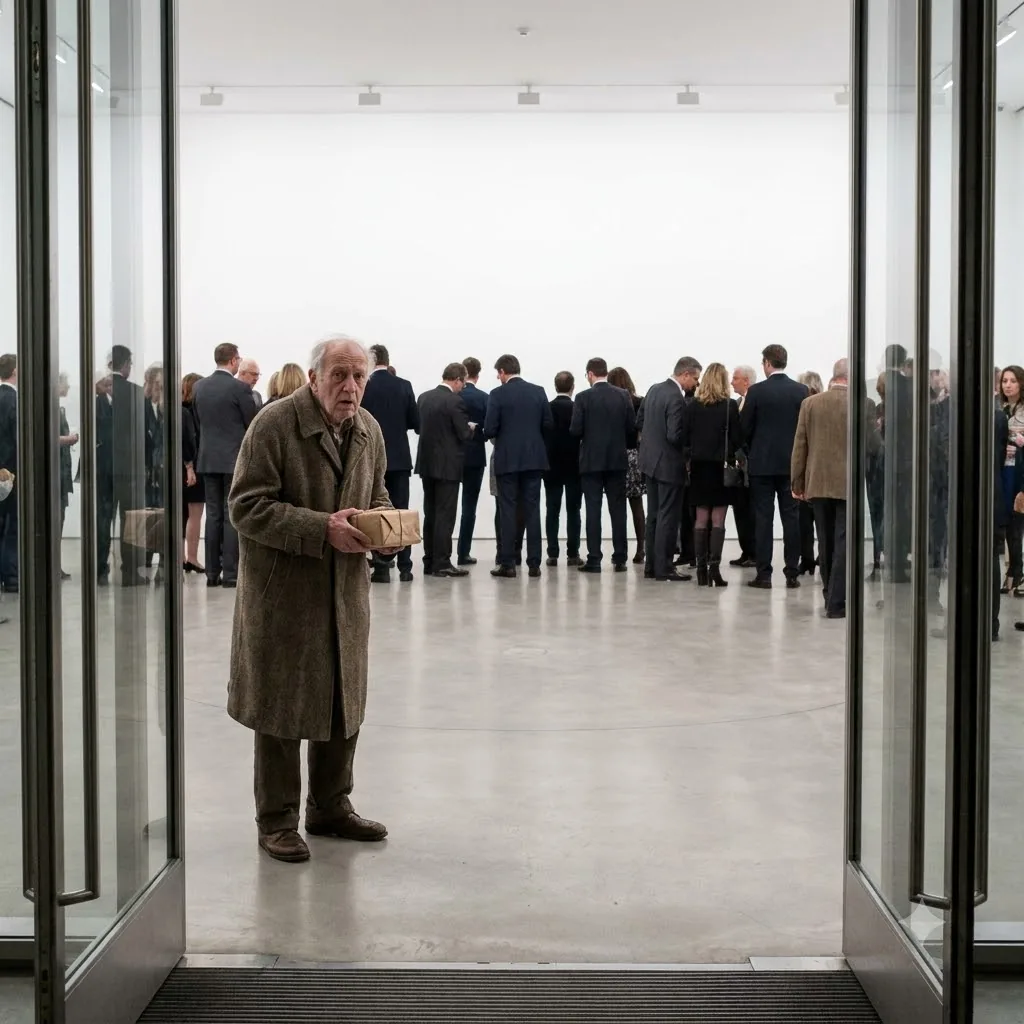
Elias pushed open the heavy glass door of the Lumina Gallery with a foil-wrapped bottle of prosecco tucked tightly under his arm, expecting the usual chorus of greetings for his twentieth anniversary exhibition. The overlapping hum of fifty conversations died the exact second the brass bell above the frame jingled. The patrons nearest the entrance stopped mid-sentence and took a synchronized, shuffling step backward, turning their shoulders away from him.
The silence in the room was absolute, a sudden vacuum that sucked the oxygen from the air. Elias held the bottle forward, a smile freezing on his face as the crowd physically parted. The people he had known for two decades refused to meet his gaze. Fellow painters, longtime collectors, and the framing supplier from downtown all stared at the floorboards, at their shoes, at their half-empty plastic wine cups. The physical recoil of the crowd left a wide, empty aisle leading straight to the far end of the room. Not a single cough or whisper broke the stillness. The only sound was the low hum of the gallery’s track lighting system overhead.
Elias walked forward into the gap, his boots unnervingly loud against the polished concrete. The east wall was supposed to be the anchor of the autumn showcase. For twenty years, that specific span of architecture had belonged exclusively to his textured oil landscapes, rendering him a permanent fixture in the local arts community. Now, the wall was entirely stripped. There were no canvases, no brass nameplates, no focused lighting highlighting his signature heavy brushstrokes. The surface was raw and naked. Patches of wet, pink spackle covered the heavy-duty anchor holes where his massive frames had hung just hours ago. A canvas dropcloth still lay bunched at the baseboard, dusted with fresh sanding grit and stray clumps of plaster. The faint, chalky smell of wet drywall mud completely overpowered the scent of expensive perfume and boxed wine in the room. His life’s work had not merely been taken down for a seasonal rotation. It had been eradicated with a frantic, desperate speed.
Out of the corner of his eye, Elias noticed a single figure standing perfectly still by the front window. While the rest of the room shrank back in collective aversion, this person remained planted. It was a dark silhouette against the glare of the streetlights, watching Elias’s exact reaction with a steady, unblinking focus. The figure’s arms were crossed, the posture rigid and deeply expectant.
Before Elias could take another step toward the ruined plaster of the east wall, Julian stepped into the clearing. The gallery owner did not extend a welcoming hand. He did not offer the celebratory embrace they had shared just yesterday afternoon. Julian’s face was entirely bloodless, the skin pulled tight over his cheekbones, his jaw locked in a rigid line. He marched straight at Elias with a heavy, deliberate stride. Over his left arm, Julian carried Elias’s heavy wool winter coat, the exact coat Elias had left hanging in the private back office earlier that morning.
Julian did not speak a single word of greeting or explanation. He reached Elias and slammed the heavy wool garment directly into Elias’s chest. The unexpected force of the shove made Elias stumble backward. He dropped the foil-wrapped bottle. It hit the concrete floor with a dull, heavy thud, the thick glass remaining intact but rolling away into the forest of silent, motionless legs. Julian did not look down at the rolling bottle. He grabbed Elias by the bicep. The grip was instantly brutal, the owner’s fingers digging deeply into the muscle through the thick fabric of Elias’s corduroy jacket.
Julian turned Elias around and began marching him back toward the glass door. Elias tried to dig his heels in, trying to force a halt, but Julian’s sheer momentum and the crushing weight of the silent room paralyzed his physical resistance. The patrons pressed their backs tightly against the opposing walls, sucking in their stomachs to give the two men a wider berth. Julian shoved him forward again, his breathing loud and jagged in the quiet room.
As Elias instinctively gripped the coat to keep it from falling to the floor, his fingers brushed against something stiff and crumpled shoved deep into the right pocket. It was a coarse piece of paper, jammed in so hastily that a torn, uneven edge stuck out past the wool seam. The texture of the paper felt completely foreign against the smooth satin lining of his pocket.
Julian’s hand gripped Elias’s shoulder now, steering him forcefully toward the exit. The gallery owner pushed the glass door open with his hip and shoved Elias out onto the cold pavement of the sidewalk. The door slammed shut immediately. The heavy brass deadbolt engaged with a loud, metallic crack that echoed down the quiet street. Elias stood alone under the amber glow of the streetlamp, gripping his coat and the torn edge of the paper poking from his pocket, as the dark silhouette in the window stepped closer to the glass to watch him unfold it.
Elias pushed open the heavy glass door of the Lumina Gallery with a foil-wrapped bottle of prosecco tucked tightly under his arm, expecting the usual chorus of greetings for his twentieth anniversary exhibition. The overlapping hum of fifty conversations died the exact second the brass bell above the frame jingled. The patrons nearest the entrance stopped mid-sentence and took a synchronized, shuffling step backward, turning their shoulders away from him.
The silence in the room was absolute, a sudden vacuum that sucked the oxygen from the air. Elias held the bottle forward, a smile freezing on his face as the crowd physically parted. The people he had known for two decades refused to meet his gaze. Fellow painters, longtime collectors, and the framing supplier from downtown all stared at the floorboards, at their shoes, at their half-empty plastic wine cups. The physical recoil of the crowd left a wide, empty aisle leading straight to the far end of the room. Not a single cough or whisper broke the stillness. The only sound was the low hum of the gallery’s track lighting system overhead.
Elias walked forward into the gap, his boots unnervingly loud against the polished concrete. The east wall was supposed to be the anchor of the autumn showcase. For twenty years, that specific span of architecture had belonged exclusively to his textured oil landscapes, rendering him a permanent fixture in the local arts community. Now, the wall was entirely stripped. There were no canvases, no brass nameplates, no focused lighting highlighting his signature heavy brushstrokes. The surface was raw and naked. Patches of wet, pink spackle covered the heavy-duty anchor holes where his massive frames had hung just hours ago. A canvas dropcloth still lay bunched at the baseboard, dusted with fresh sanding grit and stray clumps of plaster. The faint, chalky smell of wet drywall mud completely overpowered the scent of expensive perfume and boxed wine in the room. His life’s work had not merely been taken down for a seasonal rotation. It had been eradicated with a frantic, desperate speed.
Out of the corner of his eye, Elias noticed a single figure standing perfectly still by the front window. While the rest of the room shrank back in collective aversion, this person remained planted. It was a dark silhouette against the glare of the streetlights, watching Elias’s exact reaction with a steady, unblinking focus. The figure’s arms were crossed, the posture rigid and deeply expectant.
Before Elias could take another step toward the ruined plaster of the east wall, Julian stepped into the clearing. The gallery owner did not extend a welcoming hand. He did not offer the celebratory embrace they had shared just yesterday afternoon. Julian’s face was entirely bloodless, the skin pulled tight over his cheekbones, his jaw locked in a rigid line. He marched straight at Elias with a heavy, deliberate stride. Over his left arm, Julian carried Elias’s heavy wool winter coat, the exact coat Elias had left hanging in the private back office earlier that morning.
Julian did not speak a single word of greeting or explanation. He reached Elias and slammed the heavy wool garment directly into Elias’s chest. The unexpected force of the shove made Elias stumble backward. He dropped the foil-wrapped bottle. It hit the concrete floor with a dull, heavy thud, the thick glass remaining intact but rolling away into the forest of silent, motionless legs. Julian did not look down at the rolling bottle. He grabbed Elias by the bicep. The grip was instantly brutal, the owner’s fingers digging deeply into the muscle through the thick fabric of Elias’s corduroy jacket.
Julian turned Elias around and began marching him back toward the glass door. Elias tried to dig his heels in, trying to force a halt, but Julian’s sheer momentum and the crushing weight of the silent room paralyzed his physical resistance. The patrons pressed their backs tightly against the opposing walls, sucking in their stomachs to give the two men a wider berth. Julian shoved him forward again, his breathing loud and jagged in the quiet room.
As Elias instinctively gripped the coat to keep it from falling to the floor, his fingers brushed against something stiff and crumpled shoved deep into the right pocket. It was a coarse piece of paper, jammed in so hastily that a torn, uneven edge stuck out past the wool seam. The texture of the paper felt completely foreign against the smooth satin lining of his pocket.
Julian’s hand gripped Elias’s shoulder now, steering him forcefully toward the exit. The gallery owner pushed the glass door open with his hip and shoved Elias out onto the cold pavement of the sidewalk. The door slammed shut immediately. The heavy brass deadbolt engaged with a loud, metallic crack that echoed down the quiet street. Elias stood alone under the amber glow of the streetlamp, gripping his coat and the torn edge of the paper poking from his pocket, as the dark silhouette in the window stepped closer to the glass to watch him unfold it.