Story code: ST-001783
Part 1: The Red Envelope
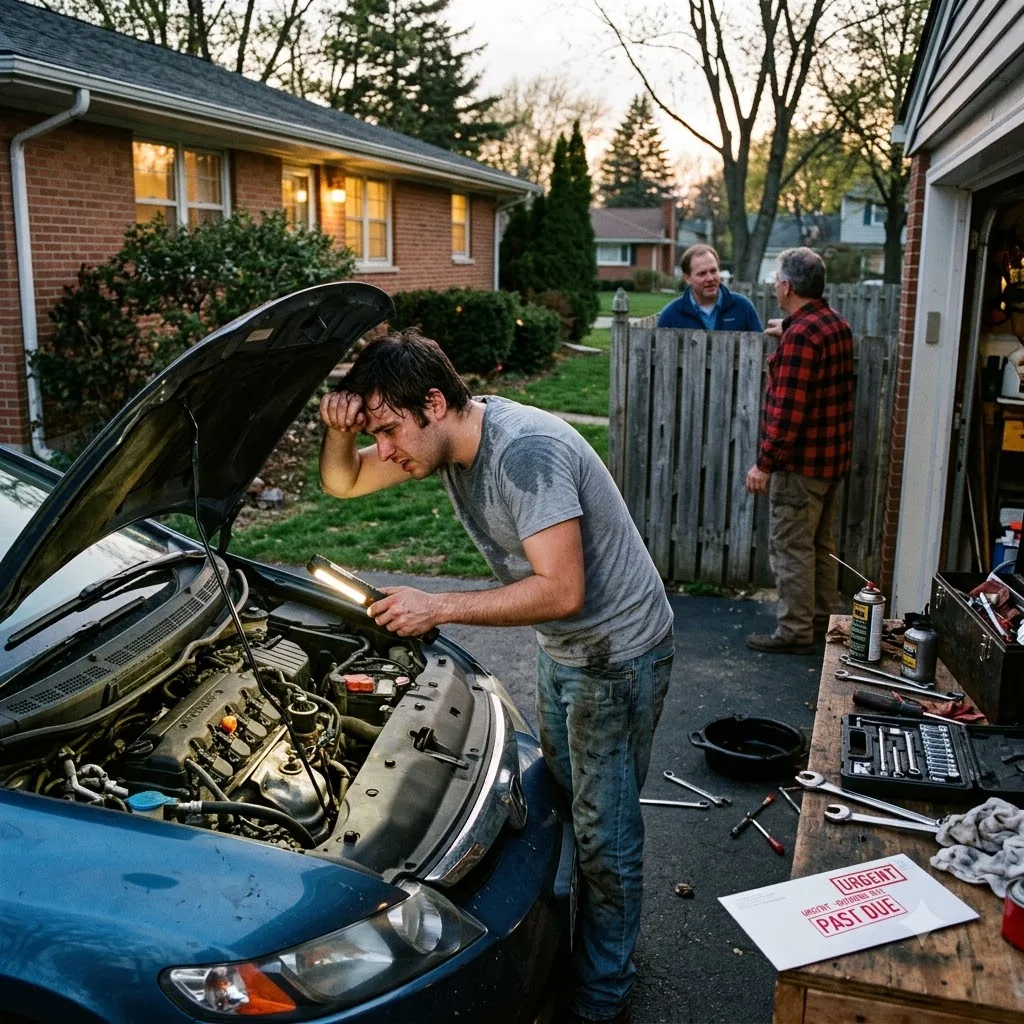
My dad leaned deep into the engine bay of his 1998 Ford Ranger, his greasy hands wrestling with a stubborn alternator belt while he shouted over the hood to our neighbor, Mr. Henderson. I stood frozen beside the front passenger tire, gripping a heavy metal flashlight with painfully sweaty palms, my eyes locked on the workbench directly behind my dad’s back. Sitting right there, tucked menacingly between a rusted can of WD-40 and a heavy socket wrench, was a thick envelope stamped with bright red letters that read FINAL NOTICE URGENT ACTION REQUIRED.
Henderson leaned against the doorframe of our garage, holding a lukewarm beer in a foam koozie, nodding along to a speech I had heard a hundred times before. My dad wiped a thick streak of dark grease across his forehead and pointed a ratchet at the driveway. He told Henderson that hard work still meant something in this country, that his boy Leo had just graduated with zero debt. He puffed out his chest, bragging loud enough for the whole street to hear that I had paid my way through four years of a prestigious private university just by bussing tables at a local diner.
I kept the beam of the flashlight steady on the alternator, but my hands were shaking so hard the light vibrated against the metal engine block. The diner job had paid absolute minimum wage. It was barely enough to cover my textbooks and a few slices of cheap pizza on the weekends. My dad had this grand, unwavering illusion of my financial discipline, an ironclad belief that I was a chip off the old block who understood the true value of a dollar. He did not know about the brutal panic attacks in my dorm room, the desperate late-night clicking on sketchy websites, or the massive, spiraling web of decisions that had actually funded my tuition. All he saw was the finished product, the expensive diploma we had framed yesterday, and a son who supposedly owed absolutely nothing to anyone.
The red envelope on the workbench seemed to pulse like a beacon in the dim garage light. I had checked the mail twenty minutes before Henderson walked over. I had meant to shove it deep into my backpack, to run upstairs and shred it, to flush the tiny pieces down the toilet exactly the way I had with the last three notices. But my dad had yelled for me to grab the flashlight and help him right away, startling me into a blind panic, and I had dropped the mail on the wood surface without thinking. Now it was a ticking bomb sitting exactly where my dad would reach the very second he needed his three-eighths wrench.
My dad gave the serpentine belt a final violent tug and grunted in deep satisfaction. He told Henderson that kids today were incredibly soft, that they took out massive loans they could never hope to pay back and expected the working taxpayer to bail them out. He slapped the fender of the truck, the metallic smack echoing sharply against the concrete walls. He stated firmly that in our house, we paid cash or we simply went without. Henderson muttered something agreeable and took a slow sip of his beer, looking at me with a cloying mixture of deep respect and mild pity.
I swallowed hard, my throat feeling like rough sandpaper. The beam of the flashlight wavered, drifting away from the engine block and hitting my dad straight in the side of the face. He snapped at me to hold it steady, complaining loudly that I had my head in the clouds now that I was an educated man. I muttered a quick apology and jerked the light back down to the belt. Every single second that passed was another horrific opportunity for him to turn around. I calculated the precise distance between my spot by the tire and the wooden workbench. It was maybe six feet. I could take two large strides, swipe the thick envelope, and crumple it into my jeans pocket in about three seconds. But my dad had eyes like a hawk, and Henderson was staring right at me from the doorframe.
“Pass me a shop towel, Leo,” my dad commanded, wiping his slick hands on his ruined denim jeans.
The clean blue shop towels were on the workbench. Right next to the heavy socket wrench. Right next to the blinding red stamp of the collections agency.
I froze completely, the heavy metal of the flashlight slipping a quarter-inch in my sweaty grip. I told him I had a rag in my back pocket. I patted my jeans awkwardly, pretending to search for it, my heart hammering a frantic rhythm against my ribs. My dad shook his head, muttering under his breath about how I would lose my own head if it was not screwed on straight. He pulled himself out from under the hood and turned around.
He took one heavy step toward the workbench. Henderson started talking about the upcoming local elections, completely oblivious to the catastrophic collapse of my entire world happening in slow motion. My dad did not answer him. He stopped dead in his tracks. He was staring down at the wooden planks, his grease-stained hand hovering just over the pile of blue shop towels. His fingers were mere inches from the thick white paper. The bright red FINAL NOTICE stamp was impossible to miss against the dull gray of his scattered tools.
He slowly lowered his hand, bypassing the towels entirely, and pinched the corner of the envelope.
My dad leaned deep into the engine bay of his 1998 Ford Ranger, his greasy hands wrestling with a stubborn alternator belt while he shouted over the hood to our neighbor, Mr. Henderson. I stood frozen beside the front passenger tire, gripping a heavy metal flashlight with painfully sweaty palms, my eyes locked on the workbench directly behind my dad’s back. Sitting right there, tucked menacingly between a rusted can of WD-40 and a heavy socket wrench, was a thick envelope stamped with bright red letters that read FINAL NOTICE URGENT ACTION REQUIRED.
Henderson leaned against the doorframe of our garage, holding a lukewarm beer in a foam koozie, nodding along to a speech I had heard a hundred times before. My dad wiped a thick streak of dark grease across his forehead and pointed a ratchet at the driveway. He told Henderson that hard work still meant something in this country, that his boy Leo had just graduated with zero debt. He puffed out his chest, bragging loud enough for the whole street to hear that I had paid my way through four years of a prestigious private university just by bussing tables at a local diner.
I kept the beam of the flashlight steady on the alternator, but my hands were shaking so hard the light vibrated against the metal engine block. The diner job had paid absolute minimum wage. It was barely enough to cover my textbooks and a few slices of cheap pizza on the weekends. My dad had this grand, unwavering illusion of my financial discipline, an ironclad belief that I was a chip off the old block who understood the true value of a dollar. He did not know about the brutal panic attacks in my dorm room, the desperate late-night clicking on sketchy websites, or the massive, spiraling web of decisions that had actually funded my tuition. All he saw was the finished product, the expensive diploma we had framed yesterday, and a son who supposedly owed absolutely nothing to anyone.
The red envelope on the workbench seemed to pulse like a beacon in the dim garage light. I had checked the mail twenty minutes before Henderson walked over. I had meant to shove it deep into my backpack, to run upstairs and shred it, to flush the tiny pieces down the toilet exactly the way I had with the last three notices. But my dad had yelled for me to grab the flashlight and help him right away, startling me into a blind panic, and I had dropped the mail on the wood surface without thinking. Now it was a ticking bomb sitting exactly where my dad would reach the very second he needed his three-eighths wrench.
My dad gave the serpentine belt a final violent tug and grunted in deep satisfaction. He told Henderson that kids today were incredibly soft, that they took out massive loans they could never hope to pay back and expected the working taxpayer to bail them out. He slapped the fender of the truck, the metallic smack echoing sharply against the concrete walls. He stated firmly that in our house, we paid cash or we simply went without. Henderson muttered something agreeable and took a slow sip of his beer, looking at me with a cloying mixture of deep respect and mild pity.
I swallowed hard, my throat feeling like rough sandpaper. The beam of the flashlight wavered, drifting away from the engine block and hitting my dad straight in the side of the face. He snapped at me to hold it steady, complaining loudly that I had my head in the clouds now that I was an educated man. I muttered a quick apology and jerked the light back down to the belt. Every single second that passed was another horrific opportunity for him to turn around. I calculated the precise distance between my spot by the tire and the wooden workbench. It was maybe six feet. I could take two large strides, swipe the thick envelope, and crumple it into my jeans pocket in about three seconds. But my dad had eyes like a hawk, and Henderson was staring right at me from the doorframe.
“Pass me a shop towel, Leo,” my dad commanded, wiping his slick hands on his ruined denim jeans.
The clean blue shop towels were on the workbench. Right next to the heavy socket wrench. Right next to the blinding red stamp of the collections agency.
I froze completely, the heavy metal of the flashlight slipping a quarter-inch in my sweaty grip. I told him I had a rag in my back pocket. I patted my jeans awkwardly, pretending to search for it, my heart hammering a frantic rhythm against my ribs. My dad shook his head, muttering under his breath about how I would lose my own head if it was not screwed on straight. He pulled himself out from under the hood and turned around.
He took one heavy step toward the workbench. Henderson started talking about the upcoming local elections, completely oblivious to the catastrophic collapse of my entire world happening in slow motion. My dad did not answer him. He stopped dead in his tracks. He was staring down at the wooden planks, his grease-stained hand hovering just over the pile of blue shop towels. His fingers were mere inches from the thick white paper. The bright red FINAL NOTICE stamp was impossible to miss against the dull gray of his scattered tools.
He slowly lowered his hand, bypassing the towels entirely, and pinched the corner of the envelope.