Story code: ST-000271
Part 4: The Indifferent Machine
The silence in the municipal chambers broke like a pane of glass. It started with a low, rumbling murmur from the back rows and erupted into an overwhelming roar of outrage. The council president banged his wooden gavel frantically against his sounding block, but the sharp cracks were entirely swallowed by the shouts of fifty betrayed locals.
At the front podium, the cashmere-clad lawyer’s pristine veneer fully collapsed. He snatched his leather briefcase, his eyes darting toward the exits. He barked an order to his private security contractors, who were no longer trying to intimidate the room but were now actively forming a tight perimeter around him to block the furious advance of several elderly Oak Creek residents. Deputy Miller didn’t lift a finger to help the corporate team, simply crossing his arms and watching with a hard, satisfied stare as the mercenaries shoved their way out the side door.
“Order! We will have order!” the council president shouted into his microphone, his face flushed a deep, panicked crimson. “This session is suspended! The emergency ordinance vote is tabled indefinitely pending a state review of these documents!”
Wade did not smile. He didn’t feel the rush of victory. The deep purple bruises around his wrists throbbed with a dull, rhythmic burn as he carefully gathered his papers, sliding the pre-drafted deeds and the neighborhood watch roster back into his manila envelope. Several people patted his shoulder as he walked up the center aisle, but he barely registered their voices. He felt hollowed out, deeply unsettled by how close the town had come to being legally dismantled.
He pushed through the heavy double doors of the municipal building, stepping out into the biting chill of a driving, freezing rain. The parking lot was awash in the harsh, flickering glare of sodium streetlamps, the wet asphalt slick and shimmering.
Wade zipped his canvas jacket up to his chin, his heavy work boots splashing through shallow puddles as he moved toward his truck. Halfway across the lot, he stopped.
Elena stood near the edge of the pavement, far away from the concrete awning where a few stragglers were seeking shelter. She had her arms wrapped defensively around her torso, her hair plastered to her cheeks by the downpour. She was staring blankly at the wet gravel, oblivious to the freezing rain soaking through her thin wool coat.
Wade altered his path, approaching her slowly. He stopped several feet away, hyper-aware of how the lawyer had invaded her personal space over the past two days, refusing to make the same mistake.
“You’re going to catch a cold out here, Elena,” Wade said, keeping his voice steady and low.
She didn’t look up immediately. When she finally raised her head, her eyes were red-rimmed and exhausted. The engineered, hollow compliance the lawyer had forced upon her was gone, but it hadn’t been replaced by relief. She just looked devastated.
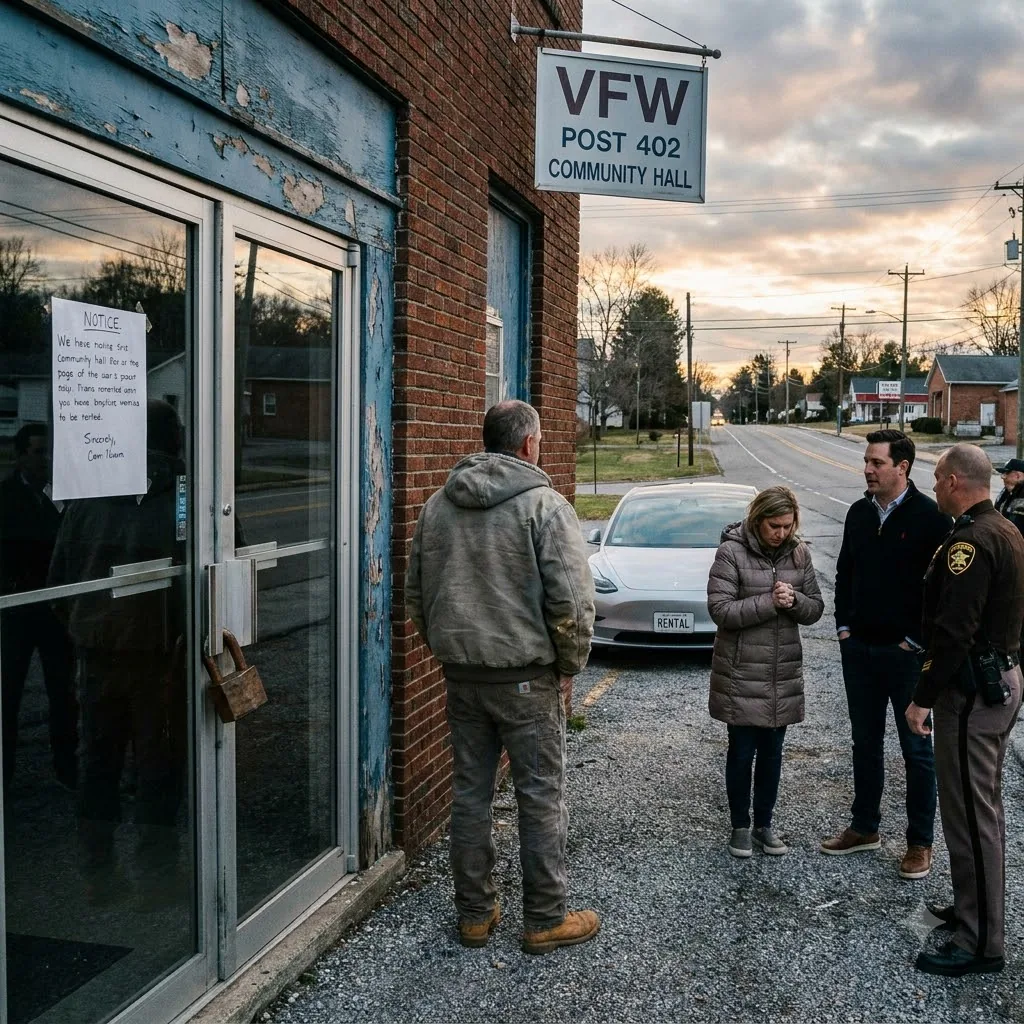
“I thought I was helping,” Elena said, her voice barely carrying over the rhythmic drumming of the rain against the parked cars. “He came to my house. He showed me pictures of your walkie-talkies. The flashlights. The way you all organized your patrols. He told me it was exactly how it started before… before what happened to me. He said you were stockpiling weapons in the VFW.”
Wade stood in the rain, the sheer, crushing weight of the corporate strategy settling firmly on his shoulders. They hadn’t just utilized a legal loophole to steal land. They had mined the darkest, most horrific day of this woman’s life, actively weaponizing her unresolved trauma, and aimed it like a laser at a dozen elderly people trying to keep their streetlights on.
“They knew exactly what buttons to push,” Wade said quietly. “They profiled the whole town. They needed a sympathetic face to sanitize a land grab, and they used you.”
Elena let out a harsh, bitter breath, the sound catching in her throat. She looked at Wade, her expression hardening with a complicated, painful honesty. “It doesn’t mean I like what you do, Wade. I still hate the watch. I hate the idea of guys walking around in the dark pretending to be cops. It terrifies me, and it always will.”
Wade nodded slowly. He didn’t try to defend the neighborhood watch. He didn’t offer a platitude about community safety or attempt to change her mind. The ideological gap between them was vast, built on genuine, traumatic foundations that a single exposed conspiracy couldn’t possibly bridge.
“I know,” Wade said simply.
At the far exit of the parking lot, the lawyer’s matte-black SUV idled at the stop sign. Its brake lights bled bright red onto the wet pavement for a long moment before it finally turned onto the highway, accelerating into the dark. Apex Innovations had lost their ordinance tonight. But Wade knew they had billions of dollars, entire floors of attorneys, and infinite patience. They would just find another loophole, another town, another vulnerability.
Elena watched the empty space where the SUV had been, looking small and utterly drained. Wade felt the exact same way. There was no triumph to be had, no grand reconciliation between them. Just the bleak, cold realization that they were small, fragile obstacles in the path of a massive, indifferent machine.
Wade stood quietly in the freezing rain with her, sharing the heavy, exhausted silence as the cold water soaked through his jacket, neither of them having the energy left to move.