Story code: ST-001174
Part 1: The Colorblind Math
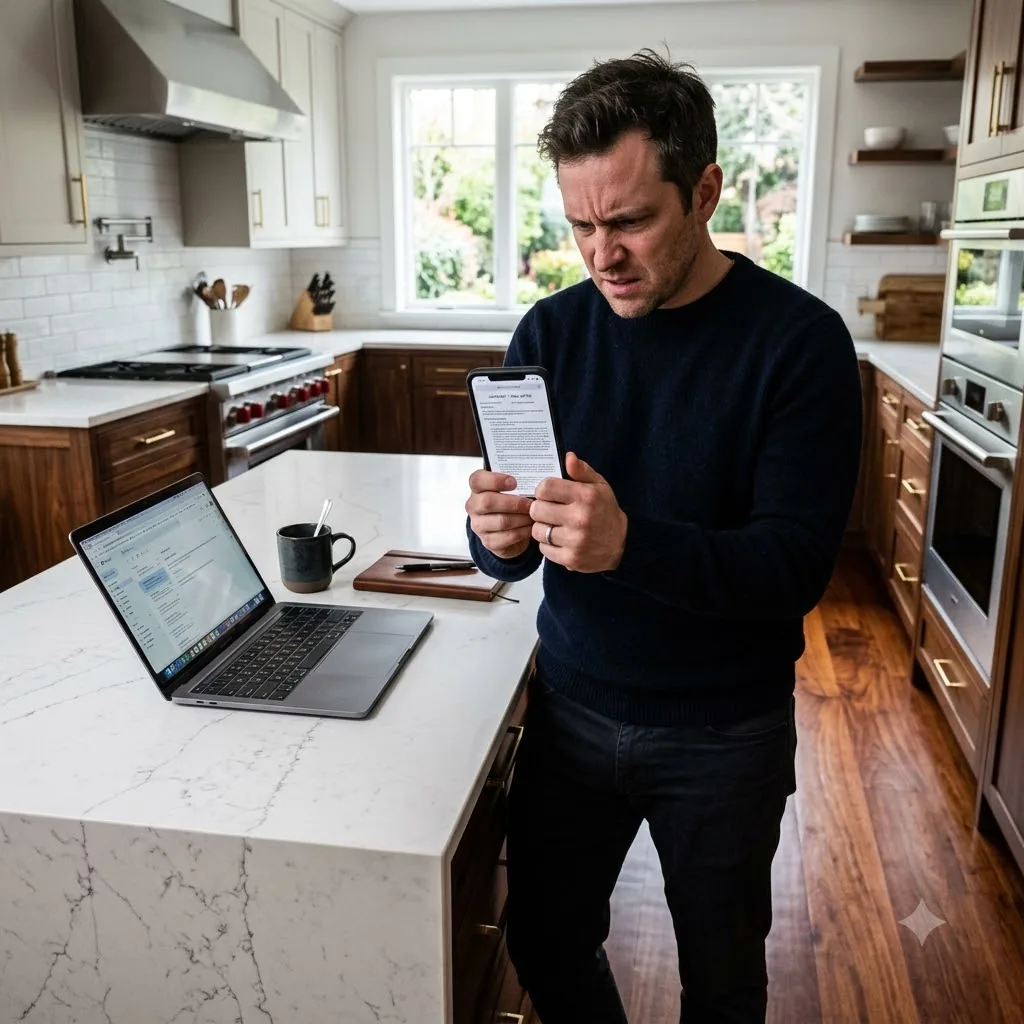
The email attachment opened with a sterile chime, rendering a single bolded number that stopped the breath in Marcus’s throat. Three hundred and fifteen thousand dollars. He stood paralyzed in the center of his newly finished custom kitchen, the imported Brazilian hardwood cool and solid beneath his socks, staring at an appraisal that matched his original purchase price down to the exact dollar. A year of relentless labor, mountains of contractor invoices, and the gleaming waterfall-edge quartz island in front of him had apparently added zero value to the historic property.
The speakerphone resting on the marble counter crackled to life. Arthur’s voice echoed through the vast, open-concept space, sounding entirely too casual for a man who had just detonated Marcus’s financial future.
“I know it is not the figure you were anticipating, Marcus,” Arthur said, the tinny audio barely masking his condescension. “But the market dictates the reality. I merely record the data.”
Marcus gripped the edge of the counter. The renovation loans were structured around a post-completion valuation of at least six hundred thousand. The bank required the equity to convert his short-term construction debt into a standard mortgage. At three hundred and fifteen thousand, the lenders would immediately call the notes. The resulting default would strip him of the house and drain his remaining liquid assets within thirty days.
“You valued it at the exact price I paid for the gutted shell,” Marcus said, his voice flat, fighting the urge to throw the phone against the custom subway tile. “There is a commercial-grade six-burner range in here. The entire foundation was reinforced. I put eighty thousand dollars into the hardwood and structural framing alone.”
“Upgrades are subjective,” Arthur replied smoothly. “A buyer does not always pay for an owner’s personal taste. The math is colorblind, Marcus. It does not see the sweat you put into the drywall. It only sees the comparable sales in your immediate radius.”
Marcus swiped his tablet screen, scrolling past the high-resolution photographs of his own flawless living room. The appraisal document was fifty pages of dense tables and boilerplate disclaimers. He navigated toward the grid where Arthur had listed the comparison properties used to drag the valuation down into the dirt.
“I walked this neighborhood for months before I bought,” Marcus said, pacing the length of the kitchen. “Nothing on this street in renovated condition has sold for less than half a million in four years.”
Arthur sighed softly, the sound of a patient teacher dealing with a slow student. “You are ignoring the anchor property. I had to weight the valuation heavily against Dr. Chen’s beautiful home at the end of your block. It is a nearly identical historic build. It sold thirty days ago. That transaction established an unyielding ceiling for your micro-market.”
Marcus stopped pacing. He knew Dr. Chen’s house well. It was a sprawling, immaculate Victorian that had always been the absolute pride of the neighborhood. The idea that it had sold for a bargain-basement price made no logical sense.
“Dr. Chen’s property is pristine,” Marcus stated, staring at the speakerphone. “If you used that as a comparable, my valuation should be astronomical.”
“The data is the data,” Arthur said. “Dr. Chen’s beautiful home closed for three hundred and ten thousand. I actually gave you a five-thousand-dollar premium for the new appliances. I was being generous.”
The panic radiating in Marcus’s chest shifted into a cold, hard knot of pure focus. He tapped the screen, pulling up the specific appraisal grid for the comparison properties. The bank would receive their automated copy of this exact PDF at five o’clock. He had less than four hours to dismantle Arthur’s report before the loan officers flagged his account for default.
Arthur continued talking, his voice dropping into a rhythmic drone of bureaucratic jargon. Marcus tuned him out completely. He pinched the screen of his tablet, zooming in on the column dedicated to Comp Number Two. Dr. Chen’s address sat at the top, followed by a cascading column of adjustments, square footage calculations, and sale conditions.
Arthur had zeroed out Marcus’s central air conditioning and deducted value for the lack of a detached garage, all while heavily anchoring the final math to that single transaction down the street.
Marcus enlarged the fine print at the very bottom of the Dr. Chen column. There was a mandatory reporting field for the conditions of the sale, a tiny box where appraisers were legally required to note any non-standard elements of the transaction. Arthur had buried the text in eight-point font, crowding it against the margin lines.
Marcus squinted at the screen, reading the string of letters and dates Arthur had used to justify the devastatingly low price. The breath left his lungs in a slow, sharp hiss as his eyes locked onto the specific parcel transfer code recorded in the final row.
The email attachment opened with a sterile chime, rendering a single bolded number that stopped the breath in Marcus’s throat. Three hundred and fifteen thousand dollars. He stood paralyzed in the center of his newly finished custom kitchen, the imported Brazilian hardwood cool and solid beneath his socks, staring at an appraisal that matched his original purchase price down to the exact dollar. A year of relentless labor, mountains of contractor invoices, and the gleaming waterfall-edge quartz island in front of him had apparently added zero value to the historic property.
The speakerphone resting on the marble counter crackled to life. Arthur’s voice echoed through the vast, open-concept space, sounding entirely too casual for a man who had just detonated Marcus’s financial future.
“I know it is not the figure you were anticipating, Marcus,” Arthur said, the tinny audio barely masking his condescension. “But the market dictates the reality. I merely record the data.”
Marcus gripped the edge of the counter. The renovation loans were structured around a post-completion valuation of at least six hundred thousand. The bank required the equity to convert his short-term construction debt into a standard mortgage. At three hundred and fifteen thousand, the lenders would immediately call the notes. The resulting default would strip him of the house and drain his remaining liquid assets within thirty days.
“You valued it at the exact price I paid for the gutted shell,” Marcus said, his voice flat, fighting the urge to throw the phone against the custom subway tile. “There is a commercial-grade six-burner range in here. The entire foundation was reinforced. I put eighty thousand dollars into the hardwood and structural framing alone.”
“Upgrades are subjective,” Arthur replied smoothly. “A buyer does not always pay for an owner’s personal taste. The math is colorblind, Marcus. It does not see the sweat you put into the drywall. It only sees the comparable sales in your immediate radius.”
Marcus swiped his tablet screen, scrolling past the high-resolution photographs of his own flawless living room. The appraisal document was fifty pages of dense tables and boilerplate disclaimers. He navigated toward the grid where Arthur had listed the comparison properties used to drag the valuation down into the dirt.
“I walked this neighborhood for months before I bought,” Marcus said, pacing the length of the kitchen. “Nothing on this street in renovated condition has sold for less than half a million in four years.”
Arthur sighed softly, the sound of a patient teacher dealing with a slow student. “You are ignoring the anchor property. I had to weight the valuation heavily against Dr. Chen’s beautiful home at the end of your block. It is a nearly identical historic build. It sold thirty days ago. That transaction established an unyielding ceiling for your micro-market.”
Marcus stopped pacing. He knew Dr. Chen’s house well. It was a sprawling, immaculate Victorian that had always been the absolute pride of the neighborhood. The idea that it had sold for a bargain-basement price made no logical sense.
“Dr. Chen’s property is pristine,” Marcus stated, staring at the speakerphone. “If you used that as a comparable, my valuation should be astronomical.”
“The data is the data,” Arthur said. “Dr. Chen’s beautiful home closed for three hundred and ten thousand. I actually gave you a five-thousand-dollar premium for the new appliances. I was being generous.”
The panic radiating in Marcus’s chest shifted into a cold, hard knot of pure focus. He tapped the screen, pulling up the specific appraisal grid for the comparison properties. The bank would receive their automated copy of this exact PDF at five o’clock. He had less than four hours to dismantle Arthur’s report before the loan officers flagged his account for default.
Arthur continued talking, his voice dropping into a rhythmic drone of bureaucratic jargon. Marcus tuned him out completely. He pinched the screen of his tablet, zooming in on the column dedicated to Comp Number Two. Dr. Chen’s address sat at the top, followed by a cascading column of adjustments, square footage calculations, and sale conditions.
Arthur had zeroed out Marcus’s central air conditioning and deducted value for the lack of a detached garage, all while heavily anchoring the final math to that single transaction down the street.
Marcus enlarged the fine print at the very bottom of the Dr. Chen column. There was a mandatory reporting field for the conditions of the sale, a tiny box where appraisers were legally required to note any non-standard elements of the transaction. Arthur had buried the text in eight-point font, crowding it against the margin lines.
Marcus squinted at the screen, reading the string of letters and dates Arthur had used to justify the devastatingly low price. The breath left his lungs in a slow, sharp hiss as his eyes locked onto the specific parcel transfer code recorded in the final row.