Story code: ST-001174
Part 4: The Psychological Tax
The dial tone blared from the speakerphone for five seconds before Arthur finally terminated the connection. Marcus didn’t move. He kept his eyes focused on the cold surface of the marble island.
Thirty minutes later, his phone buzzed with a direct reply from the bank’s Senior Dispute Underwriter. The automated default protocol was officially paused. Arthur’s report had been flagged for internal review and stripped from the file. But the reprieve came with a sharp caveat: Marcus had five days to procure a new, independent appraisal to satisfy the construction loan conversion, or the foreclosure clock would resume.
Marcus had won the immediate battle, but the bank still required a number. He needed a valuation that recognized the reality of the street. Arthur’s blatant corruption was an anomaly in its brazenness, but Marcus knew the underlying algorithm of the housing market wasn’t built for him. The next appraiser might not commit probate fraud, but they would still walk through the door carrying a lifetime of quiet, unwritten assumptions about who belonged in a high-end historic home, and what a house was worth based on who lived inside it.
Marcus could not afford another miscalculation. He could not rely on the assumption of colorblind math.
He drove to the hardware store and bought three large cardboard moving boxes. He carried them into his pristine living room, the newly installed Brazilian hardwood gleaming under the recessed lighting, and began to dismantle his life.
He started with the mantle. He took down the framed photograph of his parents standing proudly on the porch of their modest brick ranch in Atlanta. He wrapped it in newspaper and placed it at the bottom of the first box. Next went his framed degree from Morehouse College, the heavy embossed seal hidden beneath layers of bubble wrap.
He moved to the dining room. The vibrant, abstract canvas painted by a Black artist from his hometown-a piece he had saved up for months to purchase-came off the wall, leaving a blank, ghostly square on the fresh drywall. He slid it carefully into the hallway closet, out of sight.
In the den, he emptied the floating bookshelves. Out came the Baldwin essays, the Toni Morrison novels, the biographies of civil rights leaders. He boxed them all up, replacing them with generic architectural digest magazines and neutral, thrift-store landscape photography books he had bought explicitly for this purpose.
He walked into the master bathroom. He swept his shea butter, his specific hair care products, and his clippers into a plastic bin, shoving it to the very back of the deep vanity cabinet. He wiped down the counter and placed a single, unopened bottle of generic brand-name hand soap by the sink.
By midnight, the house was completely devoid of him. It looked like a developer’s staging model, sterile and entirely stripped of cultural markers. Any trace of his identity had been carefully excised, taped up in cardboard, and hidden in the dark.
Two days later, the new appraiser arrived. His name was Thomas. He walked through the echoing, depersonalized rooms with a laser measure and a tablet. He noted the commercial-grade six-burner range. He admired the waterfall-edge quartz island. He commented on the quality of the foundation reinforcement. Throughout the forty-minute inspection, Thomas treated Marcus with polite, professional detachment. He didn’t see a Black man’s hard-earned sanctuary; he saw a blank slate, an empty vessel ready to receive market value.
The new report hit Marcus’s inbox on a Thursday afternoon.
Marcus opened the attachment, scrolling past the boilerplate disclaimers. The bolded number rested at the bottom of the grid.
Five hundred and ten thousand dollars.
It was exactly what the property deserved. It was more than enough to trigger the bank’s automated approval. The short-term construction debt was instantly converted into a standard mortgage. The threat of default vanished. His equity, and his financial future, were secure.
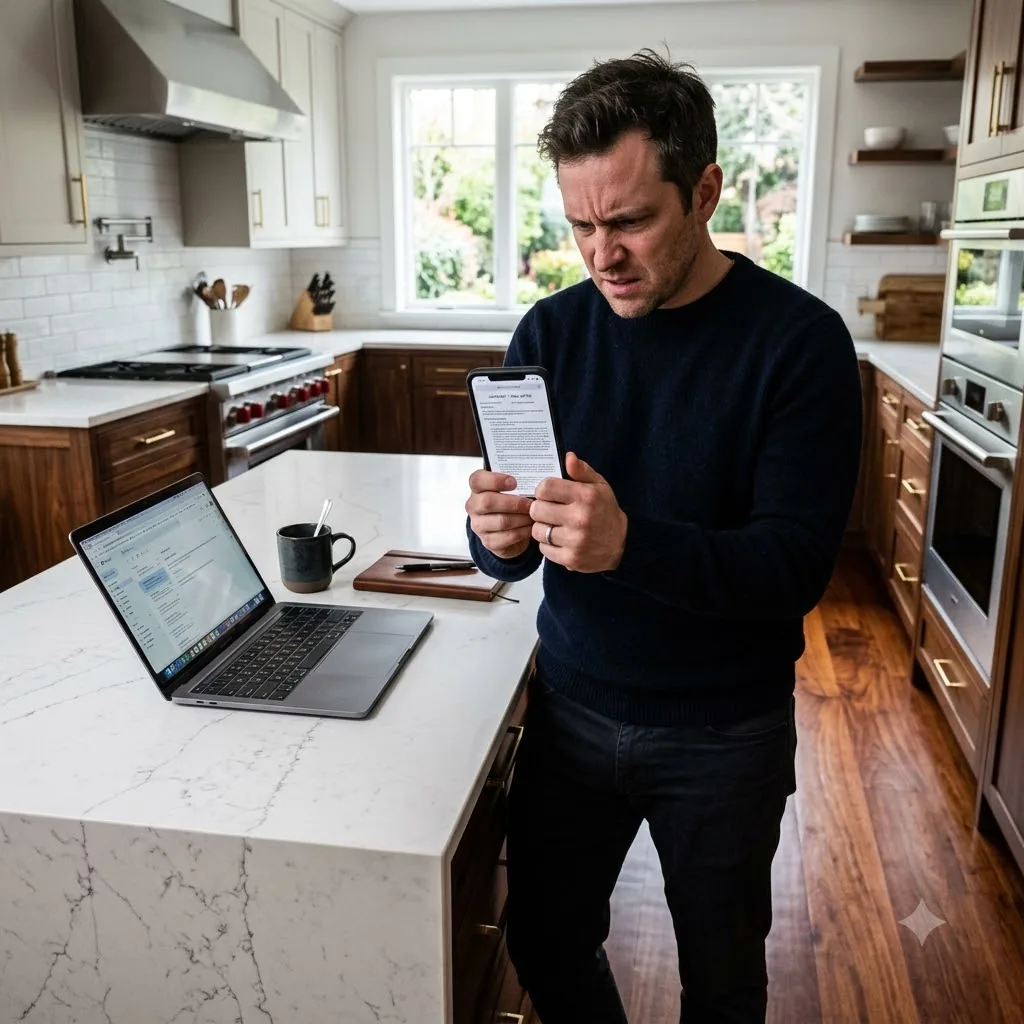
Marcus stood in the center of his custom kitchen. The late afternoon sun filtered through the expensive double-hung windows, casting long shadows across the empty living room. He swiped away the bank’s congratulatory email and locked his screen.
He looked at the bare mantle. He looked at the empty walls where his history should have been displayed. The moving boxes were still shoved into the back of the hallway closet. He had secured the loan, and he got to keep the house, but the silence in the open-concept space felt heavy and suffocating. He had beaten the system, but only by agreeing to erase himself from his own home. Marcus stood alone in the perfect, expensive, sterile house, feeling the deep, lingering ache of the psychological tax he had been forced to pay.