Story code: ST-001054
Part 4: The Cost of Compliance
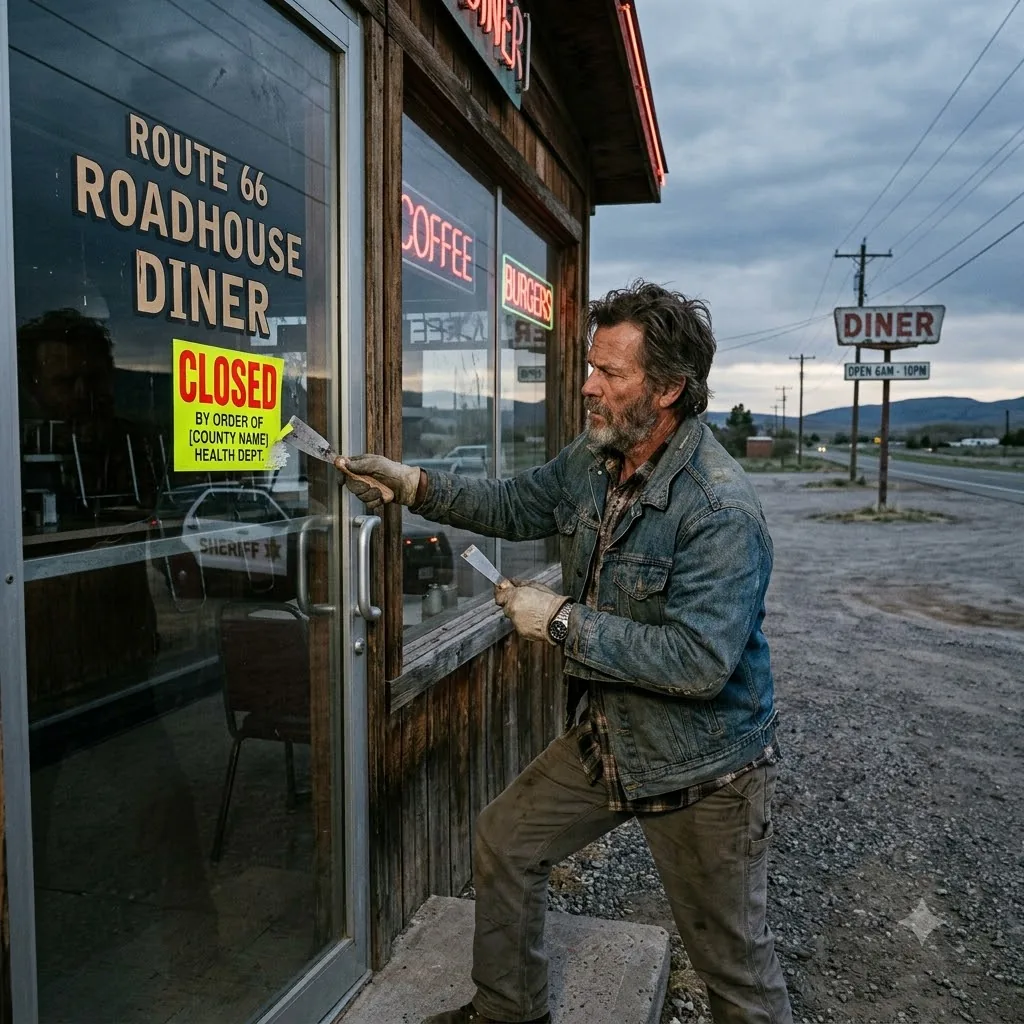
Maya Lin’s gray county sedan disappeared down the asphalt of the two-lane highway, leaving nothing behind but the sound of the harsh May wind rattling the front window of the Elkhorn Cafe. Silas did not move to lock the heavy glass double doors behind her. There was no point. No one was trying to get in, and there was absolutely nothing left inside worth protecting.
He looked down at the unencumbered operating license resting in his calloused palms. The gold embossed seal of the county felt heavy and sharply textured under his thumb. It was exactly what he had demanded. The state of Idaho now formally recognized his inherent right to cook, to serve, and to run his grandfather’s diner without their interference. There were no structural retrofit requirements, no probationary clauses, and no fines. He was perfectly compliant, legally vindicated, and completely free to open his doors to the public.
Silas carried the thick cardstock certificate past the empty chrome counter stools. The worn floorboards groaned loudly under his heavy steel-toed boots, the sound unnaturally sharp and jarring in the cavernous room. For his entire life, the Elkhorn had never been this quiet. Even in the dead of night, the building used to hum with the low vibration of the commercial refrigerators and the steady, comforting buzz of the neon sign outside. Now, the ambient noise was entirely gone, replaced by a suffocating, freezing stillness. He pushed his weight against the swinging doors and stepped into the kitchen.
The air back here was even colder, holding the deep, settled chill of a building that had spent a long winter without a functioning furnace. The massive stainless steel exhaust hood-the exact fire hazard the county had used to justify chaining his doors shut in August-hung silent and dead in the shadows. Silas reached out and rested his hand flat against the heavy steel of the flat top grill. It was ice cold, coated in a thin, undeniable layer of gritty dust. For thirty years, this metal had been warm by four in the morning, radiating heat and smelling of rendered bacon, strong coffee, and melted butter. Now, it smelled only of stale grease and total abandonment.
Sitting precisely in the center of the cold cooking surface was a thick stack of papers bound by a heavy black binder clip. It was not a neon orange county health notice. It was a formal bank foreclosure warning, delivered by a process server three days prior. The bold, sterile text at the top of the first page outlined the exact total of his defaulted commercial credit line, the six consecutive missed mortgage payments on the property, and the staggering mountain of debt he had accrued paying a downtown legal team to secure the gold-sealed piece of paper he currently held in his left hand.
He stared at the foreclosure notice, watching the harsh black ink bleed slightly into the white page where a drop of condensation from a leaky roof tile had struck it. He had bet the entire diner just to save the diner. The brutal paradox tasted like copper in the back of his dry throat.
Silas stepped away from the grill and moved slowly toward the cramped back office. The door was ajar. Inside, the small wooden desk was completely buried under past-due notices from wholesale meat suppliers, final disconnect warnings from the power company, and unpaid municipal water bills. But it was the empty space on the corkboard above the desk that forced him to stop breathing for a moment.
The four red pushpins were still stuck in the cork, forming a small, hollow rectangle where the photograph of him and his wife, Martha, used to be pinned. She had not left him a dramatic, tearful letter. She had simply packed her bags in late February, right after he quietly drained their joint retirement account to cover the appellate court filing fees. She had begged him for months to just fix the grease trap, to comply with the inspector, to keep the Elkhorn open and their staff paid. When she finally realized he loved his stubborn principles far more than their shared livelihood, she had driven away without a word. The house they shared was next on the bank’s foreclosure list.
He walked blindly back out to the main kitchen line. Four canvas aprons hung limp on the wall hooks near the dry dish pit. Luis. Hector. Sarah. Martha. He brushed his knuckles against the rough, stiff fabric of Luis’s apron. Maya Lin had been entirely right. The prep cook had not waited around for a glorious legal victory; the man had a family to feed. Silas had fought a bitter, nine-month war for their absolute right to work without government overreach, and in the process, he had successfully destroyed every single one of their jobs.
He had no money to buy a single sack of flour. He had no electricity to run the walk-in refrigerator. He had no staff to take an order, no vendors to deliver supplies, and no wife to share a cup of coffee with before the sun came up.
Silas slowly pushed back through the swinging doors into the dining room. He walked to the corner booth-Deputy Miller’s old Sunday spot-and slid into the seat. The faded red vinyl cracked and groaned under his weight in the freezing air. He placed the heavy cardstock certificate carefully on the center of the table, setting it down right next to the dusty, empty ceramic sugar dispenser.
He was legally victorious. The mandates were struck down. The heavy chain was finally off his front doors.
Silas sat completely alone in the freezing, silent diner, staring at his perfect, worthless prize, waiting for a breakfast rush that he knew was never going to come.