Story code: ST-001762
Part 1: The Deficit
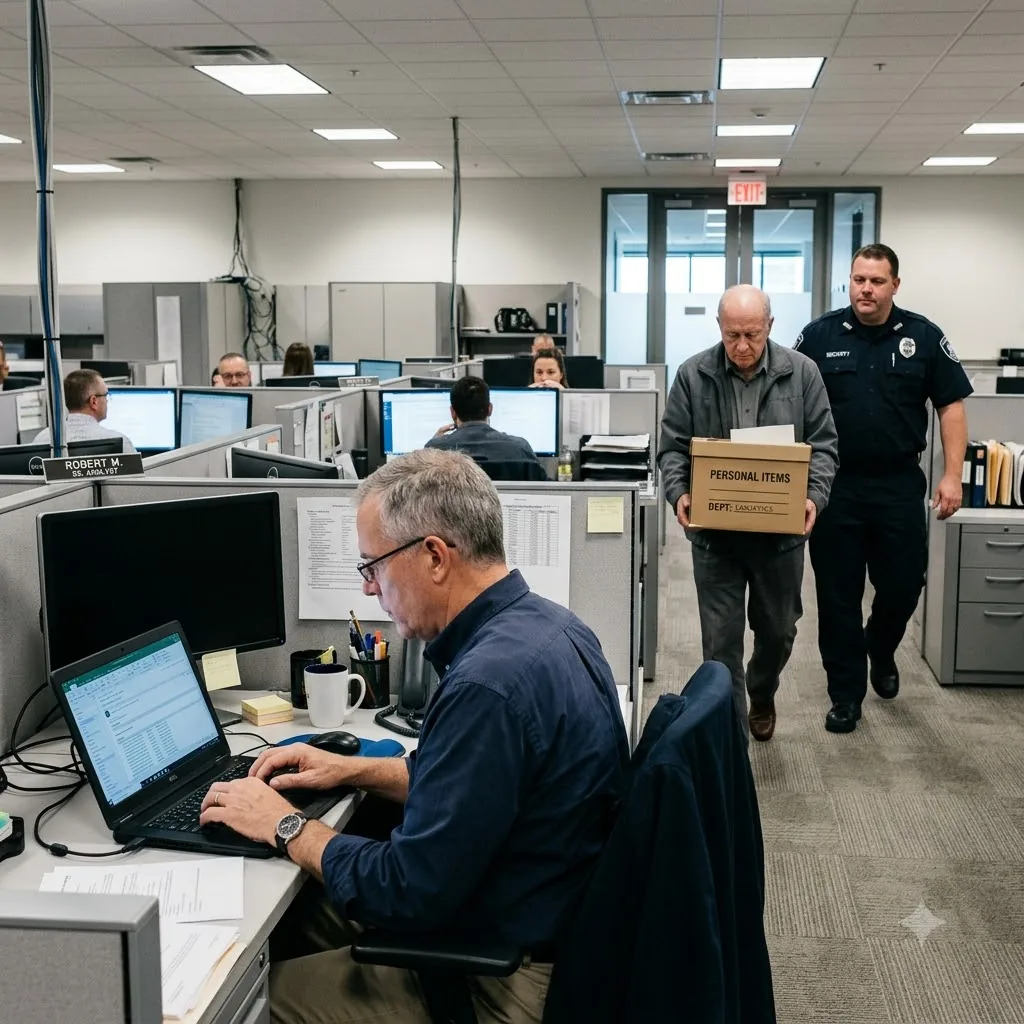
Frank did not even get to take his favorite coffee mug. Two security contractors in matching gray windbreakers stood at his shoulders, their hands hovering inches from his elbows while he swept pens and family photos into a standard-issue cardboard banker’s box. The entire bullpen was utterly silent, save for the dry, scraping sound of cardboard sliding across laminate. I kept my eyes fixed on my monitor, my hands resting on the keyboard. I was staring at a Q3 logistics spreadsheet, tapping the arrow keys to make a cell border bounce from column C to column D and back again. Nobody looked at Frank. Looking meant you might be next.
Standing at the head of the center aisle was Chloe, our HR Director. She held a silver tablet against her forearm, watching the eviction with detached neutrality. She did not say a word to sixty-one-year-old Frank. She simply watched the security guards escort him past the supply closet and out through the glass double doors. Frank looked back once, his face pale and slack, holding his box against his chest. I felt a cold knot tighten in my stomach. That was the fourth person over the age of fifty-five to be walked out in the last three weeks.
Chloe tapped something on her screen. Her French manicured nail made a sharp click against the glass. She lingered for a moment, her gaze sweeping over the rows of identical desks, before she finally turned and walked toward the executive elevators. I kept my eyes on my spreadsheet, counting her footsteps. The rhythmic clack of her heels grew fainter, fading completely as the heavy fire doors swung shut behind her.
I exhaled, my shoulders dropping a fraction of an inch. The bullpen slowly came back to life around me. Keyboards began to clatter again. I leaned back in my chair and glanced over at Frank’s empty desk. His ergonomic footrest was pushed crookedly against the modesty panel. Next to the desk, barely visible under the lip of the synthetic wood grain, was his blue recycling bin.
Right before the guards arrived, Frank had been reviewing a document. I had seen him pale, crumple it in a sudden spasm of anger, and throw it blindly. It had bounced off the rim of the shredder and fallen into the blue bin. The guards appeared thirty seconds later.
I slid my chair to the left. The wheels rolled smoothly over the low-pile carpet. I leaned down, keeping my head below the partition wall, and reached into the blue plastic bin. My fingers closed around the tightly wadded ball of printer paper. I pulled it back to my desk, my pulse thrumming in my ears.
I flattened the paper against my thigh, smoothing out the harsh creases. The corporate letterhead sat at the top, crisp and black. Below it was a title in bold, underlined text.
Cultural Fit and Risk Assessment.
I scanned the paragraphs of sterile HR jargon. It was Frank’s termination justification. But it was not about his performance. Frank had been the top logistics coordinator in the region for four years running. The sheet detailed entirely different metrics. There was a section labeled Automated Tracking Deficit. Below it were rows of data points outlining Frank’s physical movements and micro-behaviors. It recorded his average time away from his desk. It logged the duration of his bathroom breaks down to the second. It noted a decline in his keystroke velocity.
It was a manufactured paper trail. They were using the building’s internal tracking systems to build cases against the older staff. The deficit scores were heavily weighted toward physical stamina and sustained seated immobility, metrics naturally skewed against anyone with a bad knee or an aging bladder. The data was perfectly arranged to justify termination for cause, stripping Frank of his severance package and early retirement benefits. It was a legally bulletproof way to purge the expensive older tier of employees.
I read the deficit numbers again, realizing my own badge swipes and keystrokes were being filtered through the exact same system. Every time I stood up to stretch, the tracking system was building a ledger. I realized I was clutching the paper so hard my knuckles had turned white. I needed to take a photo of it with my phone before facilities emptied the bins.
The sharp, unmistakable click of a high heel hitting the laminate floor sounded behind my right shoulder.
I froze, my hand hovering over my pocket, the crumpled assessment sheet still resting flat against my thigh. I had not heard the glass doors open. I had not heard footsteps crossing the carpeted section of the bullpen.
The clicking stopped. A shadow fell across my keyboard, blocking out the fluorescent overhead lights. The sharp, expensive scent of Chloe’s citrus perfume settled over my cubicle. A manicured hand rested on my partition wall.
I see you found Frank’s trash, Arthur.
Frank did not even get to take his favorite coffee mug. Two security contractors in matching gray windbreakers stood at his shoulders, their hands hovering inches from his elbows while he swept pens and family photos into a standard-issue cardboard banker’s box. The entire bullpen was utterly silent, save for the dry, scraping sound of cardboard sliding across laminate. I kept my eyes fixed on my monitor, my hands resting on the keyboard. I was staring at a Q3 logistics spreadsheet, tapping the arrow keys to make a cell border bounce from column C to column D and back again. Nobody looked at Frank. Looking meant you might be next.
Standing at the head of the center aisle was Chloe, our HR Director. She held a silver tablet against her forearm, watching the eviction with detached neutrality. She did not say a word to sixty-one-year-old Frank. She simply watched the security guards escort him past the supply closet and out through the glass double doors. Frank looked back once, his face pale and slack, holding his box against his chest. I felt a cold knot tighten in my stomach. That was the fourth person over the age of fifty-five to be walked out in the last three weeks.
Chloe tapped something on her screen. Her French manicured nail made a sharp click against the glass. She lingered for a moment, her gaze sweeping over the rows of identical desks, before she finally turned and walked toward the executive elevators. I kept my eyes on my spreadsheet, counting her footsteps. The rhythmic clack of her heels grew fainter, fading completely as the heavy fire doors swung shut behind her.
I exhaled, my shoulders dropping a fraction of an inch. The bullpen slowly came back to life around me. Keyboards began to clatter again. I leaned back in my chair and glanced over at Frank’s empty desk. His ergonomic footrest was pushed crookedly against the modesty panel. Next to the desk, barely visible under the lip of the synthetic wood grain, was his blue recycling bin.
Right before the guards arrived, Frank had been reviewing a document. I had seen him pale, crumple it in a sudden spasm of anger, and throw it blindly. It had bounced off the rim of the shredder and fallen into the blue bin. The guards appeared thirty seconds later.
I slid my chair to the left. The wheels rolled smoothly over the low-pile carpet. I leaned down, keeping my head below the partition wall, and reached into the blue plastic bin. My fingers closed around the tightly wadded ball of printer paper. I pulled it back to my desk, my pulse thrumming in my ears.
I flattened the paper against my thigh, smoothing out the harsh creases. The corporate letterhead sat at the top, crisp and black. Below it was a title in bold, underlined text.
Cultural Fit and Risk Assessment.
I scanned the paragraphs of sterile HR jargon. It was Frank’s termination justification. But it was not about his performance. Frank had been the top logistics coordinator in the region for four years running. The sheet detailed entirely different metrics. There was a section labeled Automated Tracking Deficit. Below it were rows of data points outlining Frank’s physical movements and micro-behaviors. It recorded his average time away from his desk. It logged the duration of his bathroom breaks down to the second. It noted a decline in his keystroke velocity.
It was a manufactured paper trail. They were using the building’s internal tracking systems to build cases against the older staff. The deficit scores were heavily weighted toward physical stamina and sustained seated immobility, metrics naturally skewed against anyone with a bad knee or an aging bladder. The data was perfectly arranged to justify termination for cause, stripping Frank of his severance package and early retirement benefits. It was a legally bulletproof way to purge the expensive older tier of employees.
I read the deficit numbers again, realizing my own badge swipes and keystrokes were being filtered through the exact same system. Every time I stood up to stretch, the tracking system was building a ledger. I realized I was clutching the paper so hard my knuckles had turned white. I needed to take a photo of it with my phone before facilities emptied the bins.
The sharp, unmistakable click of a high heel hitting the laminate floor sounded behind my right shoulder.
I froze, my hand hovering over my pocket, the crumpled assessment sheet still resting flat against my thigh. I had not heard the glass doors open. I had not heard footsteps crossing the carpeted section of the bullpen.
The clicking stopped. A shadow fell across my keyboard, blocking out the fluorescent overhead lights. The sharp, expensive scent of Chloe’s citrus perfume settled over my cubicle. A manicured hand rested on my partition wall.
I see you found Frank’s trash, Arthur.