Story code: ST-001762
Part 4: The Ghost in the Machine
I didn’t wait for Chloe to find her voice. I just turned and walked out of the server closet, leaving her standing in her stocking feet on the cold laminate. The heavy door clicked shut behind me, sealing her in with the humming servers and the pulsing green progress bar that was currently ending her career.
The walk back through the bullpen felt like moving underwater. The atmosphere was completely undisturbed, a snapshot of the eerie corporate normalcy I had lived in for over two decades. Keyboards clattered in a steady, hypnotic rhythm. Phones chimed with incoming emails. The security guard was still absent, presumably still down in Bay 4 wrestling with the autonomous forklifts I had deliberately crashed. Nobody looked up as I passed. Everyone kept their heads down, terrified that making eye contact might bump them to the top of the termination queue.
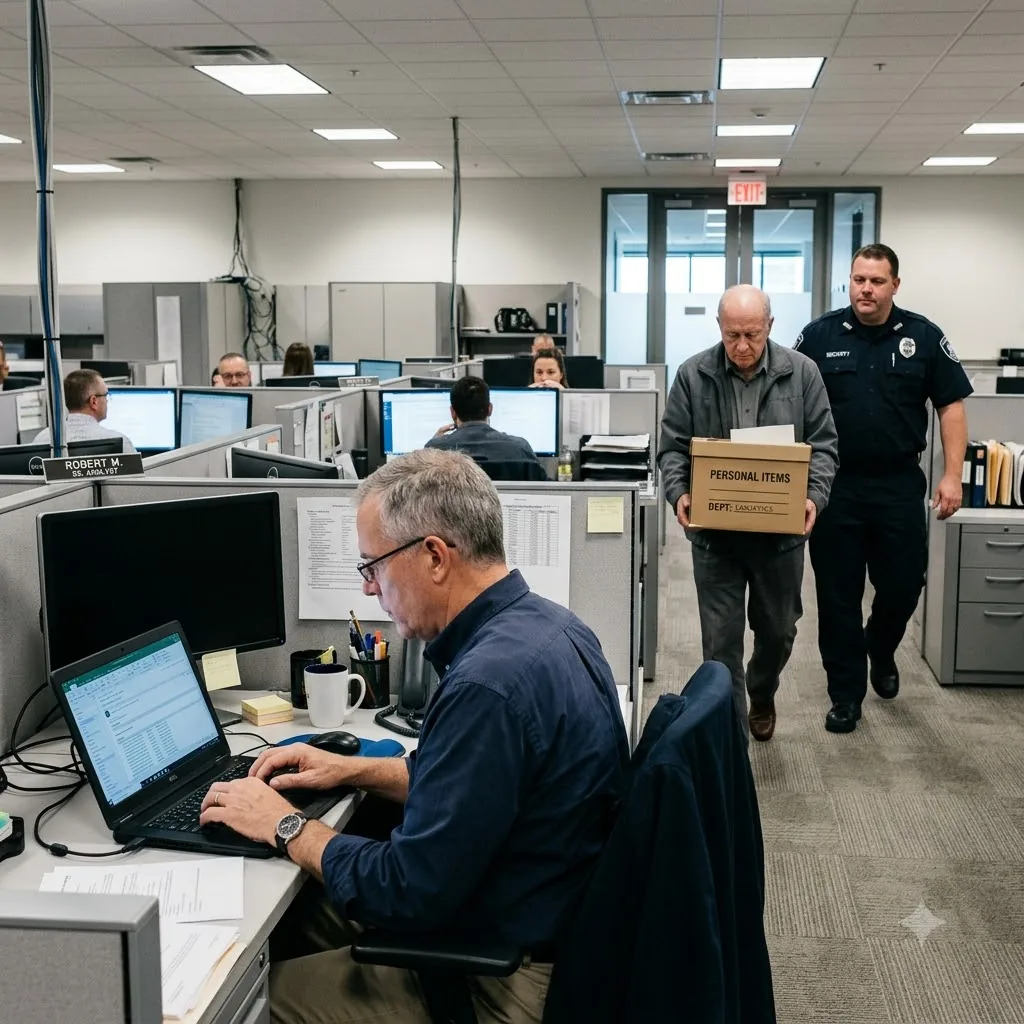
I didn’t pack a cardboard banker’s box. I didn’t grab my ergonomic footrest or the framed photograph of my late wife that sat next to my monitors. I simply picked up my car keys and my wool coat from the back of my chair. I walked to the elevator, rode it down to the lobby in total silence, and pushed through the heavy glass double doors into the late afternoon air.
Now, I sit in the driver’s seat of my ten-year-old sedan at the far edge of the employee parking lot. The engine is off. The windows are rolled down, letting the crisp autumn air chill my damp skin. The digital clock on my dashboard reads 3:42 PM. Exactly forty-eight minutes until my scheduled ‘Wellness Check’ termination.
Instead of sitting in HR Office 4A waiting for the axe to fall, I am watching a fleet of four unmarked black SUVs turn sharply off the main road and aggressively block the visitor parking zone. Men and women in dark windbreakers-not the cheap gray nylon of our security contractors, but the heavy, authoritative navy of state law enforcement-pour out of the vehicles. The Attorney General’s investigative task force moves incredibly fast when you hand them a fourteen-million-dollar corporate fraud case wrapped in an automated, perfectly documented bow.
Through the expansive glass facade of the ground-floor lobby, I watch the fallout begin. The state investigators flash their badges at the front desk. A moment later, the security turnstiles lock down with a heavy, visible clunk. Nobody is leaving. The flashing red emergency strobes trigger in the lobby, bathing the pristine marble in the color of panic.
I see the silhouette of our CEO, flanked by two panicked men from the legal department, rushing out of the private executive elevator. And then, I see Chloe. She is standing near the security desk, her silver tablet nowhere in sight. Two investigators flank her, their postures rigid and demanding. Even from across the parking lot, she looks incredibly small. The sterile, impenetrable armor of corporate HR has been entirely stripped away, leaving only a terrified middle manager caught in a digital snare she had helped weave.
I look down at my hands. Resting on my palm, cold and heavy, is a black, encrypted solid-state backup drive. While I was in the server closet, before Chloe had crept in, I hadn’t just opened the logistics port to stream the data. I had made a hard physical copy.
It holds the Sentinel Beta directory and the HR tracking logs, but it also holds the financial subfolders I found nested in the root directory. They hadn’t just been stealing our pensions to inflate their quarterly margins. They had been using our stolen metrics-Frank’s bathroom breaks, my typing fatigue, the collective physical decline of an aging workforce-to artificially inflate the AI’s predictive success rate. They then used those falsified beta results to justify extortionate, bloated licensing fees to the State Department of Corrections. They were charging the state triple the baseline rate for a ‘proven’ recidivism engine, built entirely on the backs of their own loyal employees. Fraud, extortion, and discrimination, all cleanly sorted into neat little spreadsheets.
I close my fist around the metal drive. The sharp edges dig into my skin, grounding me in the reality of the moment. I have survived. I am going to keep my full pension. Frank will likely get his job reinstated, or at the very least, a massive early settlement.
But as I look up at the towering glass building, at the four floors of intricate logistics pathways I had spent twenty-six years designing and optimizing, I feel a deep, hollow ache in my chest. I had built the arteries of this company. I had written the original code that made the pallets move, that allowed the scanners to talk to the servers, that made the entire corporate organism breathe.
They had taken my life’s work and weaponized it against the people I sat next to every day. They had turned my beautiful logistics network into a predatory cage. I am walking away with my retirement, but the emotional weight of surviving the very machine I helped build presses down on my shoulders, heavy and suffocating.
I turn the key in the ignition. The engine roars to life, a steady, honest mechanical hum that sounds nothing like the cold, calculating servers on the fourth floor. I put the car in drive and pull out of the parking lot, leaving the flashing lights, the glass building, and the machine I built fading away in the rearview mirror.