Story code: ST-001525
Part 1: The Compliance Trap
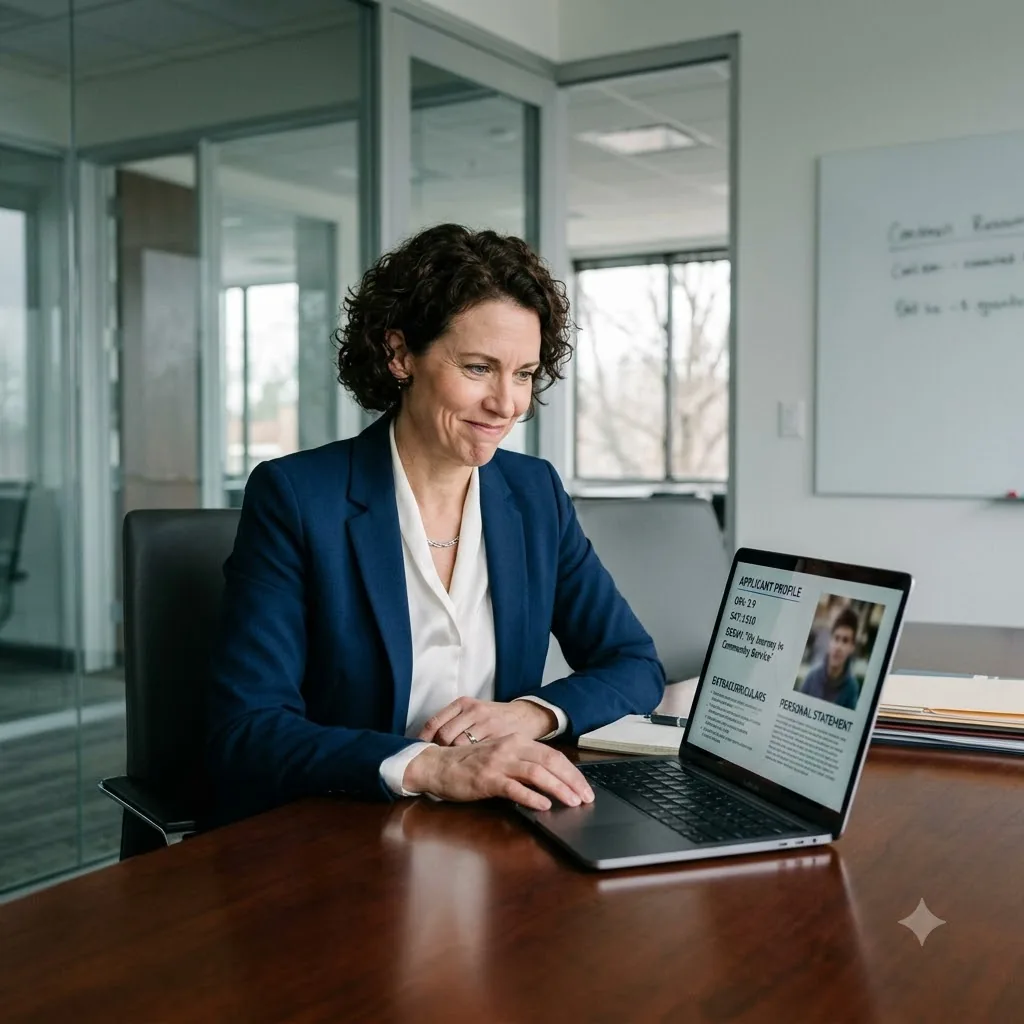
The fluorescent lights in Conference Room B buzzed at a frequency that made Sarah’s teeth ache. She tapped her stylus against the mahogany table, projecting the file of a dual-valedictorian from Illinois onto the eighty-inch display screen. The admissions cycle was in its final, brutal week, and the directive from the Dean was absolute. They had to eliminate five hundred flawless applicants by Friday to make room for the priority legacy admits.
“While the academic rigor is undeniably present, I am seeing a distinct lack of holistic wellness alignment,” Sarah said, keeping her tone perfectly flat. “The applicant’s community service hours feel highly transactional. We are looking for organic vulnerability, not a calculated accumulation of leadership points.”
The three junior admissions officers nodded in unison. Their pens scratched identical notes onto their evaluation pads. With one sentence of subjective jargon, a flawless high school career was categorized as ‘unaligned’ and moved to the rejection pile. This was the calibration meeting, the final gatekeeping layer before the acceptance letters were finalized. The university had an elite, forward-thinking image to maintain, and Sarah was its most efficient filter. She was a master at weaponizing the language of empathy to close doors.
She swiped her tablet to load the next file. The name at the top was Kevin Lin.
The summary page was a towering monument to teenage overachievement. He was first in a class of eight hundred at a highly competitive magnet school. He was captain of the state championship debate team and founder of an urban literacy non-profit called Page Forward. His standardized test scores were perfect. His personal statement was a meticulously crafted narrative about finding community through literature. He was exactly the kind of applicant they usually paraded in glossy recruitment brochures.
Sarah narrowed her eyes at the glowing screen. The absolute perfection was the problem. It left no room for the authentic struggle the committee had been instructed to prioritize this cycle. She needed an angle to downgrade him from a ‘definite admit’ to a ‘waitlist,’ which was effectively a soft rejection.
She clicked the hyperlink embedded in his application, opening the Page Forward non-profit website.
The page loaded instantly, featuring a sleek, minimalist design that looked like it cost ten thousand dollars to build. The hero image showed a diverse group of teenagers handing out books in a sunlit community center. The site was heavily optimized, featuring mission statements and impact metrics in bold sans-serif fonts. Sarah scrolled down to the ‘Team’ page. There were professional headshots of high school students with titles like Director of Outreach and Vice President of Synergistic Philanthropy.
It was entirely too polished. Sarah spent her days hunting for the seams in these fabricated teenage empires. She switched over to the ‘Recent Events’ gallery to examine the groundwork. The images were crisp, almost too crisp for a grassroots book drive.
She expanded a photo labeled ‘Spring Book Drive 2023’ and leaned closer to her monitor. The lighting was impossibly balanced for a fluorescent-lit high school gymnasium. She dragged the image to her desktop and adjusted the contrast levels. In the bottom left corner, just behind the edge of a stack of hardcover novels, there was a faint, semi-transparent lattice pattern.
It was a fragmented watermark. The image was a licensed stock photo, slightly cropped to hide the corporate origin.
Sarah felt a familiar rush of bureaucratic triumph. A fabricated non-profit was a classic application padding technique, usually executed with a bit more care than this. This was a clear integrity violation. However, an outright rejection for fraud required a formal tribunal, a legal review, and notifying the student’s high school counselor. That process took weeks and generated a massive, highly scrutinized paper trail.
Sarah preferred her own quiet method. She opened her email client and selected her custom template.
She typed with deliberate, venomous precision. She informed Kevin that his file had been flagged with a ‘Request for Compliance Clarification’ to ensure his extracurriculars aligned with the university’s core wellness values. To proceed with his evaluation, he would need to provide fifty pages of IRS tax-exempt filings, three years of audited financial statements, and notarized affidavits from his board of directors. She set the deadline for exactly forty-eight hours, citing cycle constraints and holistic review deadlines.
It was a trap built entirely of red tape and buzzwords. Faced with an impossible demand for a fake organization, applicants like Kevin always chose the same path. They panicked, ignored the email, and quietly clicked the ‘Withdraw Application’ button on the portal to avoid a permanent fraud mark on their academic record.
“Moving Kevin Lin to a pending status,” Sarah announced to the room, closing his file. “We require a compliance clarification on his extracurriculars to ensure community alignment.”
The junior officers nodded again, assuming it was just another routine institutional check. Sarah hit send, savoring the mental image of a panicked teenager scrambling for fake documents before giving up entirely. She closed the applicant viewer and prepared to bring up the next file.
Three minutes later, a notification banner slid across the top right corner of her screen.
It was a direct reply from Kevin Lin. There were no attached tax documents, no frantic pleas for an extension, and no apologies for the misunderstanding. The email contained exactly two things.
The first was a calendar invite for a secure Zoom meeting scheduled to start in exactly five minutes.
The second was a single, terrifyingly confident sentence.
The fluorescent lights in Conference Room B buzzed at a frequency that made Sarah’s teeth ache. She tapped her stylus against the mahogany table, projecting the file of a dual-valedictorian from Illinois onto the eighty-inch display screen. The admissions cycle was in its final, brutal week, and the directive from the Dean was absolute. They had to eliminate five hundred flawless applicants by Friday to make room for the priority legacy admits.
“While the academic rigor is undeniably present, I am seeing a distinct lack of holistic wellness alignment,” Sarah said, keeping her tone perfectly flat. “The applicant’s community service hours feel highly transactional. We are looking for organic vulnerability, not a calculated accumulation of leadership points.”
The three junior admissions officers nodded in unison. Their pens scratched identical notes onto their evaluation pads. With one sentence of subjective jargon, a flawless high school career was categorized as ‘unaligned’ and moved to the rejection pile. This was the calibration meeting, the final gatekeeping layer before the acceptance letters were finalized. The university had an elite, forward-thinking image to maintain, and Sarah was its most efficient filter. She was a master at weaponizing the language of empathy to close doors.
She swiped her tablet to load the next file. The name at the top was Kevin Lin.
The summary page was a towering monument to teenage overachievement. He was first in a class of eight hundred at a highly competitive magnet school. He was captain of the state championship debate team and founder of an urban literacy non-profit called Page Forward. His standardized test scores were perfect. His personal statement was a meticulously crafted narrative about finding community through literature. He was exactly the kind of applicant they usually paraded in glossy recruitment brochures.
Sarah narrowed her eyes at the glowing screen. The absolute perfection was the problem. It left no room for the authentic struggle the committee had been instructed to prioritize this cycle. She needed an angle to downgrade him from a ‘definite admit’ to a ‘waitlist,’ which was effectively a soft rejection.
She clicked the hyperlink embedded in his application, opening the Page Forward non-profit website.
The page loaded instantly, featuring a sleek, minimalist design that looked like it cost ten thousand dollars to build. The hero image showed a diverse group of teenagers handing out books in a sunlit community center. The site was heavily optimized, featuring mission statements and impact metrics in bold sans-serif fonts. Sarah scrolled down to the ‘Team’ page. There were professional headshots of high school students with titles like Director of Outreach and Vice President of Synergistic Philanthropy.
It was entirely too polished. Sarah spent her days hunting for the seams in these fabricated teenage empires. She switched over to the ‘Recent Events’ gallery to examine the groundwork. The images were crisp, almost too crisp for a grassroots book drive.
She expanded a photo labeled ‘Spring Book Drive 2023’ and leaned closer to her monitor. The lighting was impossibly balanced for a fluorescent-lit high school gymnasium. She dragged the image to her desktop and adjusted the contrast levels. In the bottom left corner, just behind the edge of a stack of hardcover novels, there was a faint, semi-transparent lattice pattern.
It was a fragmented watermark. The image was a licensed stock photo, slightly cropped to hide the corporate origin.
Sarah felt a familiar rush of bureaucratic triumph. A fabricated non-profit was a classic application padding technique, usually executed with a bit more care than this. This was a clear integrity violation. However, an outright rejection for fraud required a formal tribunal, a legal review, and notifying the student’s high school counselor. That process took weeks and generated a massive, highly scrutinized paper trail.
Sarah preferred her own quiet method. She opened her email client and selected her custom template.
She typed with deliberate, venomous precision. She informed Kevin that his file had been flagged with a ‘Request for Compliance Clarification’ to ensure his extracurriculars aligned with the university’s core wellness values. To proceed with his evaluation, he would need to provide fifty pages of IRS tax-exempt filings, three years of audited financial statements, and notarized affidavits from his board of directors. She set the deadline for exactly forty-eight hours, citing cycle constraints and holistic review deadlines.
It was a trap built entirely of red tape and buzzwords. Faced with an impossible demand for a fake organization, applicants like Kevin always chose the same path. They panicked, ignored the email, and quietly clicked the ‘Withdraw Application’ button on the portal to avoid a permanent fraud mark on their academic record.
“Moving Kevin Lin to a pending status,” Sarah announced to the room, closing his file. “We require a compliance clarification on his extracurriculars to ensure community alignment.”
The junior officers nodded again, assuming it was just another routine institutional check. Sarah hit send, savoring the mental image of a panicked teenager scrambling for fake documents before giving up entirely. She closed the applicant viewer and prepared to bring up the next file.
Three minutes later, a notification banner slid across the top right corner of her screen.
It was a direct reply from Kevin Lin. There were no attached tax documents, no frantic pleas for an extension, and no apologies for the misunderstanding. The email contained exactly two things.
The first was a calendar invite for a secure Zoom meeting scheduled to start in exactly five minutes.
The second was a single, terrifyingly confident sentence.