Story code: ST-000029
Part 1: The Orange Warning
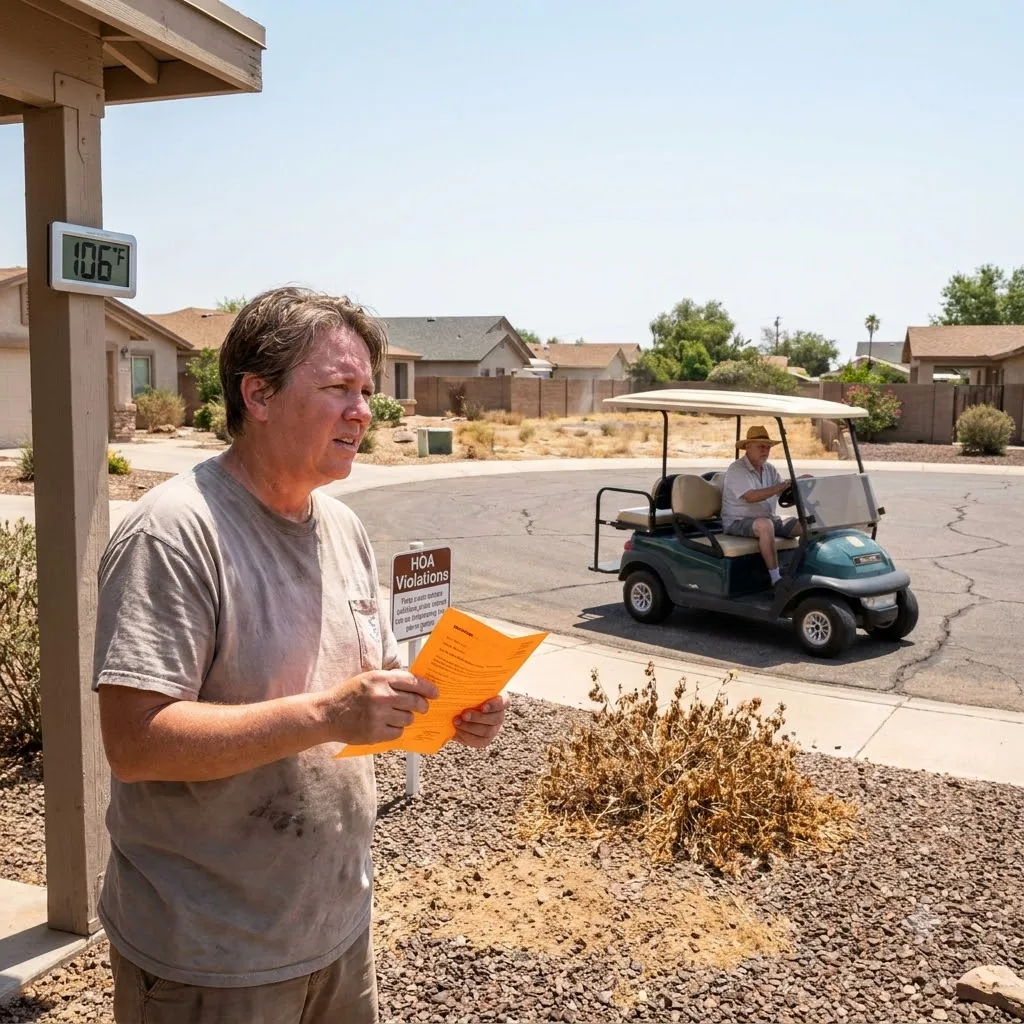
The neon-orange adhesive peeled off the hot metal of Leo’s front door with a sound like tearing skin. He held the thick cardstock by its corner, staring at the bold black lettering stamped across the top. NOTICE OF INTENT TO FILE LIEN. It was the third violation notice this week, but the first one actively threatening to seize his home.
Leo pushed through his front entryway, stepping out of the baking afternoon sun and into a living room that felt only marginally less like an oven. The central air conditioner had been broken since June. He dropped the heavy orange card onto the kitchen island. It slid across the smooth laminate and stopped exactly next to the pale yellow sheet of paper delivered by the county authorities three weeks ago.
The contrast between the two documents represented a financial death blow. The yellow paper mandated a total outdoor watering ban, citing a severe and prolonged regional drought. The county penalty for running a sprinkler was one thousand dollars per violation. The orange paper from the Oakridge Estates Homeowners Association demanded a perfectly lush, green lawn. The HOA penalty for dead turf was five hundred dollars a day.
Leo pressed his thumb against his cracked phone screen, pulling up his banking app. The screen illuminated a total checking balance of eighty-two dollars and fourteen cents. He set the phone face-down next to the two competing notices.
The heat radiating through the single-pane windows pressed heavily on his chest. His front lawn was currently a brittle, yellow mat of dead fescue, baked into total submission by a month of zero rain and strict obedience to the county water authority. Because he had followed the law, his HOA fine balance had swollen to three thousand dollars in just six days. If he turned his sprinklers on to appease the neighborhood board, the county fines would bankrupt him before the weekend. There was no middle ground, no appeals process, and no realistic way to generate the cash to survive either penalty.
A sudden flash of sunlight reflecting off glass caught his eye through the kitchen blinds. A silver golf cart was creeping down the center of the asphalt street. Arthur Pendelton, the Oakridge HOA president, sat upright behind the wheel.
Arthur wore his usual stiffly pressed khaki trousers and a pristine white polo shirt, seemingly untouched by the triple-digit temperature. He held a wooden clipboard in his left hand, steering the cart with his right. His eyes scanned the parched front yards of the neighborhood with methodical, unblinking precision.
Leo grabbed the neon-orange notice off the counter. The impossible math of his eighty-two-dollar bank account echoed in his ears. He shoved his front door open, stepping back out into the suffocating wall of afternoon heat. The silver golf cart had just rolled past his driveway, heading toward the cul-de-sac at a crawl.
Leo walked fast, his heavy boots crunching loudly over his dead grass before hitting the pavement. The heat radiating off the dark street asphalt burned upward through his rubber soles. Ahead of him, Arthur stopped the cart in front of the Miller residence two doors down. The older man produced a small digital camera from his chest pocket. He calmly took a photograph of a patch of wilting brown hydrangeas near the Millers’ brick mailbox. Arthur picked up a silver pen, clicked the top, and made a neat, deliberate checkmark on his clipboard.
Leo picked up his pace, breaking into a heavy jog. He stepped directly into the path of the golf cart just as Arthur pressed his foot to the accelerator. The electric motor whined, and Arthur slammed on the brakes. The heavy cart lurched to a halt a mere twelve inches from Leo’s knees.
Arthur adjusted his wire-rimmed glasses, looking down at Leo with an expression of profound irritation.
Leo slammed the neon-orange lien warning down onto the plastic dashboard of the cart. The thick paper smacked loudly against the steering column. Leo pointed a rigid finger at the bold print, his voice loud enough to echo down the quiet, baked street. He explained that a county mandate superseded neighborhood bylaws. He stated that the local government had banned all water usage under threat of massive fines. He made it clear that a five-hundred-dollar daily charge for obeying a municipal law was a direct path to eviction for an entire block of working families.
Arthur did not flinch. The older man picked up the orange paper, folded it perfectly in half, and held it out for Leo to take back. Arthur stated that the Oakridge property values depended on strict adherence to the community standard, regardless of external political theater. He added that the drought was a temporary inconvenience, while property depreciation was a permanent failure.
Leo refused to take the paper back. He stepped closer to the cart, wedging his boot against the front tire to block the older man from moving forward.
Arthur sighed, reaching into his pocket to retrieve his digital camera. He aimed the lens directly at Leo’s face and pressed the shutter button, the bright flash temporarily blinding Leo before Arthur reached for a bulky black radio attached to his belt.
The neon-orange adhesive peeled off the hot metal of Leo’s front door with a sound like tearing skin. He held the thick cardstock by its corner, staring at the bold black lettering stamped across the top. NOTICE OF INTENT TO FILE LIEN. It was the third violation notice this week, but the first one actively threatening to seize his home.
Leo pushed through his front entryway, stepping out of the baking afternoon sun and into a living room that felt only marginally less like an oven. The central air conditioner had been broken since June. He dropped the heavy orange card onto the kitchen island. It slid across the smooth laminate and stopped exactly next to the pale yellow sheet of paper delivered by the county authorities three weeks ago.
The contrast between the two documents represented a financial death blow. The yellow paper mandated a total outdoor watering ban, citing a severe and prolonged regional drought. The county penalty for running a sprinkler was one thousand dollars per violation. The orange paper from the Oakridge Estates Homeowners Association demanded a perfectly lush, green lawn. The HOA penalty for dead turf was five hundred dollars a day.
Leo pressed his thumb against his cracked phone screen, pulling up his banking app. The screen illuminated a total checking balance of eighty-two dollars and fourteen cents. He set the phone face-down next to the two competing notices.
The heat radiating through the single-pane windows pressed heavily on his chest. His front lawn was currently a brittle, yellow mat of dead fescue, baked into total submission by a month of zero rain and strict obedience to the county water authority. Because he had followed the law, his HOA fine balance had swollen to three thousand dollars in just six days. If he turned his sprinklers on to appease the neighborhood board, the county fines would bankrupt him before the weekend. There was no middle ground, no appeals process, and no realistic way to generate the cash to survive either penalty.
A sudden flash of sunlight reflecting off glass caught his eye through the kitchen blinds. A silver golf cart was creeping down the center of the asphalt street. Arthur Pendelton, the Oakridge HOA president, sat upright behind the wheel.
Arthur wore his usual stiffly pressed khaki trousers and a pristine white polo shirt, seemingly untouched by the triple-digit temperature. He held a wooden clipboard in his left hand, steering the cart with his right. His eyes scanned the parched front yards of the neighborhood with methodical, unblinking precision.
Leo grabbed the neon-orange notice off the counter. The impossible math of his eighty-two-dollar bank account echoed in his ears. He shoved his front door open, stepping back out into the suffocating wall of afternoon heat. The silver golf cart had just rolled past his driveway, heading toward the cul-de-sac at a crawl.
Leo walked fast, his heavy boots crunching loudly over his dead grass before hitting the pavement. The heat radiating off the dark street asphalt burned upward through his rubber soles. Ahead of him, Arthur stopped the cart in front of the Miller residence two doors down. The older man produced a small digital camera from his chest pocket. He calmly took a photograph of a patch of wilting brown hydrangeas near the Millers’ brick mailbox. Arthur picked up a silver pen, clicked the top, and made a neat, deliberate checkmark on his clipboard.
Leo picked up his pace, breaking into a heavy jog. He stepped directly into the path of the golf cart just as Arthur pressed his foot to the accelerator. The electric motor whined, and Arthur slammed on the brakes. The heavy cart lurched to a halt a mere twelve inches from Leo’s knees.
Arthur adjusted his wire-rimmed glasses, looking down at Leo with an expression of profound irritation.
Leo slammed the neon-orange lien warning down onto the plastic dashboard of the cart. The thick paper smacked loudly against the steering column. Leo pointed a rigid finger at the bold print, his voice loud enough to echo down the quiet, baked street. He explained that a county mandate superseded neighborhood bylaws. He stated that the local government had banned all water usage under threat of massive fines. He made it clear that a five-hundred-dollar daily charge for obeying a municipal law was a direct path to eviction for an entire block of working families.
Arthur did not flinch. The older man picked up the orange paper, folded it perfectly in half, and held it out for Leo to take back. Arthur stated that the Oakridge property values depended on strict adherence to the community standard, regardless of external political theater. He added that the drought was a temporary inconvenience, while property depreciation was a permanent failure.
Leo refused to take the paper back. He stepped closer to the cart, wedging his boot against the front tire to block the older man from moving forward.
Arthur sighed, reaching into his pocket to retrieve his digital camera. He aimed the lens directly at Leo’s face and pressed the shutter button, the bright flash temporarily blinding Leo before Arthur reached for a bulky black radio attached to his belt.