Story code: ST-001464
Part 1: The Error Code
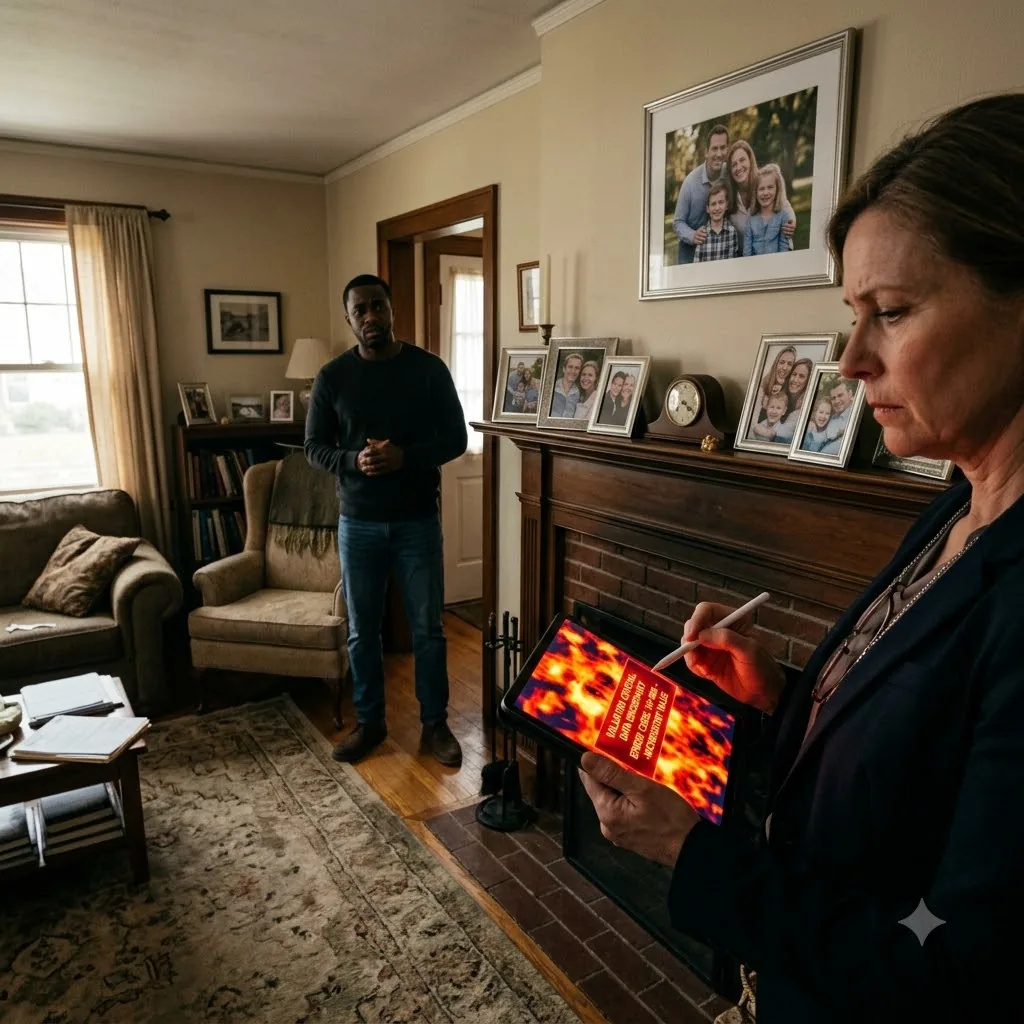
The silence in the living room carried the heavy, suffocating weight of a hospital waiting area. Marcus stood with his hands clamped tightly behind his back, shifting his weight like an uncomfortable guest in the exact spot where he usually read the Sunday paper. Across the Persian rug, the appraiser stood perfectly still before the fireplace mantle. The man stared intently at the framed photographs arranged perfectly along the ledge. They were pictures of a beaming blonde woman and two pale, freckled children, none of whom had ever set foot inside this house.
In the appraiser’s hands, a thick, black-cased tablet emitted a sharp, metallic ping. A red glow pulsed against the man’s wire-rimmed glasses. The harsh error code echoed off the vaulted ceiling, breaking the quiet with unnatural aggression.
Marcus swallowed hard, keeping his face entirely neutral. He had spent the last forty-eight hours systematically erasing his entire existence from the property. The Black art prints had been pulled from the walls and shoved into the darkest corner of the attic. The African mahogany statues were wrapped in heavy blankets in the trunk of his car. Even the spices in the kitchen had been curated, the scotch bonnets and jerk seasonings replaced with generic jars of oregano and basil. He had staged the house to match the photos on the mantle, borrowing the life of his business partner to ensure the neighborhood’s historic redlines and the appraiser’s own biases did not strip hundreds of thousands of dollars from the home’s valuation.
The appraiser tapped the screen twice. The tablet unleashed another discordant, aggressive buzz. It sounded like a digital deadbolt slamming shut.
“Moving to the kitchen,” the appraiser stated, not looking up from the glowing screen.
Marcus followed two steps behind, letting his sock-clad feet slide silently over the hardwood. He watched the man’s thumb scroll furiously. The software was supposed to be a standard valuation tool, a digital checklist for square footage, material quality, and structural integrity. Yet the machine seemed to be fighting the physical reality of the house itself. The appraiser ran a hand along the edge of the Calacatta marble island, a high-end feature Marcus had installed himself just six months prior. The man tapped a series of commands into the tablet.
The device buzzed again. Louder this time. The error tone vibrated with an outright hostility.
Marcus felt a cold bead of sweat slide down his spine. The house was immaculate. The floors gleamed, the modern appliances were top of the line, and the layout was an architect’s dream. The staged photographs on the mantle were supposed to be the final shield against systemic devaluation. By all logic, the appraiser should have been nodding in quiet approval. Instead, the man’s frown deepened into a permanent, hard crease.
“Logging the primary fixtures,” the appraiser muttered, aiming the tablet’s rear camera at the six-burner stainless steel range.
The screen flashed a violent scarlet. A long, sustained error tone filled the pristine kitchen. The appraiser let out an exasperated breath and tapped the cancel button with unnecessary force.
Marcus clenched his jaw so hard his teeth ached. He wanted to demand an explanation. He wanted to look at the screen and see exactly what parameters were failing, what hidden metrics the software was using to aggressively reject a spotless luxury interior. The urge to snatch the device burned in his chest. He forced his hands to remain perfectly still. He was playing the role of the quiet proxy, the helpful friend just letting the inspector inside while the owners were away. Any outburst would break the illusion he had so painstakingly built.
The appraiser turned away from the kitchen and marched down the main hallway toward the master suite. Marcus trailed him, feeling the ghosts of his own family in the negative space. The walls here used to hold canvas prints of his grandparents. Now, they were blank, sterile stretches of eggshell paint.
Every time the appraiser lifted the tablet, the same rejection tone sounded. The dining room generated a double buzz. The master bathroom, with its custom rainfall shower and imported tiles, triggered a flashing sequence that forced the man to restart the application entirely. The appraiser’s movements grew jerky and frustrated. He was no longer looking at the house. He was only looking at the software. The algorithm was telling him a story that contradicted the physical evidence right in front of his eyes, and he was choosing to believe the machine.
Marcus noticed the appraiser’s thumb hovering over a specific diagnostic overlay on the bottom right corner of the screen. The text was too small to read from this distance, but the data visualization was unmistakable. A sprawling, jagged red line spiked downward, pulling the entire valuation score into the gutter. The system was actively hunting for a reason to fail the property, fighting past every visual deception Marcus had deployed.
The appraiser stopped dead in the middle of the hallway. He did not look at the master bedroom. He did not look at the pristine baseboards. He stared entirely at a new prompt that had just overridden the main interface. The tablet emitted a shrill, continuous whine.
The man swiped away the warning, his face hardening into an expression of absolute authority. He spun around on his heel, closing the distance between himself and Marcus in two quick strides.
“I am required to inspect the core ventilation shafts right this second, and you will tear open the drywall behind that master closet to give me access.”
The silence in the living room carried the heavy, suffocating weight of a hospital waiting area. Marcus stood with his hands clamped tightly behind his back, shifting his weight like an uncomfortable guest in the exact spot where he usually read the Sunday paper. Across the Persian rug, the appraiser stood perfectly still before the fireplace mantle. The man stared intently at the framed photographs arranged perfectly along the ledge. They were pictures of a beaming blonde woman and two pale, freckled children, none of whom had ever set foot inside this house.
In the appraiser’s hands, a thick, black-cased tablet emitted a sharp, metallic ping. A red glow pulsed against the man’s wire-rimmed glasses. The harsh error code echoed off the vaulted ceiling, breaking the quiet with unnatural aggression.
Marcus swallowed hard, keeping his face entirely neutral. He had spent the last forty-eight hours systematically erasing his entire existence from the property. The Black art prints had been pulled from the walls and shoved into the darkest corner of the attic. The African mahogany statues were wrapped in heavy blankets in the trunk of his car. Even the spices in the kitchen had been curated, the scotch bonnets and jerk seasonings replaced with generic jars of oregano and basil. He had staged the house to match the photos on the mantle, borrowing the life of his business partner to ensure the neighborhood’s historic redlines and the appraiser’s own biases did not strip hundreds of thousands of dollars from the home’s valuation.
The appraiser tapped the screen twice. The tablet unleashed another discordant, aggressive buzz. It sounded like a digital deadbolt slamming shut.
“Moving to the kitchen,” the appraiser stated, not looking up from the glowing screen.
Marcus followed two steps behind, letting his sock-clad feet slide silently over the hardwood. He watched the man’s thumb scroll furiously. The software was supposed to be a standard valuation tool, a digital checklist for square footage, material quality, and structural integrity. Yet the machine seemed to be fighting the physical reality of the house itself. The appraiser ran a hand along the edge of the Calacatta marble island, a high-end feature Marcus had installed himself just six months prior. The man tapped a series of commands into the tablet.
The device buzzed again. Louder this time. The error tone vibrated with an outright hostility.
Marcus felt a cold bead of sweat slide down his spine. The house was immaculate. The floors gleamed, the modern appliances were top of the line, and the layout was an architect’s dream. The staged photographs on the mantle were supposed to be the final shield against systemic devaluation. By all logic, the appraiser should have been nodding in quiet approval. Instead, the man’s frown deepened into a permanent, hard crease.
“Logging the primary fixtures,” the appraiser muttered, aiming the tablet’s rear camera at the six-burner stainless steel range.
The screen flashed a violent scarlet. A long, sustained error tone filled the pristine kitchen. The appraiser let out an exasperated breath and tapped the cancel button with unnecessary force.
Marcus clenched his jaw so hard his teeth ached. He wanted to demand an explanation. He wanted to look at the screen and see exactly what parameters were failing, what hidden metrics the software was using to aggressively reject a spotless luxury interior. The urge to snatch the device burned in his chest. He forced his hands to remain perfectly still. He was playing the role of the quiet proxy, the helpful friend just letting the inspector inside while the owners were away. Any outburst would break the illusion he had so painstakingly built.
The appraiser turned away from the kitchen and marched down the main hallway toward the master suite. Marcus trailed him, feeling the ghosts of his own family in the negative space. The walls here used to hold canvas prints of his grandparents. Now, they were blank, sterile stretches of eggshell paint.
Every time the appraiser lifted the tablet, the same rejection tone sounded. The dining room generated a double buzz. The master bathroom, with its custom rainfall shower and imported tiles, triggered a flashing sequence that forced the man to restart the application entirely. The appraiser’s movements grew jerky and frustrated. He was no longer looking at the house. He was only looking at the software. The algorithm was telling him a story that contradicted the physical evidence right in front of his eyes, and he was choosing to believe the machine.
Marcus noticed the appraiser’s thumb hovering over a specific diagnostic overlay on the bottom right corner of the screen. The text was too small to read from this distance, but the data visualization was unmistakable. A sprawling, jagged red line spiked downward, pulling the entire valuation score into the gutter. The system was actively hunting for a reason to fail the property, fighting past every visual deception Marcus had deployed.
The appraiser stopped dead in the middle of the hallway. He did not look at the master bedroom. He did not look at the pristine baseboards. He stared entirely at a new prompt that had just overridden the main interface. The tablet emitted a shrill, continuous whine.
The man swiped away the warning, his face hardening into an expression of absolute authority. He spun around on his heel, closing the distance between himself and Marcus in two quick strides.
“I am required to inspect the core ventilation shafts right this second, and you will tear open the drywall behind that master closet to give me access.”