Story code: ST-001896
Part 1: The Friday Rush
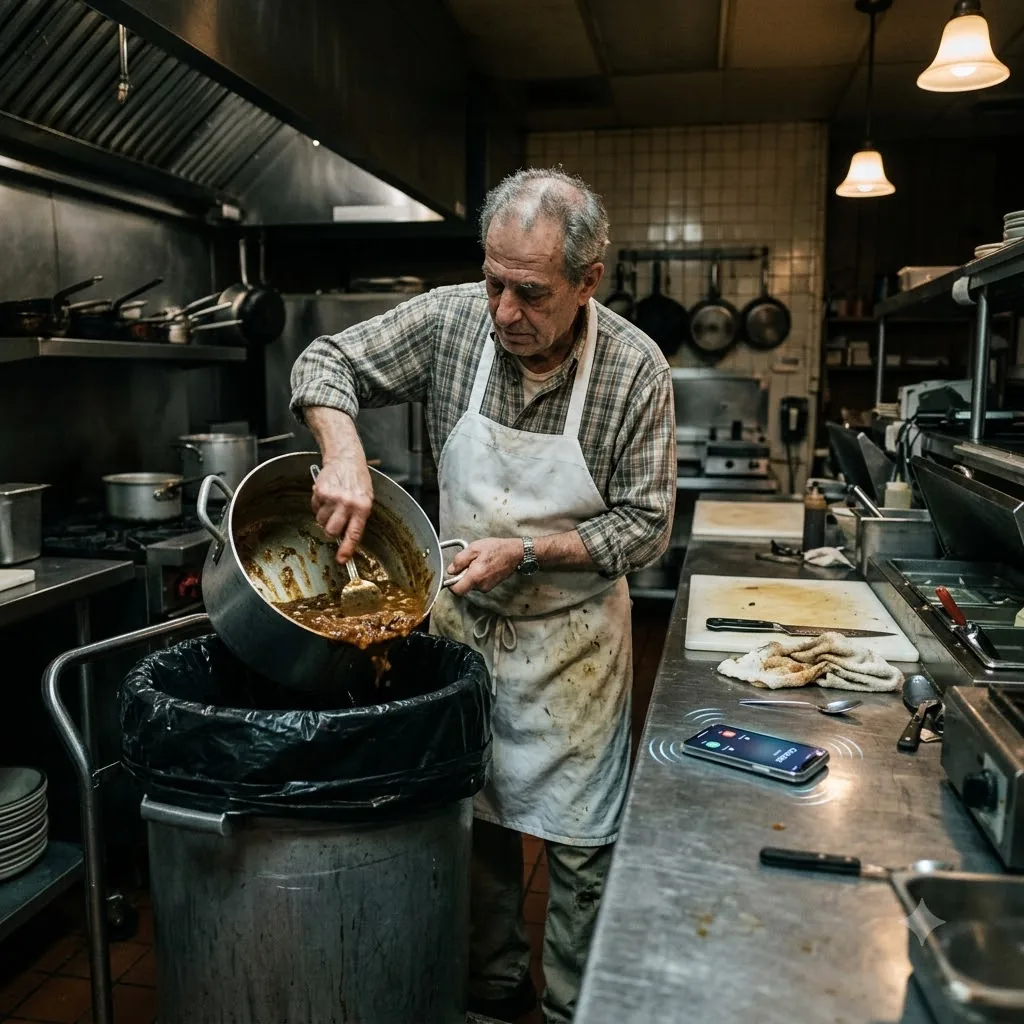
The oxtail stew hits the bottom of the black plastic bag with a heavy, wet thud. Eli scrapes the remaining meat and rich, marrow-thickened gravy from the fifty-quart aluminum pot. It is seven in the evening on a Friday. The dining room beyond the swinging kitchen doors sits entirely dark. Not a single chair has been pulled out, not a single water glass filled. There is only the sound of a silicone spatula scraping against the metal walls of the pot, followed by the sickening splash of perfectly braised beef sliding into the trash.
On the stainless steel prep station to his left, his cell phone rattles against the metal surface. It spins in tight, erratic circles as the vibration motor fires in an endless, stuttering rhythm. The screen flashes bright, projecting a strobe effect across the grease-stained ceiling tiles. Eli keeps his eyes locked firmly on the stew. He grips the rim of the massive pot, tilting it further, forcing another gallon of the day’s painstaking labor into the waste bin. The aroma of thyme, roasted garlic, and slow-caramelized onions fills the cramped kitchen, hanging in the air as a cruel mockery of a dinner service that will never happen.
He drops the massive, empty pot into the commercial sink. The metal clatters against the basin, ringing out loudly in the empty building. Normally, at this exact hour, this room would be a deafening symphony of shouting line cooks, calling ticket machines, sizzling flat tops, and the muffled roar of eighty hungry patrons out front. Tonight, the silence is thick and suffocating, interrupted only by the mechanical buzzing from the prep table.
Eli moves to the hot holding trays. He grabs a deep hotel pan full of baked macaroni and cheese, the top crust a perfect, bubbling golden-brown. He carries it to the trash can and tilts it forward. The entire block of pasta and melted cheddar slides out, landing heavily on top of the ruined stew. He returns for the collard greens. Then the buttered yeast rolls. They soak up the dark gravy at the bottom of the bag, turning instantly into soggy garbage.
The phone vibrates hard enough to slide two inches closer to the edge of the steel table. A continuous, unbroken stream of notifications lights up the lock screen. Red alert badges, rapid-fire pop-ups, a deluge of digital noise pouring in by the second. Eli wipes his greasy, shaking hands on his apron and turns his back to the device. He refuses to read the words scrolling across the glowing rectangle. The sheer volume of the incoming alerts makes his chest tighten, but he forces himself to focus entirely on the physical tasks left in the kitchen.
He walks into the walk-in cooler, the heavy insulated door thudding shut behind him, temporarily severing the sound of the buzzing phone. The chill air hits his sweating forehead. The wire shelves are stacked high with prepped ingredients for a weekend rush. Pints of freshly chopped parsley, quarts of house-made vinaigrette, dozens of hand-cut steaks resting on wire cooling racks. All of it completely useless now. He grabs a towering stack of plastic deli containers filled with creamy potato puree and carries them back out to the main kitchen.
The phone is still vibrating. It has reached the very edge of the prep table, teetering on the precipice of the steel lip. Eli opens the first container of puree and scoops it into the black bag with a heavy spoon. The physical act of this waste hurts. Three decades he has stood behind this exact line, turning raw ingredients into comfort. He has never thrown out a flawless batch of food in his life. He tosses the empty plastic container into the recycling bin and wrenches open the next one.
The phone finally tips over the edge, dropping onto the rubber anti-fatigue mat with a dull smack. It lands face up. The screen continues to flash violently in the dim light near the toes of his work boots. Eli steps directly over the glowing device and pushes his weight through the swinging doors, entering the dining room.
The streetlamps outside cast long, distorted shadows across the red vinyl booths and the black-and-white checkered floor. The neon sign in the window has been unplugged, its thick black cord hanging limply against the glass. The heavy brass deadbolt on the front door is thrown shut. He stands in the center of the silent room, his chest heaving, the rich smell of the wasted food clinging to his white uniform.
A massive, open-handed blow strikes the front door glass.
The impact shakes the heavy wooden frame. Eli freezes in the center of the dining room. Another violent strike hits the glass, significantly louder this time, followed by the frantic rattle of the locked brass handle being violently wrenched back and forth from the outside. A blinding, pure-white halo of light presses directly against the front window. The distinct, sterile glare of a portable LED ring light pierces through the darkness of the diner, illuminating the empty booths and pinning Eli perfectly in its center.
The oxtail stew hits the bottom of the black plastic bag with a heavy, wet thud. Eli scrapes the remaining meat and rich, marrow-thickened gravy from the fifty-quart aluminum pot. It is seven in the evening on a Friday. The dining room beyond the swinging kitchen doors sits entirely dark. Not a single chair has been pulled out, not a single water glass filled. There is only the sound of a silicone spatula scraping against the metal walls of the pot, followed by the sickening splash of perfectly braised beef sliding into the trash.
On the stainless steel prep station to his left, his cell phone rattles against the metal surface. It spins in tight, erratic circles as the vibration motor fires in an endless, stuttering rhythm. The screen flashes bright, projecting a strobe effect across the grease-stained ceiling tiles. Eli keeps his eyes locked firmly on the stew. He grips the rim of the massive pot, tilting it further, forcing another gallon of the day’s painstaking labor into the waste bin. The aroma of thyme, roasted garlic, and slow-caramelized onions fills the cramped kitchen, hanging in the air as a cruel mockery of a dinner service that will never happen.
He drops the massive, empty pot into the commercial sink. The metal clatters against the basin, ringing out loudly in the empty building. Normally, at this exact hour, this room would be a deafening symphony of shouting line cooks, calling ticket machines, sizzling flat tops, and the muffled roar of eighty hungry patrons out front. Tonight, the silence is thick and suffocating, interrupted only by the mechanical buzzing from the prep table.
Eli moves to the hot holding trays. He grabs a deep hotel pan full of baked macaroni and cheese, the top crust a perfect, bubbling golden-brown. He carries it to the trash can and tilts it forward. The entire block of pasta and melted cheddar slides out, landing heavily on top of the ruined stew. He returns for the collard greens. Then the buttered yeast rolls. They soak up the dark gravy at the bottom of the bag, turning instantly into soggy garbage.
The phone vibrates hard enough to slide two inches closer to the edge of the steel table. A continuous, unbroken stream of notifications lights up the lock screen. Red alert badges, rapid-fire pop-ups, a deluge of digital noise pouring in by the second. Eli wipes his greasy, shaking hands on his apron and turns his back to the device. He refuses to read the words scrolling across the glowing rectangle. The sheer volume of the incoming alerts makes his chest tighten, but he forces himself to focus entirely on the physical tasks left in the kitchen.
He walks into the walk-in cooler, the heavy insulated door thudding shut behind him, temporarily severing the sound of the buzzing phone. The chill air hits his sweating forehead. The wire shelves are stacked high with prepped ingredients for a weekend rush. Pints of freshly chopped parsley, quarts of house-made vinaigrette, dozens of hand-cut steaks resting on wire cooling racks. All of it completely useless now. He grabs a towering stack of plastic deli containers filled with creamy potato puree and carries them back out to the main kitchen.
The phone is still vibrating. It has reached the very edge of the prep table, teetering on the precipice of the steel lip. Eli opens the first container of puree and scoops it into the black bag with a heavy spoon. The physical act of this waste hurts. Three decades he has stood behind this exact line, turning raw ingredients into comfort. He has never thrown out a flawless batch of food in his life. He tosses the empty plastic container into the recycling bin and wrenches open the next one.
The phone finally tips over the edge, dropping onto the rubber anti-fatigue mat with a dull smack. It lands face up. The screen continues to flash violently in the dim light near the toes of his work boots. Eli steps directly over the glowing device and pushes his weight through the swinging doors, entering the dining room.
The streetlamps outside cast long, distorted shadows across the red vinyl booths and the black-and-white checkered floor. The neon sign in the window has been unplugged, its thick black cord hanging limply against the glass. The heavy brass deadbolt on the front door is thrown shut. He stands in the center of the silent room, his chest heaving, the rich smell of the wasted food clinging to his white uniform.
A massive, open-handed blow strikes the front door glass.
The impact shakes the heavy wooden frame. Eli freezes in the center of the dining room. Another violent strike hits the glass, significantly louder this time, followed by the frantic rattle of the locked brass handle being violently wrenched back and forth from the outside. A blinding, pure-white halo of light presses directly against the front window. The distinct, sterile glare of a portable LED ring light pierces through the darkness of the diner, illuminating the empty booths and pinning Eli perfectly in its center.