Story code: ST-000822
Part 2: The Fraud Trap
“Seven, eight,” Sterling finished, his voice slicing through the heavy silence of the sedan.
David’s lungs burned. He exhaled a ragged breath, his vision blurring for a fraction of a second as the dashboard lights seemed to flare. He knew that sequence of numbers as intimately as his own birthday. He had filled it out on countless financial aid forms for college, and more recently, on the mountains of hospital intake paperwork when his mother had desperately tried to list herself as his guarantor.
“How do you have that?” David demanded, his voice trembling before he forced it into a harsh whisper. “Where did you get her information?”
“It was provided on the application for a fast-cash signature loan exactly forty-eight months ago,” Sterling replied, resuming his polite, conversational rhythm as if he hadn’t just dropped a bomb into David’s lap. “Twenty-two thousand, four hundred dollars. The primary borrower is listed as David Miller. The co-signer is listed as your mother. The funds were deposited into a checking account ending in four-four-two-zero.”
David squeezed his eyes shut. That was his old college checking account, the one he had closed three years ago when he moved back home to start his job. “I didn’t take out a loan,” David said, panic clawing at his throat. “And my mother certainly didn’t co-sign one. This is identity theft. It has to be. I am calling the police right now and reporting you and your agency for fraud.”
“You are entirely within your rights to file a police report, David,” Sterling said. There was no hesitation, no fear in the collector’s voice. Instead, there was a sickeningly patient amusement. “However, you should understand the procedural realities of claiming familial identity theft before you make that call.”
“There is no procedural reality,” David snapped. “It is a crime.”
“When a debtor claims a family member fraudulently used their identity, or vice versa, the financial institutions are legally obligated to investigate,” Sterling explained, speaking with the practiced ease of a predator explaining the mechanics of a trap. “To protect the allegedly stolen assets, the bank immediately freezes all accounts associated with the co-signer. All of them, David. Pensions, checking accounts, joint savings. They remain frozen for the duration of the fraud investigation.”
David felt the blood drain from his face. The heater was still blasting, but he was suddenly freezing.
“A standard investigation takes anywhere from ninety to one hundred and twenty days,” Sterling continued. “Tell me, David, because I am looking at the public property records for the house you are currently parked in front of… can your parents survive without access to a single dime of their money for four months? Will the bank holding their second mortgage wait patiently while the detectives sort it out?”
David stared through the frosted windshield at the yellow porch light. They couldn’t survive a month. His parents were living paycheck to paycheck, aggressively funneling every spare dollar toward the second mortgage they had taken out to pay for his radiation treatments. A frozen bank account would mean a missed mortgage payment. A missed payment would trigger a default clause on the aggressive subprime loan they had been forced to take.
Sterling wasn’t just threatening to take the GoFundMe money; he was holding a gun to the family’s entire existence. If David paid the fake debt, he lost the medical money and his parents remained trapped under the second mortgage. If he fought it and claimed fraud, the resulting freeze would destroy his parents’ lives anyway.
“You’re lying,” David whispered, though the hollow ache in his stomach told him Sterling was entirely serious. “You wouldn’t freeze them.”
“I wouldn’t have to. The bank’s automated fraud department would do it the second you file the affidavit,” Sterling said. “But I am not an unreasonable man. I understand that medical recoveries are stressful. I am authorized to offer a one-time hardship settlement. If you route the twenty thousand dollars currently sitting in your account to us by midnight, I will personally write off the remaining two thousand, four hundred dollars of interest. We close the account. Your mother’s credit is untarnished. Her bank accounts remain untouched.”
David’s hand drifted down to his heavy winter jacket, his fingers brushing against the stiff paper of the cashier’s check in his pocket. Sterling’s intelligence was slightly outdated. The collector thought the twenty thousand was still sitting as a digital balance in David’s account, waiting to be wired. He didn’t know David had walked into a physical branch at three o’clock that afternoon and converted the entire sum into a piece of paper.
Before David could figure out how to leverage that tiny advantage, the front door of the house swung open.
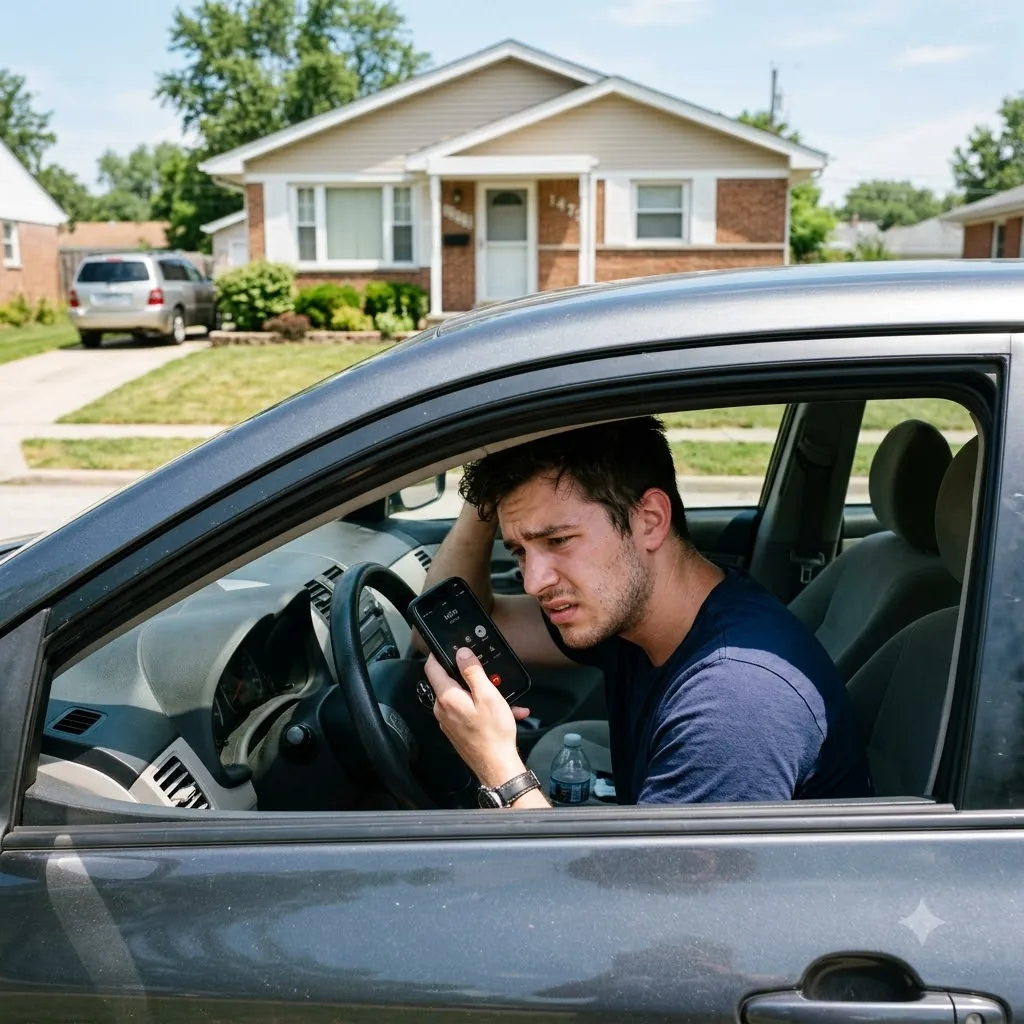
David gasped, dropping the phone onto the passenger seat. His father stepped out onto the porch, pulling a worn fleece jacket tight around his shoulders. He peered into the darkness, his eyes locking onto the idling sedan. A warm, tired smile broke across his father’s face, and he waved, gesturing for David to come inside.
David forced his hand up, waving back with a stiff, unnatural motion. He nodded, pantomiming that he just needed a minute to finish a call. His father gave a thumbs-up and stayed on the porch, leaning against the wooden railing, clearly waiting to greet him.
“I just emailed you the original loan application, David,” Sterling’s voice drifted up from the speaker on the passenger seat. “Review the signatures. Take a look at the secondary contact email. Tell me if you still want to call the police.”
David scrambled to pick up the phone, taking it off speaker and pressing it to his ear while opening his email app with trembling fingers. The new message was already at the top of his inbox. He tapped the PDF attachment.
It was a digital application from 2020. There was his old checking account number. There was his mother’s social security number. And at the bottom, under the digital signature for the co-signer, was a secondary contact email address.
It wasn’t his mother’s email. It was his father’s old work email address-an address his father had lost access to when he was laid off three years ago.
David stared at the screen, his breath catching in his throat. Through the windshield, he saw his father push off the porch railing and start walking down the driveway toward the car, his boots crunching loudly against the frozen grass.