Story code: ST-000851
Part 1: The Blue Crescent
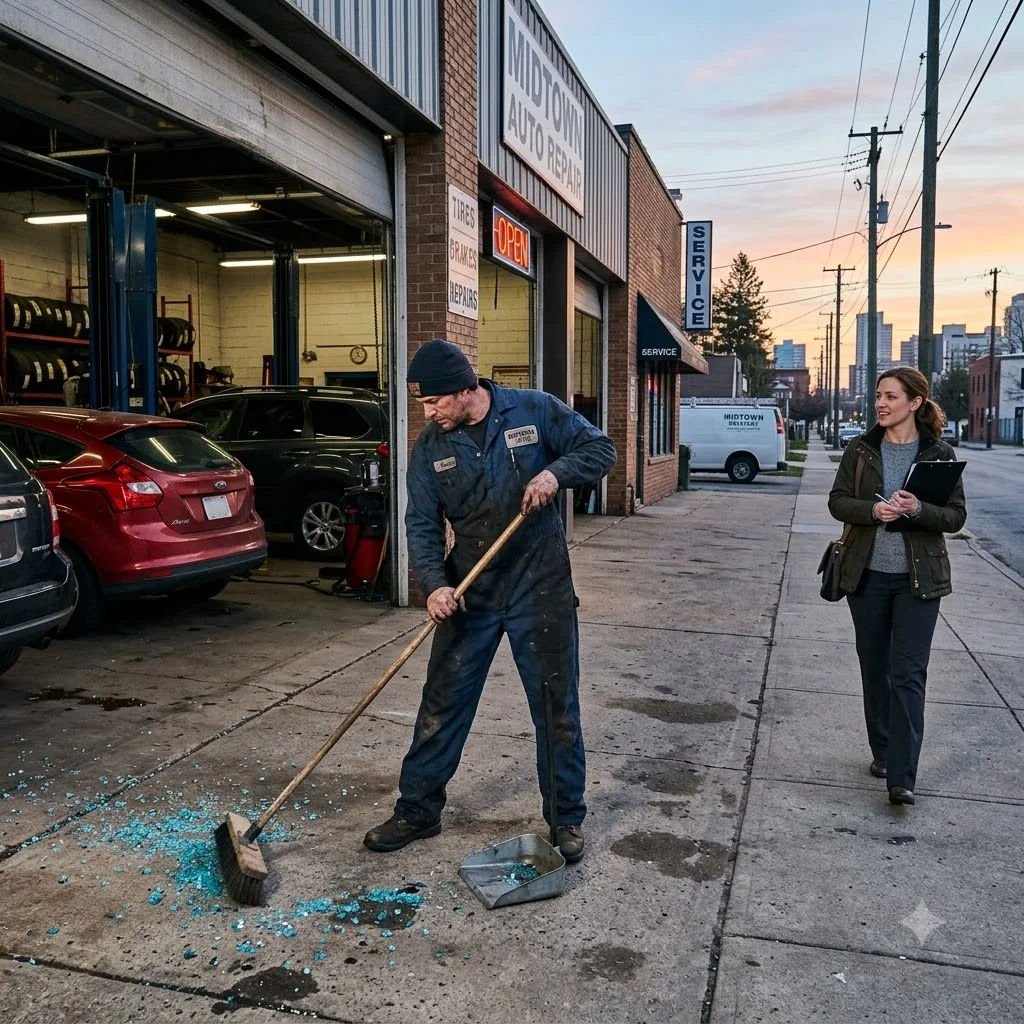
Marcus drove the stiff bristles of the push broom across the cracked concrete of bay three. The scraping sound echoed through the empty auto shop, a harsh rhythm that matched the grinding in his jaw. He focused entirely on the glittering pile of pulverized blue glass gathering near the drain grate. The morning air off the harbor still carried a damp chill, but sweat glued his uniform shirt to his spine.
It was not a random act of vandalism. Kids breaking beer bottles left jagged green and brown shards, usually accompanied by fast food wrappers. This glass was cobalt blue, crushed down to a fine, uniform grit, and scattered in a deliberate crescent across the threshold of his main bay. Marcus recognized the deep blue tint. Everyone who had survived in this neighborhood for more than a decade recognized it. He swept faster, forcing the toxic blue dust into a heavy black contractor bag, treating the mess like routine urban blight. He needed it gone before his mechanics arrived for their shifts.
He tied the bag shut with a vicious knot. The message left in the dead of night required no written words. The crescent shape and the blue grit established a non-negotiable deadline. He had until sundown to walk into City Hall and officially drop his zoning appeal.
The crunch of tires on gravel pulled his attention to the curb. A faded silver sedan parked at a harsh angle, half in the red zone. Elena stepped out into the gray morning light. She wore an oversized wool cardigan that looked like it belonged to her late son, and she clutched a thick wooden clipboard tight against her chest.
Marcus grabbed a rag from his back pocket and wiped his greasy hands, forcing his face into a mask of mild annoyance. He could not afford to let her see the adrenaline vibrating through his forearms.
Elena stopped at the edge of the driveway. She looked at the lingering traces of blue dust near his work boots but dismissed it as shop debris. Her eyes were bloodshot, circled by the dark shadows of a grief that had not rested in a year.
“You filed a formal injunction, Marcus,” she said, her voice trembling with a mix of exhaustion and betrayal. “I saw the public notice pinned to the door of the old pharmacy.”
“The neighborhood association has rules about commercial properties,” Marcus said. He turned his back on her to toss the rag onto a workbench. “It is not zoned for medical use. A clinic brings a different kind of foot traffic.”
“It is a harm-reduction center.” She slapped her hand against the stack of papers on her clipboard. “I have five hundred signatures from the people on these four blocks. People you have known for twenty years. People whose cars you fix. They all want the center open.”
Marcus leaned against the heavy metal rim of a tire balancer. He made sure to keep his posture relaxed, indifferent. “Petitions do not override city ordinances, Elena. The paperwork is filed.”
“You are intentionally destroying everything you built here.” She stepped closer, invading the oily workspace of bay three. “Everyone respects you. You let my family run a tab when my husband lost his job. You showed my boy how to change his brakes right there on that very lift. Now you are using your standing with the council to sabotage the one thing I am trying to build in his memory.”
He stared at a dark oil stain on the concrete. Let her hate him, he thought. Let the whole neighborhood think he had turned into a bitter, property-obsessed crank. A ruined reputation was a small price to pay. If he withdrew the zoning appeal and let her open that clinic, the people who left the blue glass would do far worse than file paperwork. But he could not tell her that. He could not let her anywhere near the reality of the crescent left at his door.
“My shop, my property values,” Marcus said, forcing the words out flat and hard. “I am not going to watch this street turn into a loitering zone.”
Elena gasped sharply, stepping back as if he had struck her. The cruelty in his voice worked perfectly. It built a wall between them, cold and unscalable.
“I do not know who you are anymore,” she whispered, her grip tightening on the clipboard until her knuckles turned white. “But I am not stopping. I am taking these petitions straight to the zoning board today.”
Marcus checked his watch. The sun would set at exactly six-fourteen. If she went to the board today, she would force a public hearing. That would lock the appeal in the system, making it impossible for him to drop it quietly before the deadline. The crescent of blue glass demanded compliance, not public noise.
He pushed off the tire balancer, taking a heavy step toward her to block her path to her car.
“You are not taking those papers anywhere,” Marcus said, reaching out to grab the edge of the clipboard.
Elena yanked it back, but a sudden noise from the alleyway froze them both. The sharp, unmistakable sound of a glass vial shattering against brick echoed through the quiet morning.
Marcus drove the stiff bristles of the push broom across the cracked concrete of bay three. The scraping sound echoed through the empty auto shop, a harsh rhythm that matched the grinding in his jaw. He focused entirely on the glittering pile of pulverized blue glass gathering near the drain grate. The morning air off the harbor still carried a damp chill, but sweat glued his uniform shirt to his spine.
It was not a random act of vandalism. Kids breaking beer bottles left jagged green and brown shards, usually accompanied by fast food wrappers. This glass was cobalt blue, crushed down to a fine, uniform grit, and scattered in a deliberate crescent across the threshold of his main bay. Marcus recognized the deep blue tint. Everyone who had survived in this neighborhood for more than a decade recognized it. He swept faster, forcing the toxic blue dust into a heavy black contractor bag, treating the mess like routine urban blight. He needed it gone before his mechanics arrived for their shifts.
He tied the bag shut with a vicious knot. The message left in the dead of night required no written words. The crescent shape and the blue grit established a non-negotiable deadline. He had until sundown to walk into City Hall and officially drop his zoning appeal.
The crunch of tires on gravel pulled his attention to the curb. A faded silver sedan parked at a harsh angle, half in the red zone. Elena stepped out into the gray morning light. She wore an oversized wool cardigan that looked like it belonged to her late son, and she clutched a thick wooden clipboard tight against her chest.
Marcus grabbed a rag from his back pocket and wiped his greasy hands, forcing his face into a mask of mild annoyance. He could not afford to let her see the adrenaline vibrating through his forearms.
Elena stopped at the edge of the driveway. She looked at the lingering traces of blue dust near his work boots but dismissed it as shop debris. Her eyes were bloodshot, circled by the dark shadows of a grief that had not rested in a year.
“You filed a formal injunction, Marcus,” she said, her voice trembling with a mix of exhaustion and betrayal. “I saw the public notice pinned to the door of the old pharmacy.”
“The neighborhood association has rules about commercial properties,” Marcus said. He turned his back on her to toss the rag onto a workbench. “It is not zoned for medical use. A clinic brings a different kind of foot traffic.”
“It is a harm-reduction center.” She slapped her hand against the stack of papers on her clipboard. “I have five hundred signatures from the people on these four blocks. People you have known for twenty years. People whose cars you fix. They all want the center open.”
Marcus leaned against the heavy metal rim of a tire balancer. He made sure to keep his posture relaxed, indifferent. “Petitions do not override city ordinances, Elena. The paperwork is filed.”
“You are intentionally destroying everything you built here.” She stepped closer, invading the oily workspace of bay three. “Everyone respects you. You let my family run a tab when my husband lost his job. You showed my boy how to change his brakes right there on that very lift. Now you are using your standing with the council to sabotage the one thing I am trying to build in his memory.”
He stared at a dark oil stain on the concrete. Let her hate him, he thought. Let the whole neighborhood think he had turned into a bitter, property-obsessed crank. A ruined reputation was a small price to pay. If he withdrew the zoning appeal and let her open that clinic, the people who left the blue glass would do far worse than file paperwork. But he could not tell her that. He could not let her anywhere near the reality of the crescent left at his door.
“My shop, my property values,” Marcus said, forcing the words out flat and hard. “I am not going to watch this street turn into a loitering zone.”
Elena gasped sharply, stepping back as if he had struck her. The cruelty in his voice worked perfectly. It built a wall between them, cold and unscalable.
“I do not know who you are anymore,” she whispered, her grip tightening on the clipboard until her knuckles turned white. “But I am not stopping. I am taking these petitions straight to the zoning board today.”
Marcus checked his watch. The sun would set at exactly six-fourteen. If she went to the board today, she would force a public hearing. That would lock the appeal in the system, making it impossible for him to drop it quietly before the deadline. The crescent of blue glass demanded compliance, not public noise.
He pushed off the tire balancer, taking a heavy step toward her to block her path to her car.
“You are not taking those papers anywhere,” Marcus said, reaching out to grab the edge of the clipboard.
Elena yanked it back, but a sudden noise from the alleyway froze them both. The sharp, unmistakable sound of a glass vial shattering against brick echoed through the quiet morning.