Story code: ST-001759
Part 2: Collateral Geography
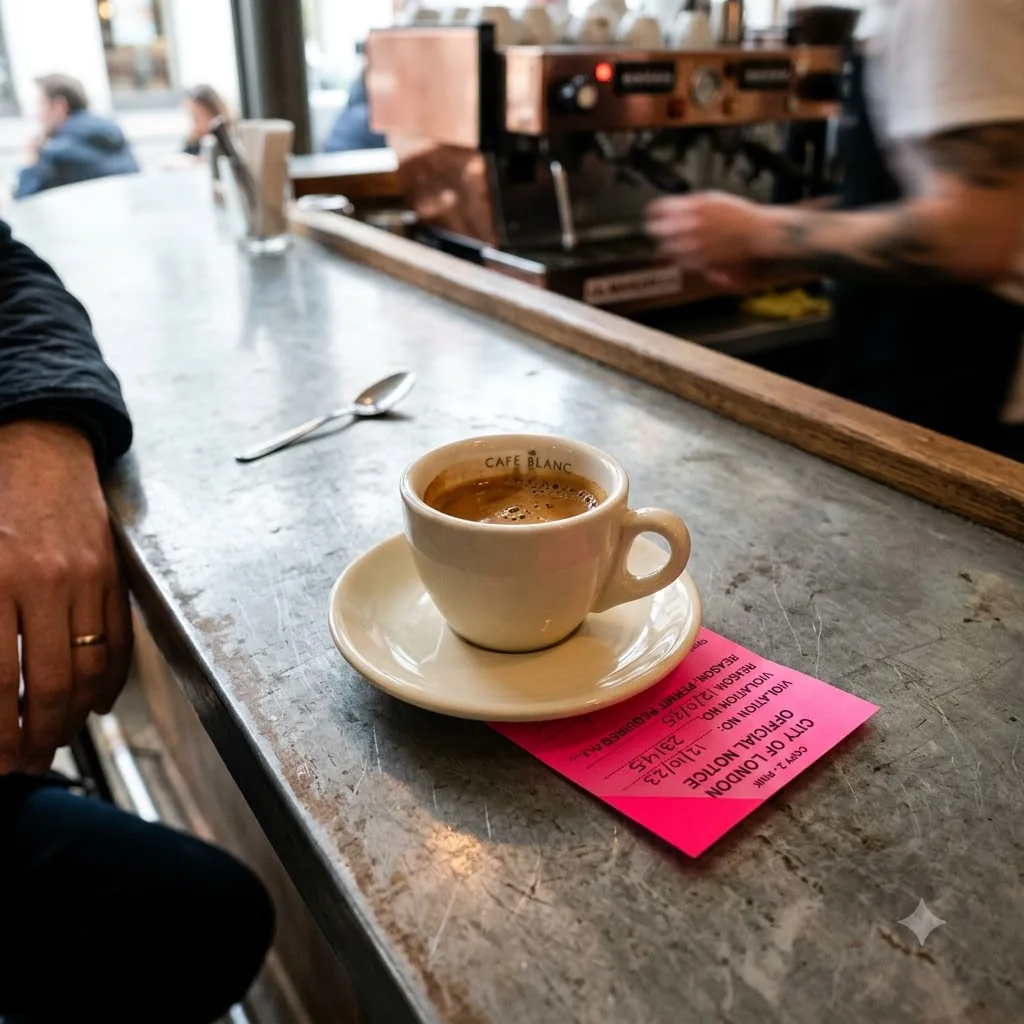
The heat radiating from the heavy ceramic mug transferred directly through Maya’s pale fingers, but she didn’t flinch. Elias stared at her hand, his brain stalling at the sheer audacity of the physical contact. Baristas did not grab customers’ drinks. They certainly didn’t trap a patron’s hand against the counter. It was a blatant violation of the unspoken social contract that governed his entire morning routine.
“Maya,” Elias said, keeping his voice carefully modulated, though a sharp edge of warning bled into his tone. “Let go of the cup.”
She didn’t move. Her knuckles were white, her grip trembling slightly, though whether from anger or adrenaline, Elias couldn’t tell. Her eyes remained locked on his, entirely devoid of the cheerful deference he had purchased with a generous tip every morning for the past three years.
“Read it,” she said. Her voice was barely above a whisper, yet it somehow cut through the grinding hum of the espresso machine behind her.
Elias bristled, his spine stiffening. He was a man who dictated terms. He did not take orders from service workers in his own neighborhood. He glanced around the cafe, acutely aware of the shifting atmosphere. The ambient chatter at the nearby tables had thinned. The man in the corner reading the financial times had lowered his paper. A woman in yoga pants waiting near the pastry case was openly staring. Elias felt a flush of heat creep up his neck. He hated spectacles. He had spent his entire adult life, and the last six months of the zoning board campaign, ensuring his environment remained orderly, predictable, and dignified.
“This is highly inappropriate,” Elias whispered harshly, leaning in closer to minimize the blast radius of the scene she was causing. “I understand you might be upset about something, but bringing municipal paperwork into your workplace is unprofessional.”
“Unprofessional,” Maya echoed, the word falling flat and heavy between them.
She abruptly released the mug. Elias instinctively pulled his hand back, as if the ceramic had burned him. Without his fingers pinning the corner, Maya slid the neon pink cardstock completely out from under the saucer and pushed it across the polished wood, stopping it exactly an inch from his chest.
Elias refused to look down at it, keeping his gaze firmly fixed on her face, projecting an aura of unimpressed authority. But the bright, synthetic color screamed in his peripheral vision.
“Address,” Maya commanded, her voice still maintaining that unnerving, quiet intensity.
“I am not playing this game,” Elias said. He reached into the inner pocket of his tailored coat, producing a crisp twenty-dollar bill. He placed it on the counter, deliberately avoiding the pink slip. “Keep the change. I’ll get my coffee elsewhere today.”
“412 Maple Court,” Maya said, stepping sideways to block his line of sight to the door. “It’s two blocks outside the historic preservation boundary. The boundary you drew, Elias.”
Elias froze. He knew the building. It was a squat, aging brick four-plex. It wasn’t historically significant, which was precisely why he had excluded it from his petition. Including it would have weakened his argument about architectural heritage with the city planners. By drawing the line at Elm Street, he had successfully shielded the half-acre of empty grass and the grand Victorian homes, leaving Maple Court completely unprotected.
“Zoning maps are a matter of public record and architectural standards,” Elias said smoothly, falling back on the polished arguments he had used at a dozen town halls. The rehearsed words acted as a shield, calming his racing pulse. “If the city has decided to repurpose that lot, it’s a standard municipal upgrade. It has nothing to do with me.”
“The developer you beat last night,” Maya continued, ignoring his defense entirely. “They lost the mixed-use project. So they bought Maple Court at eight o’clock this morning. Paid cash to the landlord. They’re tearing it down to build luxury townhomes to recoup their projected losses.”
Elias swallowed, his throat suddenly dry. The connection was direct, immediate, and undeniably a byproduct of his victory. The developers couldn’t build on the empty lot, so they had pivoted to the path of least resistance-the unprotected block where Maya lived.
“That is unfortunate,” Elias said, his voice tightening. He adjusted his scarf, seeking comfort in the expensive cashmere. “But urban development is a complex ecosystem. Property changes hands. It isn’t my fault your landlord decided to sell.”
“Thirty days, Elias,” she said, her voice finally cracking, betraying a desperate exhaustion that made him deeply uncomfortable. “I have thirty days to pack up five years of my life. Where am I supposed to go? Rents in this zip code went up twelve percent this morning just because you ‘saved’ that empty patch of dirt.”
Elias looked at her, truly looked at her, and hated what he saw. He saw a messy, complicated human problem dragging mud across his pristine victory. He had fought to keep the neighborhood exactly as it was. He hadn’t asked the developer to buy her building. It was a tragic market reality, he reasoned. It wasn’t hypocrisy; it was collateral damage in the defense of beauty and order.
He turned away from the counter, abandoning his untouched coffee and his twenty-dollar bill. He pushed through the heavy glass doors of The Daily Grind, desperate to inhale the crisp, clean air of his curated streets. He needed to look at the empty lot. He needed to see the undisturbed grass to remind himself that he had done the right thing, that the sacrifice of a few outdated apartments was worth the greater aesthetic good.
He walked briskly down Elm Street, his polished leather shoes clicking rhythmically against the immaculate pavement. But as he rounded the corner toward the half-acre lot, his steps faltered.
Parked idling in front of the empty, protected grass was a massive white commercial van. A crew of workers in high-visibility vests was unloading rolls of heavy-duty chain-link fencing, dropping them onto the sidewalk with echoing metallic clangs.
Elias stared, a cold knot forming in his stomach. The city notice taped to the side of the van wasn’t neon pink. It was bright, fluorescent yellow. He knew the color codes. Pink was demolition. Yellow was an emergency municipal utility mandate-a designation that superseded all historic preservation laws.
A worker grabbed a sledgehammer and began driving a heavy steel post directly into the center of the pristine, overgrown grass Elias had just spent six months of his life fighting to protect.