Story code: ST-001759
Part 4: The Museum
Elias watched the faded blue sedan pull away, the frayed bungee cord vibrating wildly as the car disappeared around the corner. He did not bend down to retrieve the envelope. The heavy tread of the city backhoe had already churned it into the wet earth, swallowing the crisp white paper and the three thousand dollars in pristine hundreds. The diesel fumes burned his nose. He turned his back on the municipal destruction and walked away, his polished leather shoes leaving muddy prints on the pristine concrete of Elm Street.
He walked faster, his breath shallow, dodging the scattered debris of the construction zone until he reached the heavy wrought-iron gate of his own property. Here, the historic preservation boundary was absolute. His three-story Victorian home stood exactly as it had in 1892, meticulously restored down to the exact shade of slate-blue exterior paint mandated by the neighborhood charter.
He pushed through the gate, hurried up the brick path, and practically threw his weight against the heavy oak front door. He slammed it shut behind him, instantly throwing the heavy brass deadbolt. The sharp, metallic click echoed through the entryway.
Silence. Total, absolute silence.
Elias leaned back against the solid oak, closing his eyes as the conditioned air cooled his flushed skin. The smell of beeswax furniture polish and fresh eucalyptus filled his lungs. It was perfect. He had fought so hard for this silence, spending hours at zoning boards arguing against the noise of mixed-use development, against the chaotic influx of transient renters, against anything that threatened the immaculate order of his domain.
He took off his cashmere scarf and hung it on the antique brass hook. He looked down at his shoes. The mud from the construction site clung to the expensive leather, a dark, jagged stain against the gleaming hardwood of his foyer. He felt a spike of panic and immediately kicked them off, carrying them by the heels to the utility sink in the mudroom. He scrubbed his hands with hot water and coarse soap until his skin turned red. He needed the morning erased. He needed to reset the day.
Elias walked into his kitchen, a masterclass in period-accurate design hiding state-of-the-art appliances. He approached the high-end espresso machine he rarely used, having preferred the daily ritual and human infrastructure of his local cafe. The gleaming chrome mocked him. He pulled a ceramic mug from the cabinet-a heavy, white diner-style mug, identical to the one Maya had trapped against the counter.
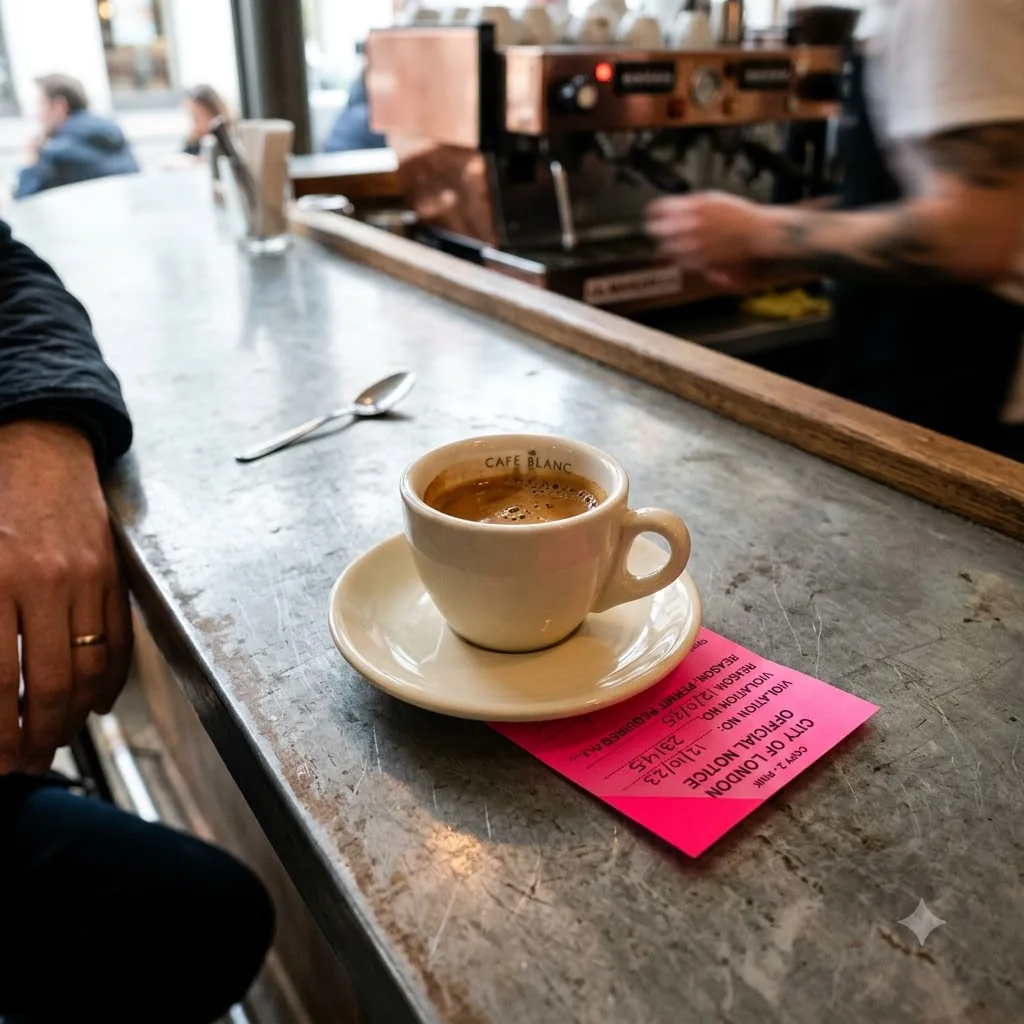
He set it down on the marble island. The loud clack of the ceramic against the stone sent a violent shudder through his shoulders. He stared at the base of the cup, half-expecting a neon pink demolition notice to bleed out from underneath it.
He abandoned the coffee. He walked into his formal living room, standing in the center of the Persian rug. The space was flawless. A velvet tufted sofa sat in precise alignment with the restored marble fireplace. First-edition books lined the built-in shelves in color-coded symmetry. There was not a single item out of place. There was no clutter, no faded paperbacks, no taped cardboard boxes threatening to spill their contents.
It was exactly the pristine, historic aesthetic he had championed in his mailers.
Elias walked to the bay window and pulled back the heavy silk drapes just a fraction of an inch. He looked out at the street. It was empty. The neighborhood was safe. Property values were secure. The aesthetic was preserved.
But as he stared at the perfect, silent street, the hollow exhaustion Maya had aimed at him in the cafe seeped through the thick glass of his window. *You didn’t preserve a damn thing, Elias.*
He let the silk drape fall closed, sealing out the fading daylight. The house felt suddenly massive. The silence, which had always felt like a luxurious blanket, now pressed against his eardrums with an oppressive weight.
He could never return to The Daily Grind. He could never walk past the corner lot, now a gaping municipal scar, without remembering the muddy tire tracks swallowing his cash. He had successfully defended his fortress, but in doing so, he had salted the earth outside his own walls. Maya was gone. The casual, transactional warmth that had tethered him to the community and made him feel human was entirely gone.
Elias sank into the velvet sofa, pulling his knees together. He was fifty-two years old, sitting alone in a multi-million-dollar time capsule. He had drawn a boundary line to protect his world, but looking around at the flawlessly curated, dustless antiques, he realized he hadn’t built a sanctuary. He had built a sterile museum.
And he was the only exhibit left inside. He sat perfectly still in the pristine quiet, surrounded by everything he owned, utterly and entirely alone.