Story code: ST-001704
Part 1: The Midnight Violation
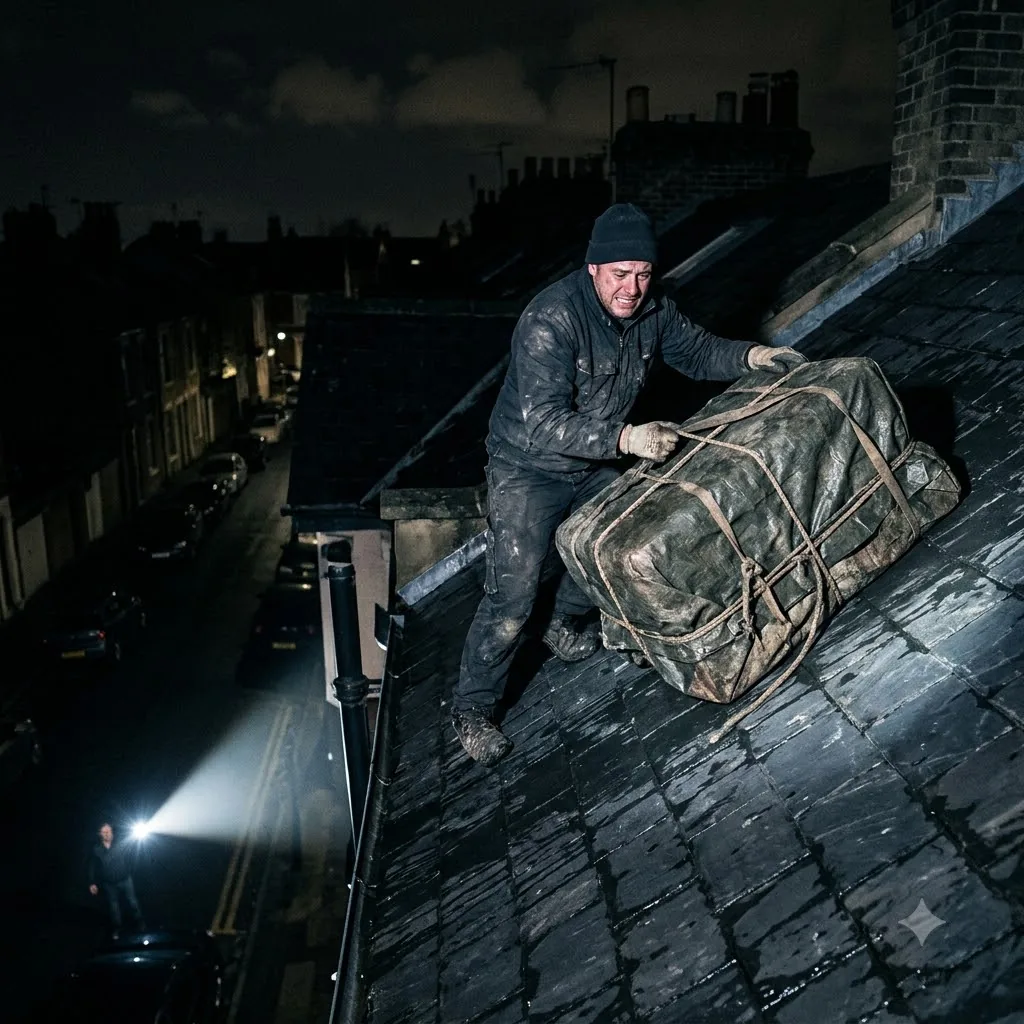
The digital thermometer on the nightstand read ninety-four degrees, but the real pressure came from the relentless, high-pitched beep emitting from the small reinforced cooler in the corner of the bedroom. The grid had been dead for six hours, the battery backup was failing, and Marcus had no time left. He hoisted the heavy, tarp-wrapped rectangle onto his shoulder, grunted against the crushing weight, and pushed backward through the narrow attic window onto the sloped slate roof.
Midnight offered no relief from the brutal heatwave. The thick, stagnant air pressed down on him, and the century-old slate tiles radiated a baked-in intensity through the thin soles of his sneakers. He gripped the edge of the dormer, finding his balance on the steep pitch. Below him, the historic district of Heritage Hill lay plunged in absolute darkness. Not a single porch light or streetlamp pierced the gloom, leaving only the oppressive, suffocating heat and the suffocating silence of the blacked-out city.
Marcus adjusted his grip on the rigid rectangle. The blue plastic tarp rustled against his sweat-soaked shirt. It was awkward, wide, and fragile beneath its protective wrapping, requiring him to move with agonizing care. One slip on the sheer drop of the Victorian roofline meant a two-story fall into the unkempt rosebushes below. He crab-walked upward, inching toward the peak, dragging the flat burden alongside him.
With every scrape of his shoes against the stone, the faint, rhythmic warning beep from the bedroom below echoed in his ears. The sound was a countdown. If that battery died, the internal temperature of the cooler would rise. If it crossed forty degrees, the fragile, life-sustaining chemistry inside would turn into cloudy, useless sludge. They had no money to replace it, and the specialized pharmacies were all shuttered in the blackout anyway.
He reached the ridge and straddled the peak, his muscles screaming from the exertion. He carefully laid the tarp-wrapped object flat against the southern-facing slope. He pulled a cordless drill from his canvas tool belt, the heavy battery pack weighing down his hip. He needed to secure the brackets, angle the flat surface precisely, and feed the heavy-gauge cables down through the lead flashing of the chimney before dawn. The morning sun was his only chance.
He clamped a metal bracket against the slate. He knew the noise of the drill would shatter the quiet of the neighborhood. Heritage Hill was a place of extreme silence, strict architectural covenants, and aggressive enforcement. They were a neighborhood that issued formal citations for the wrong shade of white paint on a window trim. Driving lag bolts through original 1890s roofing material was a catastrophic violation of the charter.
Marcus pressed his lips together, wiped the stinging sweat from his eyes, and squeezed the trigger.
The drill whined, a mechanical scream that chewed through stone and aged timber. The noise felt deafening in the dead air. He leaned his body weight into the tool, forcing the steel bolt deep into the rafter. He released the trigger and grabbed the second bracket, his hands trembling with adrenaline and haste.
Before he could seat the second bolt, a blinding pillar of white light slammed into him from the darkness below.
Marcus flinched, throwing a forearm over his eyes. The high-lumen LED beam washed out the roof, pinning him against the chimney like an escaped convict against a prison wall.
A voice boomed from the manicured lawn of the adjacent property.
“Desecration of a historical roofline, Marcus. I have it all on video.”
Marcus squinted through the glare. Standing on the grass, wearing a lightweight summer robe and holding a tactical flashlight, was Arthur Pendelton. The president of the Heritage Hill Preservation Board stood rigid, his phone held aloft in his other hand, recording the entire scene.
“Step away from the slate,” Arthur ordered, his voice carrying the practiced, nasal authority of a man who lived to levy fines. “You are in direct violation of Section Four, Paragraph B of the neighborhood covenant. No unapproved exterior modifications. No piercing of original materials.”
Marcus kept one hand firmly pressed against the tarp-wrapped rectangle. The plastic rustled in a brief, hot gust of wind.
“Arthur, go back inside,” Marcus called down, trying to keep his voice steady. “This is an emergency.”
“The only emergency is the vandalism you are committing against a protected structure,” Arthur shouted back, taking a step closer to the property line. The beam of light did not waver. “I know exactly what you are doing up there under the cover of a blackout. You are trying to sneak in a satellite dish, or perhaps one of those hideous modern skylights. You think the dark will hide your aesthetic crimes.”
The high-pitched beep from the open bedroom window seemed to grow louder, a desperate, dying pulse against the humid night air.
“You have precisely one minute to pack up your tools and climb down,” Arthur announced, his tone dripping with absolute financial leverage. “If you drive one more screw into that roof, the board will levy the maximum penalty. Five hundred dollars a day. We will lien this property by Monday. We will foreclose on this house before the end of the month.”
Marcus looked down at the drill in his hand. The battery on the cooler had maybe twenty minutes left. The fine Arthur was threatening would wipe out their depleted bank account instantly, setting off a chain reaction of ruin they could never recover from.
“I am waiting,” Arthur said, the beam of light locking onto the drill.
Marcus wiped his brow, felt the brutal heat radiating off the slate beneath his palms, and tightened his grip on the handle.
The digital thermometer on the nightstand read ninety-four degrees, but the real pressure came from the relentless, high-pitched beep emitting from the small reinforced cooler in the corner of the bedroom. The grid had been dead for six hours, the battery backup was failing, and Marcus had no time left. He hoisted the heavy, tarp-wrapped rectangle onto his shoulder, grunted against the crushing weight, and pushed backward through the narrow attic window onto the sloped slate roof.
Midnight offered no relief from the brutal heatwave. The thick, stagnant air pressed down on him, and the century-old slate tiles radiated a baked-in intensity through the thin soles of his sneakers. He gripped the edge of the dormer, finding his balance on the steep pitch. Below him, the historic district of Heritage Hill lay plunged in absolute darkness. Not a single porch light or streetlamp pierced the gloom, leaving only the oppressive, suffocating heat and the suffocating silence of the blacked-out city.
Marcus adjusted his grip on the rigid rectangle. The blue plastic tarp rustled against his sweat-soaked shirt. It was awkward, wide, and fragile beneath its protective wrapping, requiring him to move with agonizing care. One slip on the sheer drop of the Victorian roofline meant a two-story fall into the unkempt rosebushes below. He crab-walked upward, inching toward the peak, dragging the flat burden alongside him.
With every scrape of his shoes against the stone, the faint, rhythmic warning beep from the bedroom below echoed in his ears. The sound was a countdown. If that battery died, the internal temperature of the cooler would rise. If it crossed forty degrees, the fragile, life-sustaining chemistry inside would turn into cloudy, useless sludge. They had no money to replace it, and the specialized pharmacies were all shuttered in the blackout anyway.
He reached the ridge and straddled the peak, his muscles screaming from the exertion. He carefully laid the tarp-wrapped object flat against the southern-facing slope. He pulled a cordless drill from his canvas tool belt, the heavy battery pack weighing down his hip. He needed to secure the brackets, angle the flat surface precisely, and feed the heavy-gauge cables down through the lead flashing of the chimney before dawn. The morning sun was his only chance.
He clamped a metal bracket against the slate. He knew the noise of the drill would shatter the quiet of the neighborhood. Heritage Hill was a place of extreme silence, strict architectural covenants, and aggressive enforcement. They were a neighborhood that issued formal citations for the wrong shade of white paint on a window trim. Driving lag bolts through original 1890s roofing material was a catastrophic violation of the charter.
Marcus pressed his lips together, wiped the stinging sweat from his eyes, and squeezed the trigger.
The drill whined, a mechanical scream that chewed through stone and aged timber. The noise felt deafening in the dead air. He leaned his body weight into the tool, forcing the steel bolt deep into the rafter. He released the trigger and grabbed the second bracket, his hands trembling with adrenaline and haste.
Before he could seat the second bolt, a blinding pillar of white light slammed into him from the darkness below.
Marcus flinched, throwing a forearm over his eyes. The high-lumen LED beam washed out the roof, pinning him against the chimney like an escaped convict against a prison wall.
A voice boomed from the manicured lawn of the adjacent property.
“Desecration of a historical roofline, Marcus. I have it all on video.”
Marcus squinted through the glare. Standing on the grass, wearing a lightweight summer robe and holding a tactical flashlight, was Arthur Pendelton. The president of the Heritage Hill Preservation Board stood rigid, his phone held aloft in his other hand, recording the entire scene.
“Step away from the slate,” Arthur ordered, his voice carrying the practiced, nasal authority of a man who lived to levy fines. “You are in direct violation of Section Four, Paragraph B of the neighborhood covenant. No unapproved exterior modifications. No piercing of original materials.”
Marcus kept one hand firmly pressed against the tarp-wrapped rectangle. The plastic rustled in a brief, hot gust of wind.
“Arthur, go back inside,” Marcus called down, trying to keep his voice steady. “This is an emergency.”
“The only emergency is the vandalism you are committing against a protected structure,” Arthur shouted back, taking a step closer to the property line. The beam of light did not waver. “I know exactly what you are doing up there under the cover of a blackout. You are trying to sneak in a satellite dish, or perhaps one of those hideous modern skylights. You think the dark will hide your aesthetic crimes.”
The high-pitched beep from the open bedroom window seemed to grow louder, a desperate, dying pulse against the humid night air.
“You have precisely one minute to pack up your tools and climb down,” Arthur announced, his tone dripping with absolute financial leverage. “If you drive one more screw into that roof, the board will levy the maximum penalty. Five hundred dollars a day. We will lien this property by Monday. We will foreclose on this house before the end of the month.”
Marcus looked down at the drill in his hand. The battery on the cooler had maybe twenty minutes left. The fine Arthur was threatening would wipe out their depleted bank account instantly, setting off a chain reaction of ruin they could never recover from.
“I am waiting,” Arthur said, the beam of light locking onto the drill.
Marcus wiped his brow, felt the brutal heat radiating off the slate beneath his palms, and tightened his grip on the handle.