Story code: ST-001040
Part 2: Playing the Part
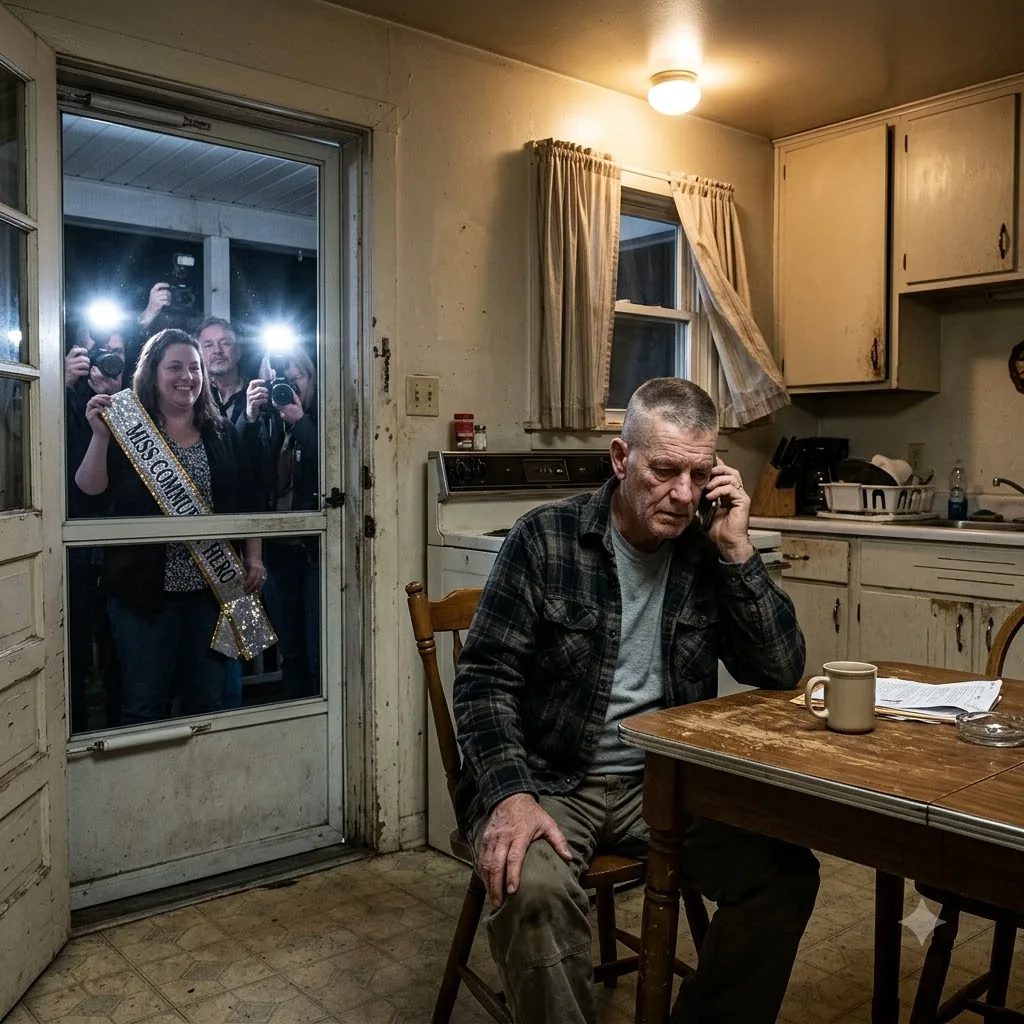
Frank lowered the pen. The silver tip hovered a fraction of an inch above the crisp white paper. The PR woman tapped her glossy nail against the clipboard again, her manufactured smile tightening at the corners. The cameraman shifted his weight, the heavy rig groaning softly on his shoulder, the glaring LED panel burning a white-hot square into Frank’s retinas.
If he threw the clipboard back in her face, they would simply pack up their expensive equipment and leave. The evening news would find another tired old man to wear their cheap ceremonial sash. Zenith Pension Guarantor would continue liquidating his life from a high-rise office, utterly untouched and invisible.
Frank pressed the pen to the paper. He dragged the black ink across the dotted line, his signature jagged, heavy, and rough.
“Perfect,” the woman chirped, instantly snatching the clipboard away. She didn’t bother looking at the signature. She turned to the lens, her voice dropping into an artificial, hushed reverence. “A true local legend. But Frank’s story doesn’t end on this porch. Let’s step inside and see the life of a real American worker.”
Before Frank could block the doorway, the sound technician ducked under the porch awning and slipped past him. The cameraman followed, walking backward, pulling the blinding white light into the dim, cramped hallway of Frank’s home.
“Wait a minute,” Frank croaked, his throat dry.
“Just a little b-roll, Frank! Act entirely natural,” the woman said, brushing past his shoulder. The scent of heavy, expensive floral perfume masked the familiar musty smell of his hallway.
Frank leaned heavily on his wooden cane, dragging his swollen knee over the threshold. He pulled his phone from his hand, his thumb finally pressing the red button to end the call, cutting off the tinny elevator music that had been mocking him for the last hour. He shoved the device into his flannel pocket. Every step sent a fresh, sickening wave of heat up his thigh.
Inside the small living room, the crew was already dismantling his privacy. The sound technician unceremoniously kicked Frank’s worn carpet slippers out of the frame. The cameraman was panning slowly across the mantle, lingering on a dusty, framed photograph of Frank in his hardhat outside the stamping plant thirty years ago.
“Oh, this is gold,” the PR woman said, standing in the center of his faded rug. She framed the living room with her manicured hands. “It’s so… authentic. The peeling wallpaper really sells the resilience angle. Get a tight shot of the worn fabric on that armchair.”
Frank bit the inside of his cheek, tasting copper. He stood by the doorway, gripping his cane until his knuckles turned a mottled white. He was a prop in his own home, a museum exhibit of working-class poverty curated by the very people who had engineered it. He forced his breathing to remain steady, swallowing the physical agony in his leg and the hot, rising bile of humiliation. He needed them to stay. He needed the camera rolling.
The woman pivoted, her sharp eyes scanning the adjoining kitchen. The bright LED light swiveled with her, cutting through the shadows and illuminating the scarred Formica countertop.
Frank’s breath caught in his throat.
Sitting dead center on the counter, right next to his ancient drip coffee maker, was the morning’s stack of mail. The top page was completely unfolded. It was the final denial letter from Zenith Pension Guarantor, stamped with the exact same mountain-and-pillars logo currently pinned to his chest. If the PR woman read that letter, if she realized he was an active, hostile liability to her parent company, she would pull the plug on the entire segment. The opportunity standing in his living room would vanish instantly.
“Let’s get him at the kitchen table,” the woman said, taking a purposeful step toward the counter. “Looking over his old union badges or something. Do you have old union badges, Frank?”
“No,” Frank said. He pushed off the doorframe, forcing his bad leg forward. The sudden, uncalculated movement sent a jagged spike of white-hot pain straight through his kneecap. He stumbled, letting out a sharp, ragged gasp.
The woman stopped, turning back to him with a flash of genuine irritation. “Are you okay? We can’t have you looking sick on camera. The vibe is ‘strong and enduring,’ not ‘medical emergency.'”
“I’m fine,” Frank grunted. He used the momentum of his stumble to lunge past her, closing the distance to the kitchen counter. He slammed his large, calloused hand down directly over the denial letter, crumpling the crisp corporate paper securely under his palm.
“What’s that?” the cameraman asked, the lens zooming in on Frank’s white-knuckled grip.
“Junk mail,” Frank said, his voice low and gravelly. He swept the crumpled letter off the edge of the counter and into the open trash can below, keeping his broad shoulders positioned between the camera and the bin. “Nothing the viewers want to see.”
The PR woman eyed him suspiciously for a long, quiet second. Then, her media-trained smile snapped back into place. “Right. Well, let’s skip the kitchen. Frank, come stand by the front window. Look out at the street. Think about how much this town has changed.”
Frank limped to the window. He turned his back to the room, staring out at the cracked pavement and the dying azaleas, letting the camera capture his stoic, silent profile. He felt the heavy sash pulling at his collar, the silver thread of the Zenith logo resting heavy against his chest.
“Beautiful,” the woman whispered loudly. “Hold that. Sad, but hopeful.”
The cameraman circled around, framing Frank against the glass. The heat from the LED panel radiated against Frank’s cheek.
“This is going to be the perfect teaser,” the woman said, checking her glowing phone. “We’ll run this raw footage at the top of the six o’clock hour. It’s going to drive massive engagement for the live event tonight.”
Frank slowly turned his head. “Live event?”
“Oh, didn’t I mention?” The woman didn’t look up from her screen, her thumbs flying across the glass. “This is just the promo. The actual Hometown Hero presentation is happening live tonight at the town hall. Prime time. A massive crowd. And the best part?” She looked up, her eyes gleaming with manufactured corporate synergy. “Mr. Sterling, the CEO of our parent group, is flying in personally to pin the medallion on you. It’s his flagship charity initiative. He’ll be on stage with you for a full ten-minute live interview.”
Frank’s grip on his wooden cane tightened. Sterling. The man who signed the order to liquidate the stamping plant’s pension fund. The man who owned the automated voice that had kept him on hold all morning.
The woman dug into her blazer pocket and pulled out a trifold piece of heavy cardstock. She stepped forward and shoved it into Frank’s free hand.
“Here are your talking points,” she said, her tone suddenly dropping its cheerful pitch, becoming cold, flat, and entirely instructional. “Memorize them. When Mr. Sterling asks how the community supported you, you pivot to how much the corporate revitalization grant means to the neighborhood. Stick to the script, Frank. Don’t go rogue, don’t mention your joints hurting, and definitely don’t stop smiling.”
Frank stared down at the laminated card in his hand. He looked at the bold Zenith logo printed at the top. He thought about the denial letter sitting in his trash can, and the raw, throbbing joint in his knee.
“I understand,” Frank said quietly, raising his eyes to stare directly into the unblinking camera lens. “I’ll know exactly what to say.”