Story code: ST-001040
Part 4: The Ledger
The heavy trailer door flew open before Sterling even finished screaming. Two men in black polo shirts and tactical earpieces swarmed the cramped space. Frank didn’t raise his cane to fight them. He didn’t have the balance, and he didn’t have the leverage, but he didn’t need either anymore. The damage was already sitting at the bottom of the rusted plumbing.
A thick, heavily muscled arm wrapped around Frank’s chest, pinning his arms to his ribs. The cheap ceremonial sash tore at the seam. The security guard hauled him backward, forcing his swollen right knee to drag across the aluminum threshold. Frank bit down on his own tongue to trap the agonizing yell rising in his throat. He tasted hot copper.
“Get him out of here!” Sterling barked, his meticulously crafted television persona shattering into shrill, frantic panic. “Chloe! Tell the stage manager to cut the feed! Go to commercial! Do something!”
Frank was shoved down the metal steps. His bad leg buckled the moment his boot hit the asphalt. He hit the ground hard, scraping his palms against the loose gravel. The second guard grabbed the back of his flannel collar and hauled him upright, practically carrying him past the edge of the production perimeter.
“Don’t come back, old man,” the guard growled, giving Frank one final, violent shove toward the unlit access road behind the town hall.
Frank stumbled and caught himself heavily on his wooden cane. He stood in the shadows, listening to the muffled, chaotic feedback screeching from the town hall loudspeakers. A live audience of thousands, primed for a multi-million-dollar spectacle, was now sitting in awkward, confused silence. Frank wiped the grit from his bleeding palms onto his jeans, turned his back to the arena, and began the two-mile walk home.
The first half-mile was a dull, radiating ache. By the second mile, it was a blinding, structural failure. Every step was a negotiation with the crushed cartilage beneath his kneecap. The damp night air seeped into his bones, stiffening the joint until it felt less like a limb and more like a rusted iron hinge. He desperately needed his anti-inflammatory medication, but the bottle on his bathroom sink had been empty since yesterday. The pharmacy had refused the refill that morning, citing the newly frozen Zenith medical account. Sterling had literally taken the painkillers out of Frank’s cabinet to pay for the dead pyrotechnics sitting uselessly on the stage behind him.
Frank dragged his boot across the cracked concrete of the sidewalk, focusing only on the stretch of pavement immediately in front of his cane. Streetlights flickered overhead, casting long, distorted shadows. He walked past the darkened storefronts of the neighborhood Zenith had hollowed out, past the empty parking lot of the old stamping plant, past the chain-link fences holding back decades of weeds.
When he finally reached his street, his vision was swimming. He hauled himself up the three decaying wooden steps of his porch, his breath coming in shallow, ragged gasps. He didn’t bother going inside. He collapsed heavily into the sagging wicker chair facing the street, letting his cane clatter onto the floorboards.
He sat in the dark, clutching his throbbing thigh, staring out over the silhouettes of the neighborhood roofs.
In the distance, over the town hall, the night sky remained a flat, unbroken black. There was no choreographed explosion of red, white, and blue. There was no sparkling corporate banner burning Zenith’s logo into the clouds. Occasionally, a single, pathetic sparkler would shoot up and fizzle out silently-a manual, desperate attempt by a stagehand to salvage the finale without the locked digital terminal. It looked exactly like what it was: a cheap, broken promise.
Frank watched the dismal display until the sky went completely dark again. The pain in his leg hadn’t subsided. It was a vicious, pulsing heat that would keep him awake all night, a permanent reminder of the thirty years he had given to a company that had casually erased him. But the crushing, suffocating helplessness that had weighed on his chest all morning was gone.
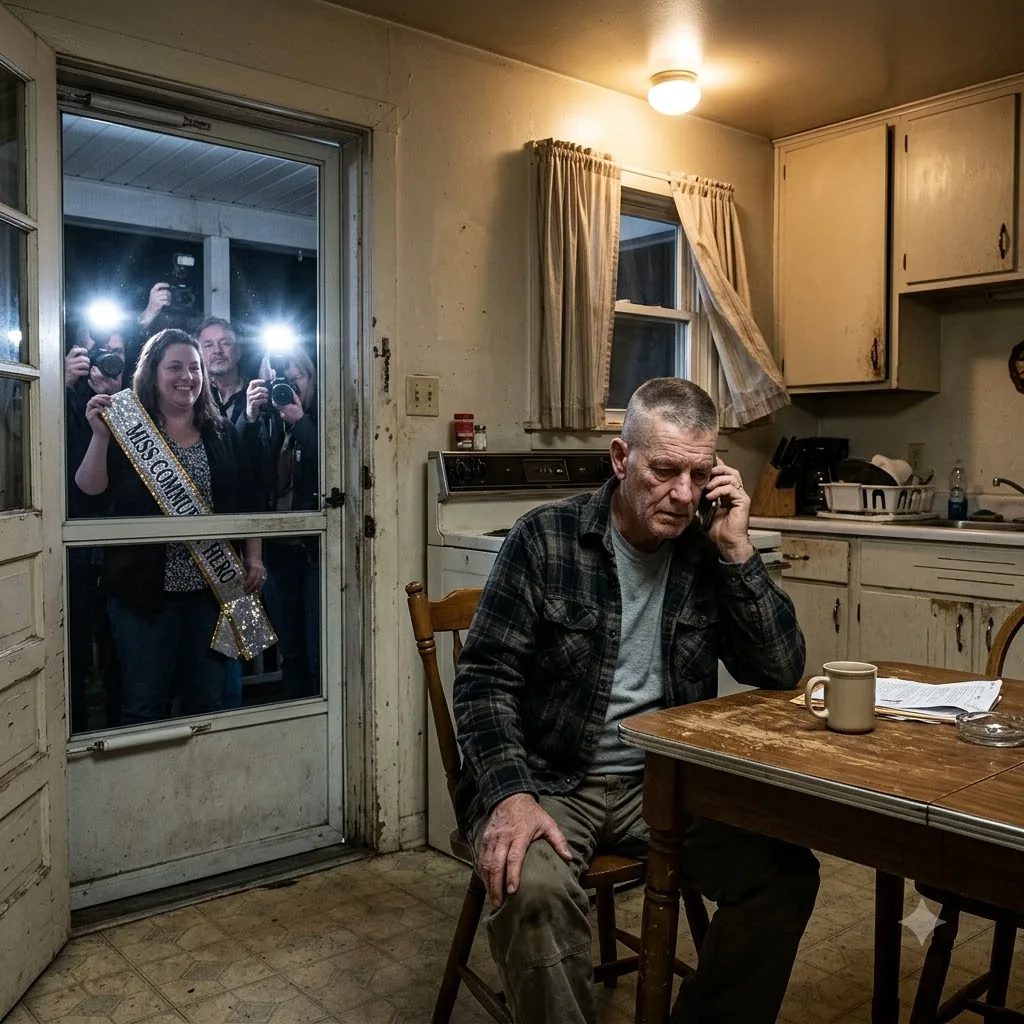
He reached into his breast pocket and pulled out his phone. He bypassed the automated Zenith claims number he had been dialing for weeks. Instead, he opened his contacts and scrolled down to the very bottom, searching for the numbers he hadn’t dialed since the picket lines of the late nineties.
He found the entry for Miller, the old shop steward, who still drank at the VFW hall every Tuesday. Below that was Davis, who ran the retired pipefitters’ local. He had dozens of them. A whole directory of men and women who were sitting in their own crumbling homes, holding identical denial letters with that same abstract mountain-and-pillars logo printed at the top.
Sterling thought he had isolated them. He thought he could pick them off one by one, liquidating their futures on a spreadsheet while wearing a tailored suit and a sympathetic smile on television.
Frank tapped Miller’s name and pressed call. He rested the phone against his ear, listening to the dial tone ring out into the quiet night. He rubbed his calloused thumb over the aching swell of his knee. The live broadcast was ruined, but the real fight was just starting.