Story code: ST-000178
Part 3: Public Comment
The fluorescent lights of the Westbridge Municipal Zoning Board hummed with a sterile, flickering energy. Sarah sat in the back row of the cramped auditorium, her feet throbbing inside her cheap flats. It had been exactly three weeks since her ten-year-old sedan was hauled away and legally absorbed by the impound lot, leaving her to navigate a labyrinth of unreliable bus routes just to keep her job and her apartment. She clutched a thick manila folder in her lap, the edges worn soft from her sweaty palms.
At the front of the room, standing before a panel of five bored-looking city commissioners, Eleanor Vance adjusted the microphone. She wore a tailored beige blazer, looking just as immaculate and serene as she had on Maya’s driveway.
“Oak Creek Estates is more than just a subdivision,” Eleanor said, her voice echoing smoothly through the speakers. “We are a progressive, welcoming community that prioritizes restorative environmental practices. However, the Valley Road Affordable Housing Initiative proposes high-density, multi-family units directly adjacent to our property line. We are deeply concerned about the disruption to the neighborhood’s ecosystem, the strain on our shared resources, and the overall harmony of our safe spaces. We must prioritize sensible boundaries to protect the character of our community.”
Sarah stared at the back of Eleanor’s perfectly coiffed head, a cold realization settling into her chest.
Eleanor wasn’t just the HOA president; she was the lead opponent to the housing permit Sarah had spent the last two years drafting for the County Housing Coalition. The morning of the tow, Eleanor had carried a wooden clipboard. Sarah remembered the paperwork clipped to it-not just citation forms, but a thick packet with the county planning commission logo. Eleanor hadn’t randomly stumbled upon an unregistered vehicle. She had recognized Sarah’s name on the permit application, matched it to the guest vehicle registered in the community portal by Maya the day before, and waited by the property line at dawn to execute a financial hit.
“Thank you, Mrs. Vance,” the board chairman said, shuffling his papers. “We will now hear from the applicant representative. Sarah Jenkins?”
Sarah stood up. Her legs felt heavy, but the lingering exhaustion from the past three weeks evaporated, replaced by a sharp, burning clarity. She walked down the center aisle and took her place at the podium, dropping her heavy folder onto the wooden surface.
She looked up at the commissioners, and then she turned her head to look directly at Eleanor, who was settling into a front-row seat. The serene, patient smile on Eleanor’s face faltered for a fraction of a second.
“My name is Sarah Jenkins,” Sarah said into the microphone. “I am here to advocate for the affordable housing permit. But first, I think the board needs to understand exactly how the opposition defines ‘community character’ and ‘safe spaces.'”
“Miss Jenkins, please stick to the zoning proposal,” the chairman warned.
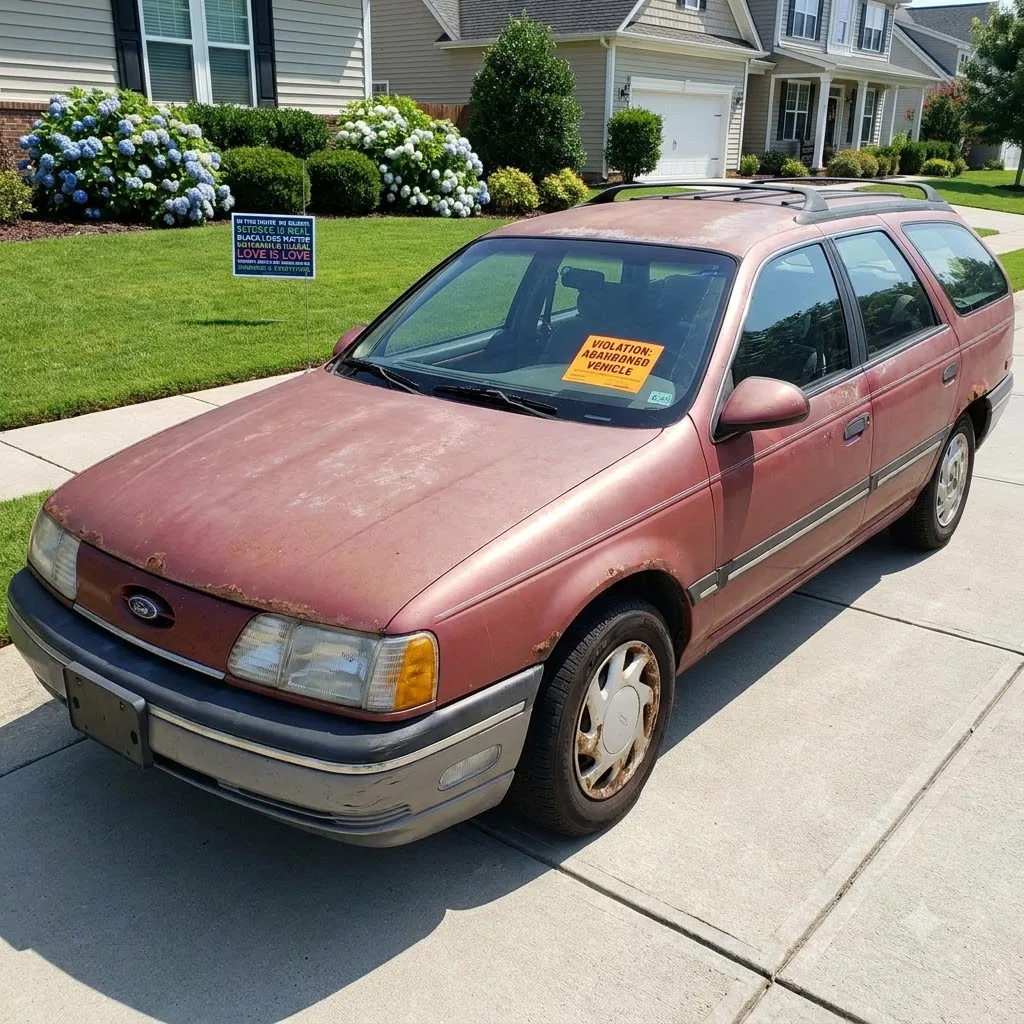
“This is entirely about the proposal,” Sarah replied, keeping her eyes locked on Eleanor. “Mrs. Vance just stood here and described Oak Creek Estates as a welcoming, progressive environment. I am intimately familiar with her neighborhood. In fact, she has a brightly colored sign planted in her front yard, facing the street for everyone to see. It says: *In This House We Believe Black Lives Matter, No Human Is Illegal, and Kindness Is Everything.*”
Eleanor shifted in her chair, crossing her legs tightly. Her posture went rigid.
Sarah opened her manila folder, pulling out the glossy dispute resolution pamphlet Eleanor had handed her three weeks ago. “Those are beautiful platitudes. But let’s look at the actual rules Mrs. Vance authored to maintain her ‘ecosystem.’ By-law seven-A dictates immediate five-hundred-dollar fines and predatory towing for any unregistered vehicle parked overnight, specifically targeting older cars that ‘blight’ the scenery. Section four-B mandates eviction threats for any renter who attempts to host a guest without the HOA’s explicit, notarized permission.”
“Mr. Chairman!” Eleanor said loudly, half-standing. “This is a municipal hearing, not a forum for personal grievances over parking tickets.”
“It’s not a parking ticket, Eleanor. It’s a system of exclusionary enforcement,” Sarah said, her voice rising to cut through the room’s sudden tension. She held the pamphlet up high. “You weaponize lease agreements to terrify single mothers into abandoning their friends. You use a thirty-five-mile bureaucratic loophole, knowing full well your victims have just been stripped of their transportation. You hand out pamphlets preaching ‘restorative justice’ while actively criminalizing poverty and forcing low-income visitors into literal bankruptcy over a dead car battery.”
A low murmur rippled through the audience. The commissioners exchanged uneasy glances.
“You use ‘kindness is everything’ as a decorative lawn ornament,” Sarah pushed on, her hands gripping the edges of the podium, “while you actively stalk and financially destroy anyone who threatens your exclusive enclave. You didn’t tow my car because I violated a grace period. You towed it because you recognized my name from this housing permit. You used your precious bylaws to bankrupt me so I wouldn’t be able to afford the bus fare to stand at this podium tonight.”
“That is slander!” Eleanor hissed. The smooth, maternal tone was entirely gone, replaced by a grating, frantic pitch. She shot up from her vinyl chair, her beige blazer wrinkling.
“Is it?” Sarah demanded, leaning closer to the microphone. “Or is it just the truth? You don’t care about ecosystems or safe spaces. You just want a legal mechanism to keep poor people out of your sight. You use progressive buzzwords to mask brutal, classist segregation!”
“We worked hard for what we have!” Eleanor screamed, stepping into the aisle, her fists clenched at her sides. The polite veneer shattered completely, leaving her face splotchy and contorted with rage. “You want to bus your unvetted vagrants into our backyards and act like we’re the villains for protecting our investments! My property values are not a charity fund!”
The entire municipal room went dead silent. The harsh fluorescent lights buzzed overhead, illuminating Eleanor as she stood breathless in the aisle, the ugly, undeniable truth hanging in the air between them.