Story code: ST-000712
Part 1: The Pink Van
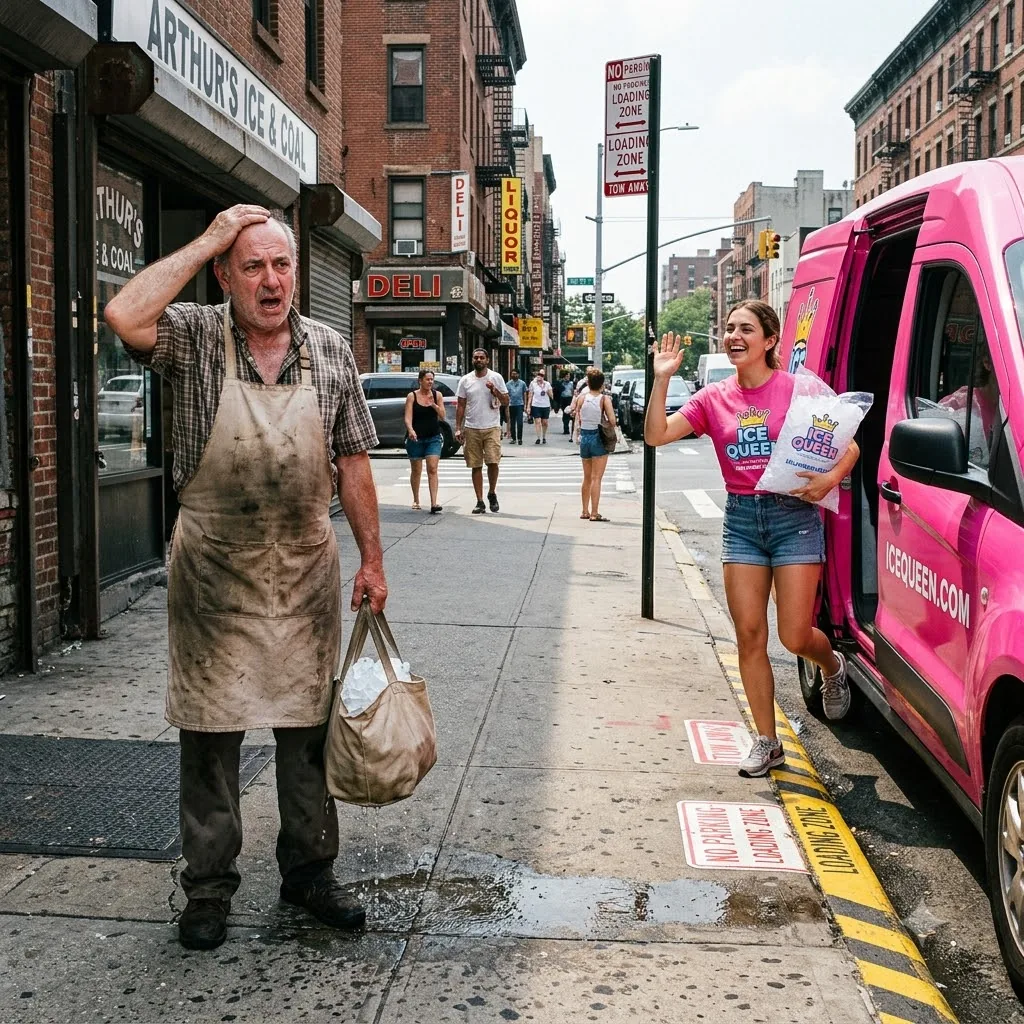
The forty-pound bag of crushed ice slipped against Mateo’s damp shirt as he backed through the bodega’s glass front doors. He braced his boots against the familiar cracked concrete of the curb, ready to swing the bag into the display bin. He stopped short when his heel hit the tire of a neon pink delivery van. The vehicle was parked perfectly across his faded yellow loading zone lines.
Mateo dropped the ice bag. It hit the pavement with a heavy, wet crunch. He wiped a streak of sweat from his forehead with the back of his forearm, leaving a smear of cardboard dust across his skin. For thirty years, every morning at six, he had hauled the ice out to the curb. His father had done it for thirty years before him. The spot in front of the store was a sacred boundary, respected by delivery trucks, sanitation workers, and even the aggressive local traffic cops. Now, a van painted the color of bubblegum blocked the exact path his produce distributor would need in less than ten minutes.
He rolled his shoulders, feeling the dull ache in his lower back flare up as he registered the sheer size of the vehicle. It was a luxury sprinter van, immaculate and gleaming under the amber streetlights. Mateo stepped toward the driver’s side window, ready to deliver a stern lecture on commercial loading zones. He had practiced this speech on careless drivers a hundred times. Before he could raise his knuckles to tap on the tinted glass, the rear doors of the van swung open with a cheerful electronic chime.
A woman hopped out, practically bouncing as her bright white sneakers hit the oily pavement. She wore a spotless pastel apron over designer yoga pants and carried a woven wicker basket filled with bone-shaped pastries. Her smile was blindingly white and weaponized with a relentless, overwhelming enthusiasm.
“Good morning, neighbor,” she called out. Her voice was loud enough to echo off the brick facades of the block, shattering the quiet morning rhythm Mateo relied on.
Mateo stood there, the prepared reprimand dying in his throat. The sheer force of her cheerfulness acted like a social shield, deflecting his anger before he could voice it. He pointed a calloused finger at the yellow lines beneath her front left tire, intending to explain the rigid delivery schedule that kept his store stocked with fresh fruit.
She did not let him speak. She thrust a cellophane-wrapped dog biscuit toward his chest, holding it right under his chin. “I am Chloe. We are doing our soft launch today at the old hardware store space next door. Organic, grain-free, locally sourced canine treats.”
Mateo did not own a dog. He looked at the pastry, which appeared more expensive than his own breakfast, then back at the van. The side of the vehicle featured a cartoon poodle eating from a silver platter. He crossed his arms, ignoring the offered baked good. He tried to muster the rigid authority his father used to chase away loiterers. He told her the spot was reserved. He explained the box truck carrying his plantains and tomatoes was currently two avenues away and needed the curb to drop a heavy pallet.
Chloe waved her free hand in a dismissive, airy motion. She laughed a bright, tinkling sound that grated against the low rumble of the waking city. “Oh, we will just be a second. Unloading our display cases is an absolute breeze. It is just so wonderful to finally meet the legacy tenants.”
The phrase hung in the humid morning air. ‘Legacy tenants.’ It sounded less like a compliment and more like a medical diagnosis. Mateo felt a muscle twitch in his jaw. His family owned the business, and they held an iron-clad commercial lease for the ground floor. They were not just a relic holding on to the past. They were the anchor of the block, the place where the neighborhood bought their milk, their lottery tickets, and their morning coffee.
Chloe reached into the front pocket of her pastel apron and pulled out a stack of thick, glossy cardstock. “Here is our introductory menu,” she said, pressing the top sheet into Mateo’s hand before he could step back. “Please pass it around to your customers. We are hoping to elevate the street’s retail profile.”
Mateo looked down at the paper in his hand. The front was an explosion of soft pinks and mint greens, listing absurd items like venison liver macarons and carob-dipped truffles. He turned the flyer over, intending to hand it back to her and demand once more that she move the van immediately.
The back of the flyer was not blank. It was not a continuation of the luxury dog menu. The heavy, glossy paper had been fed through a standard office printer, recycling a document that was clearly never meant to leave Chloe’s desk. Mateo stared at the black-and-white architectural rendering printed over the back of the cardstock.
The image showed the footprint of the entire ground floor of the building. The structural wall separating the new dog bakery from his family’s bodega was completely erased. Right over the spot where his father’s vintage cash register sat, the blueprint label read ‘Phase Two: Expanded Grooming Spa.’ Below the drawing, a printed email thread between Chloe and the building’s new property management firm outlined a strict timeline for a demolition permit.
Mateo looked up from the paper. Chloe was already turning away, whistling a bright tune as she reached into the back of her neon van to pull out a silver display rack.
The forty-pound bag of crushed ice slipped against Mateo’s damp shirt as he backed through the bodega’s glass front doors. He braced his boots against the familiar cracked concrete of the curb, ready to swing the bag into the display bin. He stopped short when his heel hit the tire of a neon pink delivery van. The vehicle was parked perfectly across his faded yellow loading zone lines.
Mateo dropped the ice bag. It hit the pavement with a heavy, wet crunch. He wiped a streak of sweat from his forehead with the back of his forearm, leaving a smear of cardboard dust across his skin. For thirty years, every morning at six, he had hauled the ice out to the curb. His father had done it for thirty years before him. The spot in front of the store was a sacred boundary, respected by delivery trucks, sanitation workers, and even the aggressive local traffic cops. Now, a van painted the color of bubblegum blocked the exact path his produce distributor would need in less than ten minutes.
He rolled his shoulders, feeling the dull ache in his lower back flare up as he registered the sheer size of the vehicle. It was a luxury sprinter van, immaculate and gleaming under the amber streetlights. Mateo stepped toward the driver’s side window, ready to deliver a stern lecture on commercial loading zones. He had practiced this speech on careless drivers a hundred times. Before he could raise his knuckles to tap on the tinted glass, the rear doors of the van swung open with a cheerful electronic chime.
A woman hopped out, practically bouncing as her bright white sneakers hit the oily pavement. She wore a spotless pastel apron over designer yoga pants and carried a woven wicker basket filled with bone-shaped pastries. Her smile was blindingly white and weaponized with a relentless, overwhelming enthusiasm.
“Good morning, neighbor,” she called out. Her voice was loud enough to echo off the brick facades of the block, shattering the quiet morning rhythm Mateo relied on.
Mateo stood there, the prepared reprimand dying in his throat. The sheer force of her cheerfulness acted like a social shield, deflecting his anger before he could voice it. He pointed a calloused finger at the yellow lines beneath her front left tire, intending to explain the rigid delivery schedule that kept his store stocked with fresh fruit.
She did not let him speak. She thrust a cellophane-wrapped dog biscuit toward his chest, holding it right under his chin. “I am Chloe. We are doing our soft launch today at the old hardware store space next door. Organic, grain-free, locally sourced canine treats.”
Mateo did not own a dog. He looked at the pastry, which appeared more expensive than his own breakfast, then back at the van. The side of the vehicle featured a cartoon poodle eating from a silver platter. He crossed his arms, ignoring the offered baked good. He tried to muster the rigid authority his father used to chase away loiterers. He told her the spot was reserved. He explained the box truck carrying his plantains and tomatoes was currently two avenues away and needed the curb to drop a heavy pallet.
Chloe waved her free hand in a dismissive, airy motion. She laughed a bright, tinkling sound that grated against the low rumble of the waking city. “Oh, we will just be a second. Unloading our display cases is an absolute breeze. It is just so wonderful to finally meet the legacy tenants.”
The phrase hung in the humid morning air. ‘Legacy tenants.’ It sounded less like a compliment and more like a medical diagnosis. Mateo felt a muscle twitch in his jaw. His family owned the business, and they held an iron-clad commercial lease for the ground floor. They were not just a relic holding on to the past. They were the anchor of the block, the place where the neighborhood bought their milk, their lottery tickets, and their morning coffee.
Chloe reached into the front pocket of her pastel apron and pulled out a stack of thick, glossy cardstock. “Here is our introductory menu,” she said, pressing the top sheet into Mateo’s hand before he could step back. “Please pass it around to your customers. We are hoping to elevate the street’s retail profile.”
Mateo looked down at the paper in his hand. The front was an explosion of soft pinks and mint greens, listing absurd items like venison liver macarons and carob-dipped truffles. He turned the flyer over, intending to hand it back to her and demand once more that she move the van immediately.
The back of the flyer was not blank. It was not a continuation of the luxury dog menu. The heavy, glossy paper had been fed through a standard office printer, recycling a document that was clearly never meant to leave Chloe’s desk. Mateo stared at the black-and-white architectural rendering printed over the back of the cardstock.
The image showed the footprint of the entire ground floor of the building. The structural wall separating the new dog bakery from his family’s bodega was completely erased. Right over the spot where his father’s vintage cash register sat, the blueprint label read ‘Phase Two: Expanded Grooming Spa.’ Below the drawing, a printed email thread between Chloe and the building’s new property management firm outlined a strict timeline for a demolition permit.
Mateo looked up from the paper. Chloe was already turning away, whistling a bright tune as she reached into the back of her neon van to pull out a silver display rack.