Story code: ST-000183
Part 4: Gravity and Runoff
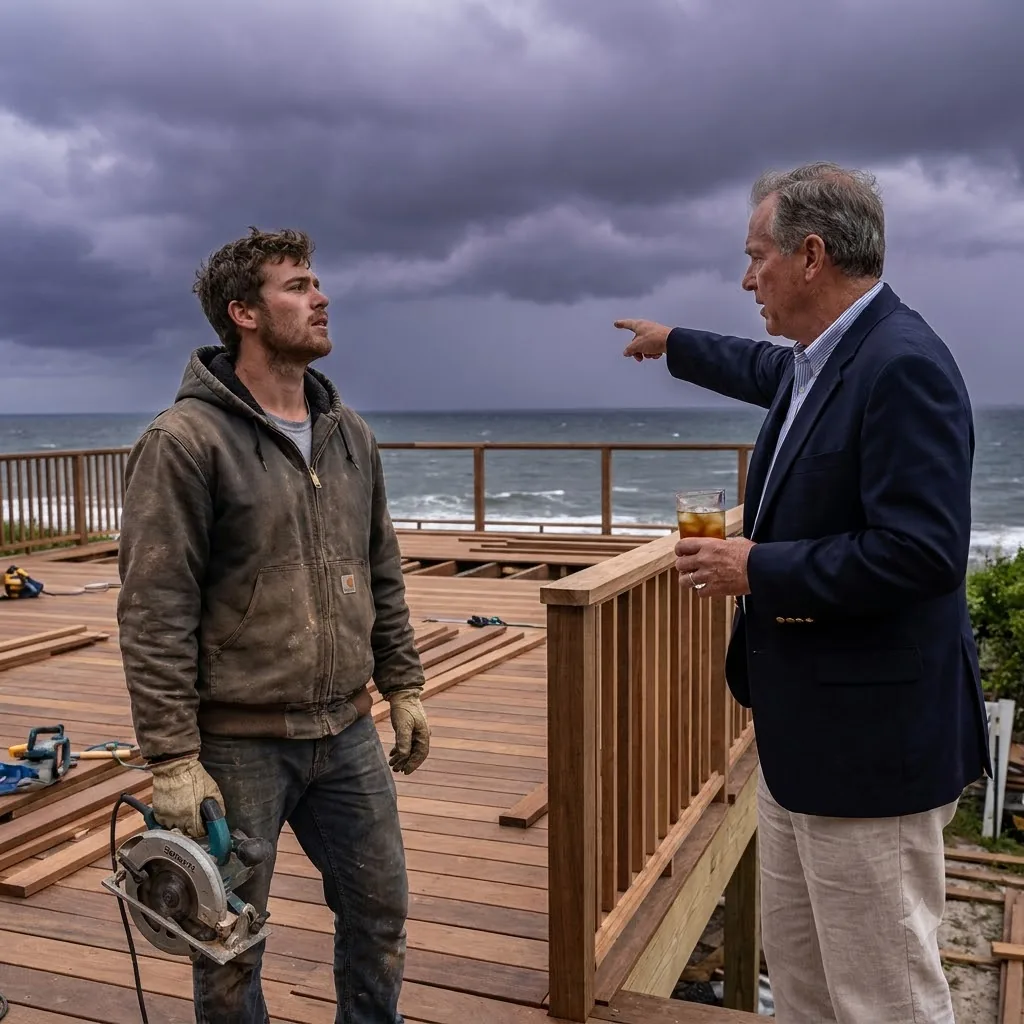
Leo didn’t bend down to retrieve his impact driver. He left the heavy canvas bag of titanium drill bits, his pneumatic air compressor, and the expensive reciprocating saw sitting directly in the pooling rainwater on the millionaire’s ruined patio. He turned away from the sheer sixty-foot drop and walked toward his weathered Ford F-150.
Vance didn’t yell after him. The silence of the homeowner, usually so full of relentless demands and threats of docked pay, was suddenly swallowed entirely by the howling Pacific wind. Leo opened the door of his truck, the rusty hinge screaming against the storm, and climbed inside. He didn’t slam the door. He just pulled it shut, sealing himself in the damp, familiar smell of old coffee and stale work boots.
He put the truck in gear and rolled forward, his heavy tires crunching over the immaculate crushed gravel of the private driveway. He was driving away from a ten-thousand-dollar final draw. The contract was officially breached. The check was gone. The emergency bank loan for his home repairs, the one he had secured based on the promise of this massive cliffside payout, would default by the end of the month.
The drive down the mountain was a perilous, agonizing crawl through sheets of gray rain. The winding asphalt was already slick with coastal mud, but Leo barely noticed the danger as his windshield wipers slapped furiously back and forth. His eyes tracked the deep concrete gutters running parallel to the luxury estates. They were roaring. Thousands of gallons of churning, muddy watershed surged down the steep grade, bypassing the natural mountain reservoirs just as Vance’s engineer had designed.
Leo followed the water. He rode the brakes, watching the torrential flow gain speed and violence with every switchback. This was the unseen, undeniable architecture of the city. Gravity and money, working perfectly in tandem. The massive runoff didn’t touch the cantilevered decks or the expensive infinity pools. It was funneled away, out of sight, channeled efficiently toward the lowest possible elevation where the cheapest land sat waiting.
By the time Leo’s truck reached the valley floor, the municipal emergency sirens had finally stopped, replaced by the chaotic hum of idling diesel engines and the deafening rush of displaced water. The sky overhead was a bruised, oppressive charcoal, dumping unrelenting sheets of rain. He turned his steering wheel, navigating the familiar, narrow roads until he reached Crestview Drive.
He didn’t need to go all the way down the block to see the damage. The street itself was already gone, replaced by a slow-moving, contaminated river of brown runoff.
Leo parked his truck on the slight incline of his driveway, the absolute highest point of his small property, right before the concrete slope dipped aggressively toward the garage. The dark water was already cresting the lip of the sidewalk, swallowing the yellow curb entirely. His headlights illuminated the stack of burlap sandbags he had rushed to buy yesterday morning. They were still sitting on the asphalt where he had left them, perfectly dry on top, entirely useless against the rising tide.
He killed the engine. The sudden mechanical silence inside the cab was deafening, broken only by the relentless drumming of the storm against his roof.
He stared out through the streaked glass at the front of his home. The wooden porch steps were completely submerged. The waterline was steadily creeping up the white aluminum siding, inching closer to the front door. Inside, there was nothing left for him to save. His wife had already taken the kids to a cheap motel on higher ground. The brand-new furnace, sitting unprotected in the basement, was undoubtedly drowning again. The exposed drywall studs, still waiting for insulation, were actively drinking in the toxic mix of storm drain overflow and mountain runoff.
Leo pulled his cracked phone from his damp flannel pocket. His hands were trembling slightly, completely numb from the cliffside chill, but his mind felt unnervingly still. He opened his banking app, the biometric scanner failing twice against his calloused, wet thumb before finally letting him in. The screen glowed harshly in the dim cab.
Available balance: forty-two dollars.
The emergency repair loan was eighteen thousand. He had just walked away from the final check that would have kept his head above water. There would be no second loan. No insurance payout from the company that had already denied him once. The bank would inevitably foreclose by spring. The math was as absolute as the rising tide.
He locked the screen and let the phone drop onto the empty passenger seat.
He should have felt a blinding panic. He should have felt the crushing, suffocating weight of total financial ruin pressing on his chest. But as Leo sat in the freezing cab, watching the black water swallow his front yard, he felt only a terrifying, absolute clarity.
He understood exactly how the world was built, from the towering cliffs down to the concrete basin. It wasn’t about bad luck, and it wasn’t about the weather. It was a structural guarantee. The people at the top bought the view, and the people at the bottom absorbed the runoff. Vance wasn’t going to jail for the bypass. The city wouldn’t investigate the flooded sewer lines. Eventually, Vance would just hire a new crew, cut down the forty-two-inch posts, and go back to admiring the horizon from his hot tub.
And Leo would lose his house.
But as he stared at the rising floodwaters, Leo didn’t wish he had stayed on the cliff. He didn’t regret sinking those heavy-duty steel lag screws deep into the pristine ironwood. He had left Vance a permanent, ugly monument to the true cost of his luxury. It wasn’t justice, and it wouldn’t pump the water out of his living room. It was just gravity.
Leo leaned his head back against the headrest, closed his eyes, and listened to the dark water lapping against the front tires of his truck.