Story code: ST-001891
Part 1: The Citation
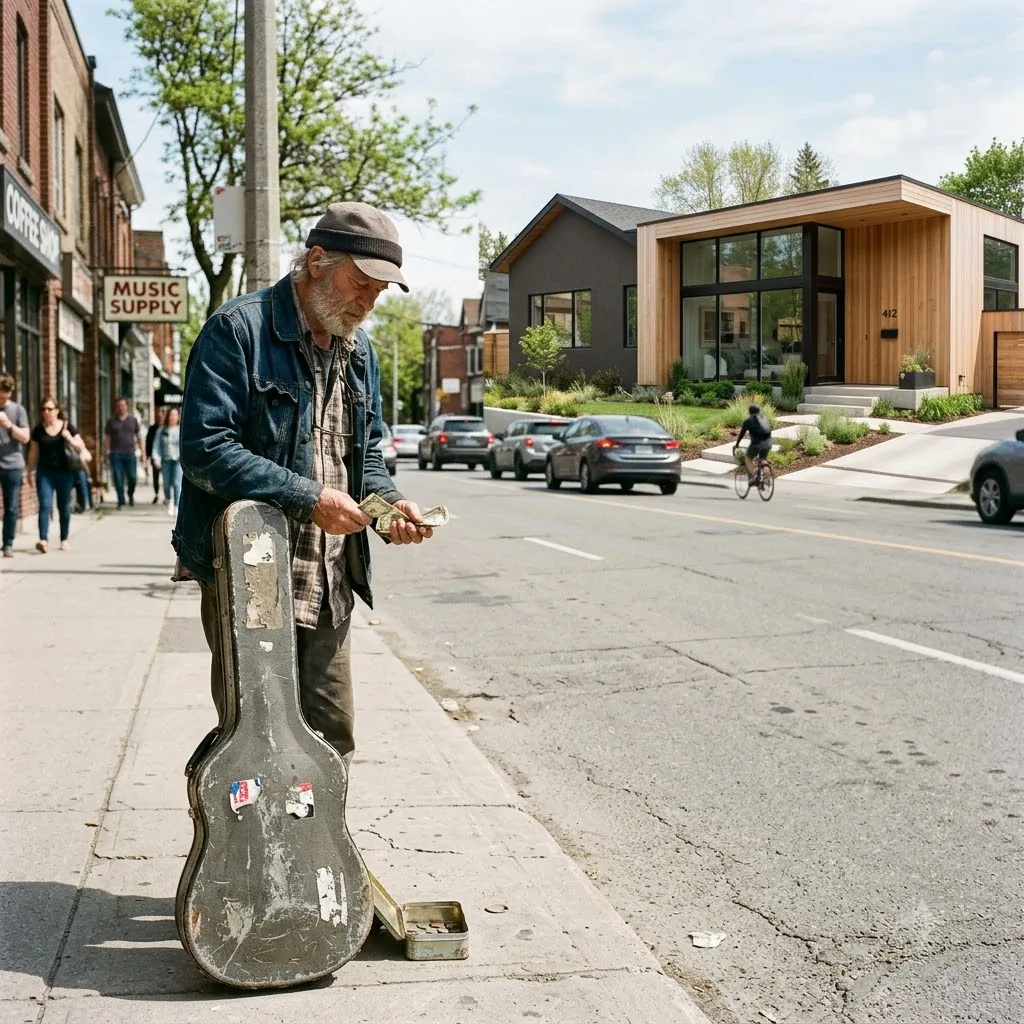
The pink carbon copy of the municipal noise citation fluttered against the faded red velvet lining of Silas’s open guitar case. He pinned the thin slip of paper down with a hasty stack of quarters, his calloused hands shaking too violently to keep the silver coins aligned. The miniature tower collapsed, scattering across the velvet. Fifty dollars. Payable immediately through the city clerk’s mobile portal, or his street performer’s medallion would be suspended at the stroke of midnight. Silas tipped his dented plastic bucket upside down, letting the rest of his morning earnings cascade out over his spare guitar strings.
Crumpled single dollar bills, one torn five, and a heavy wash of nickels and dimes rained down. He did not look up at the pedestrians stepping widely around him. The lingering aura of the police cruiser that had just pulled away left an invisible, repellent barrier on the sidewalk. Commuters and tourists who usually smiled and tossed a dollar into the bucket now hurried past with their eyes locked firmly on the pavement.
Across the narrow cobblestone street, the freshly renovated modern bungalow stood in stark contrast to the historic brick storefronts. A sleek, pill-shaped smart camera mounted beside the heavy oak door blinked a steady, recording blue light. The new resident had not even stepped onto their pristine porch to ask him to turn down his small battery-powered amplifier. They had simply dialed the non-emergency line, summoning a patrol car to silence Silas right as the highly profitable lunch rush peaked.
Silas snatched up the wrinkled bills, flattening them against the denim of his thigh with desperate, frantic strokes. Ten, eleven, twelve, thirteen. He needed the math to change. He needed a miracle hidden in the folds of the one-dollar bills. The fine was an immovable fifty dollars. The thick manila envelope folded in the inside pocket of his worn leather jacket-the one he touched every ten minutes like a talisman-needed to hit exactly three hundred by late afternoon. The spot-fine was a brutal, sudden tax that derailed his entire day. If he paid the citation now, he was crippled. If he ignored it, the officers promised to return in an hour and confiscate his acoustic guitar and amplifier entirely.
He tried to take a deep breath. The crisp autumn air refused to fill his lungs. His chest felt bound in tight iron wire, a suffocating pressure making spots dance at the edge of his vision. He scraped the scattered coins into distinct, desperate piles. Thirty-two dollars in paper. Maybe eight in silver. He was ten dollars short for the fine alone, completely gutting the progress he had made for the envelope.
The blue eye of the camera across the street caught the harsh afternoon sun. Silas glared at the black lens, a hot surge of protective anger rising in his throat. He had played on this exact corner of Elm and Maple for four years. The bakery owner brought him day-old muffins. The neighborhood knew him, relying on his acoustic blues progressions to set the rhythm of their mornings. Now, one flipped piece of real estate and a single noise complaint had shattered a fragile, vital timeline he had been maintaining since Monday.
Moving to another street was not an option. This intersection was the only place where the dense foot traffic from the financial district merged with the tourist path. Any other corner meant starting over with an empty bucket, no crowd, and zero momentum. Time was the one resource tighter and more unforgiving than the cash. He could not afford to waste an hour relocating and tuning up for an audience that did not exist yet.
He grabbed the pink slip again. The charge was explicitly written in block letters. Unpermitted Amplification of Sound. The ink was still fresh, smearing slightly under his sweaty thumb. The responding officer had been apologetic but firmly bound by protocol, tapping his body camera and nodding toward the bungalow while writing the ticket. The homeowner had cited a disruption to their remote workday.
Silas stuffed the counted bills deep into his front pocket and scooped the loose coins back into the bucket. The sharp plastic handle dug into his palm. He needed to play. He needed to put the guitar strap over his shoulder and sing until his vocal cords frayed. The citation, however, required a digital receipt of payment before he could even touch the amplifier’s power switch. He was paralyzed on his own corner, staring at his unplugged equipment.
A sharp, sustained vibration buzzed against his lower ribs.
Silas flinched. He dropped a handful of pennies onto the concrete. They rolled in erratic circles toward the storm drain, but he did not drop to his knees to chase them. His focus snapped entirely to the inside pocket of his jacket.
He reached in with a trembling hand and pulled out his ancient, cracked smartphone. He stared at the blank black screen for a long, agonizing second. His thumb hovered over the side button. The suffocating panic in his chest condensed into a cold, heavy dread. He knew exactly who was messaging him. He knew what time it was.
He pressed the button. The spider-webbed screen flared to harsh life, illuminating a new text message on the lock screen. The brief string of words offered no extensions, no sympathy, and laid out an absolute cutoff time that was now mathematically impossible to meet.
The pink carbon copy of the municipal noise citation fluttered against the faded red velvet lining of Silas’s open guitar case. He pinned the thin slip of paper down with a hasty stack of quarters, his calloused hands shaking too violently to keep the silver coins aligned. The miniature tower collapsed, scattering across the velvet. Fifty dollars. Payable immediately through the city clerk’s mobile portal, or his street performer’s medallion would be suspended at the stroke of midnight. Silas tipped his dented plastic bucket upside down, letting the rest of his morning earnings cascade out over his spare guitar strings.
Crumpled single dollar bills, one torn five, and a heavy wash of nickels and dimes rained down. He did not look up at the pedestrians stepping widely around him. The lingering aura of the police cruiser that had just pulled away left an invisible, repellent barrier on the sidewalk. Commuters and tourists who usually smiled and tossed a dollar into the bucket now hurried past with their eyes locked firmly on the pavement.
Across the narrow cobblestone street, the freshly renovated modern bungalow stood in stark contrast to the historic brick storefronts. A sleek, pill-shaped smart camera mounted beside the heavy oak door blinked a steady, recording blue light. The new resident had not even stepped onto their pristine porch to ask him to turn down his small battery-powered amplifier. They had simply dialed the non-emergency line, summoning a patrol car to silence Silas right as the highly profitable lunch rush peaked.
Silas snatched up the wrinkled bills, flattening them against the denim of his thigh with desperate, frantic strokes. Ten, eleven, twelve, thirteen. He needed the math to change. He needed a miracle hidden in the folds of the one-dollar bills. The fine was an immovable fifty dollars. The thick manila envelope folded in the inside pocket of his worn leather jacket-the one he touched every ten minutes like a talisman-needed to hit exactly three hundred by late afternoon. The spot-fine was a brutal, sudden tax that derailed his entire day. If he paid the citation now, he was crippled. If he ignored it, the officers promised to return in an hour and confiscate his acoustic guitar and amplifier entirely.
He tried to take a deep breath. The crisp autumn air refused to fill his lungs. His chest felt bound in tight iron wire, a suffocating pressure making spots dance at the edge of his vision. He scraped the scattered coins into distinct, desperate piles. Thirty-two dollars in paper. Maybe eight in silver. He was ten dollars short for the fine alone, completely gutting the progress he had made for the envelope.
The blue eye of the camera across the street caught the harsh afternoon sun. Silas glared at the black lens, a hot surge of protective anger rising in his throat. He had played on this exact corner of Elm and Maple for four years. The bakery owner brought him day-old muffins. The neighborhood knew him, relying on his acoustic blues progressions to set the rhythm of their mornings. Now, one flipped piece of real estate and a single noise complaint had shattered a fragile, vital timeline he had been maintaining since Monday.
Moving to another street was not an option. This intersection was the only place where the dense foot traffic from the financial district merged with the tourist path. Any other corner meant starting over with an empty bucket, no crowd, and zero momentum. Time was the one resource tighter and more unforgiving than the cash. He could not afford to waste an hour relocating and tuning up for an audience that did not exist yet.
He grabbed the pink slip again. The charge was explicitly written in block letters. Unpermitted Amplification of Sound. The ink was still fresh, smearing slightly under his sweaty thumb. The responding officer had been apologetic but firmly bound by protocol, tapping his body camera and nodding toward the bungalow while writing the ticket. The homeowner had cited a disruption to their remote workday.
Silas stuffed the counted bills deep into his front pocket and scooped the loose coins back into the bucket. The sharp plastic handle dug into his palm. He needed to play. He needed to put the guitar strap over his shoulder and sing until his vocal cords frayed. The citation, however, required a digital receipt of payment before he could even touch the amplifier’s power switch. He was paralyzed on his own corner, staring at his unplugged equipment.
A sharp, sustained vibration buzzed against his lower ribs.
Silas flinched. He dropped a handful of pennies onto the concrete. They rolled in erratic circles toward the storm drain, but he did not drop to his knees to chase them. His focus snapped entirely to the inside pocket of his jacket.
He reached in with a trembling hand and pulled out his ancient, cracked smartphone. He stared at the blank black screen for a long, agonizing second. His thumb hovered over the side button. The suffocating panic in his chest condensed into a cold, heavy dread. He knew exactly who was messaging him. He knew what time it was.
He pressed the button. The spider-webbed screen flared to harsh life, illuminating a new text message on the lock screen. The brief string of words offered no extensions, no sympathy, and laid out an absolute cutoff time that was now mathematically impossible to meet.