Story code: ST-000341
Part 1: Read-Only
Maya’s fingers halted over her mechanical keyboard as the text input field at the bottom of her screen turned a flat, unresponsive gray. She clicked the blank space twice, expecting the cursor to blink. Instead, a small padlock icon materialized next to the `#eng-deployments` header. The system status text below the channel name updated to inform her she was viewing a read-only channel. She glanced at the clock in the corner of her monitor. It was nine fifty-six, exactly four minutes before the architecture review she had spent the entire weekend preparing for. She dragged her mouse to the sidebar and clicked on `#backend-core`. The text field was gray. She clicked `#sprint-planning`. Gray.
She minimized the window and relaunched the application, assuming a temporary caching error had scrambled her account permissions. When the interface loaded again, the digital silence felt absolute. The usual rapid-fire cascade of automated alerts, deployment notifications, and team banter had frozen. Her entire list of engineering channels bore the same tiny padlock icon. Maya hovered her cursor over her manager’s name in the direct message menu to report the glitch. Before she could click, a calendar alert slid out from the top right corner of her screen, accompanied by a soft, cheerful chime.
It was a new notification, pushed directly to her schedule and overriding her upcoming architecture review. The subject line read, *Optional: Wellness & Culture Alignment Check-in*.
Maya opened the full calendar view. The dark blue block representing her highly anticipated presentation had vanished completely. It was not rescheduled or moved to another day. It was deleted. In its place sat a pastel-yellow block with the sudden HR meeting details, starting at ten o’clock sharp. She clicked the invitation to expand the description. The text inside was a dense block of aggressively positive, therapy-adjacent language. It spoke of “holding space for synergistic transitions,” “nurturing our talent ecosystem,” and “ensuring your personal journey aligns with our holistic company energy.” The jarring warmth of the corporate jargon contrasted sharply with the cold, locked-down state of her development tools.
She tabbed back to her messaging app. Her manager’s status indicator had shifted from active to offline. She scrolled down to her lead developer. Offline. Every single member of her immediate engineering team showed a gray, hollow circle next to their name. She typed a quick message to her manager anyway, hit enter, and watched a red error text appear, stating the message could not be delivered due to workspace policy restrictions.
The clock on her monitor rolled over to nine fifty-eight. She picked up her phone to text her coworker, Sarah, but stopped when she saw a push notification from her mobile email client. The app was requesting her to sign in again. She tapped the icon, only to be met with a generic authentication error.
She opened her browser and navigated to the cloud drive holding her architecture presentation. She needed those slides, regardless of what the calendar app said. The loading wheel spun for three seconds before the screen flashed white. A stark, unstyled text box appeared in the center of the page, informing her that her organizational access to the document had been revoked. She stared at the black text on the white background. The silence in her apartment was usually broken by the constant ping of notifications, but now the only sound was the low hum of her computer tower.
Maya navigated back to the calendar app and reread the HR invitation. The pastel-yellow block on her calendar seemed to pulse on the screen. She read the wellness description again. One sentence at the bottom caught her eye. *We recognize that growth requires shedding old paradigms, and we are committed to providing psychological safety during periods of role evolution.* None of this sounded like the standard human resources communications they received about benefits enrollment or holiday schedules.
The word optional stood out against the mandatory dismantling of her digital workspace. She had no channels to post in, no team members to message, and no access to the slide deck she was supposed to present in less than two minutes. The only functional link on her entire screen was the Zoom URL embedded beneath the paragraphs about wellness and culture alignment.
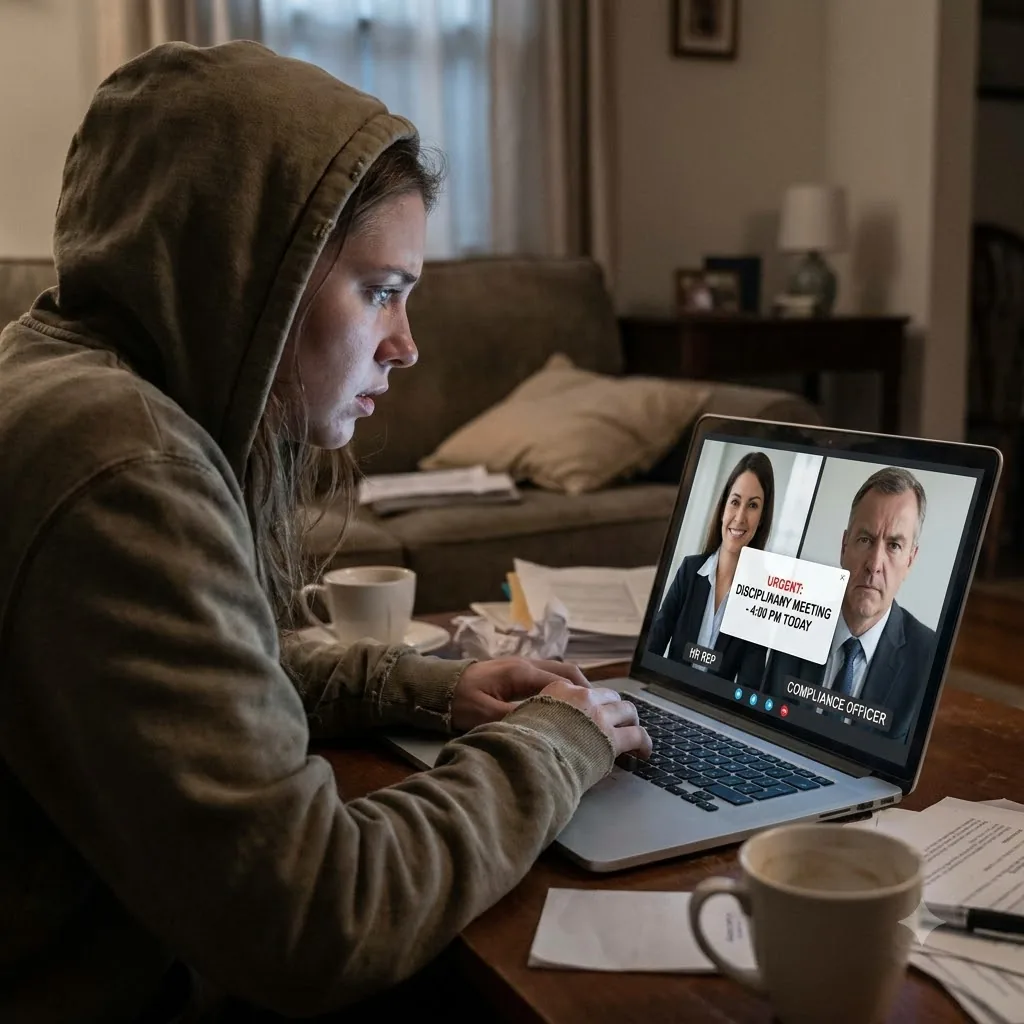
She adjusted her headset and clicked the link. The video conferencing application launched, bypassing the usual waiting room protocol completely. Her webcam indicator light flared green, illuminating her face on the screen. The grid view populated instantly with three other video feeds. None of them belonged to her manager. One frame showed a pristine, plant-filled office with a woman smiling warmly at the camera. The title card beneath her face read *Chloe – People Success Guide*. Another frame held a man in a beige sweater, his background blurred, titled *Julian – Culture Empathy Partner*.
Chloe leaned forward, her smile widening into a rigid display of bright white teeth. She held up a pair of hands framed by perfectly manicured nails and began to speak in a soft, practiced tone about embracing new chapters and finding gratitude in sudden pivots.
Maya reached for her mouse to unmute her microphone. She dragged the cursor to the bottom left corner of the application window, only to find the microphone and camera toggles completely absent from the control bar.
Maya’s fingers halted over her mechanical keyboard as the text input field at the bottom of her screen turned a flat, unresponsive gray. She clicked the blank space twice, expecting the cursor to blink. Instead, a small padlock icon materialized next to the `#eng-deployments` header. The system status text below the channel name updated to inform her she was viewing a read-only channel. She glanced at the clock in the corner of her monitor. It was nine fifty-six, exactly four minutes before the architecture review she had spent the entire weekend preparing for. She dragged her mouse to the sidebar and clicked on `#backend-core`. The text field was gray. She clicked `#sprint-planning`. Gray.
She minimized the window and relaunched the application, assuming a temporary caching error had scrambled her account permissions. When the interface loaded again, the digital silence felt absolute. The usual rapid-fire cascade of automated alerts, deployment notifications, and team banter had frozen. Her entire list of engineering channels bore the same tiny padlock icon. Maya hovered her cursor over her manager’s name in the direct message menu to report the glitch. Before she could click, a calendar alert slid out from the top right corner of her screen, accompanied by a soft, cheerful chime.
It was a new notification, pushed directly to her schedule and overriding her upcoming architecture review. The subject line read, *Optional: Wellness & Culture Alignment Check-in*.
Maya opened the full calendar view. The dark blue block representing her highly anticipated presentation had vanished completely. It was not rescheduled or moved to another day. It was deleted. In its place sat a pastel-yellow block with the sudden HR meeting details, starting at ten o’clock sharp. She clicked the invitation to expand the description. The text inside was a dense block of aggressively positive, therapy-adjacent language. It spoke of “holding space for synergistic transitions,” “nurturing our talent ecosystem,” and “ensuring your personal journey aligns with our holistic company energy.” The jarring warmth of the corporate jargon contrasted sharply with the cold, locked-down state of her development tools.
She tabbed back to her messaging app. Her manager’s status indicator had shifted from active to offline. She scrolled down to her lead developer. Offline. Every single member of her immediate engineering team showed a gray, hollow circle next to their name. She typed a quick message to her manager anyway, hit enter, and watched a red error text appear, stating the message could not be delivered due to workspace policy restrictions.
The clock on her monitor rolled over to nine fifty-eight. She picked up her phone to text her coworker, Sarah, but stopped when she saw a push notification from her mobile email client. The app was requesting her to sign in again. She tapped the icon, only to be met with a generic authentication error.
She opened her browser and navigated to the cloud drive holding her architecture presentation. She needed those slides, regardless of what the calendar app said. The loading wheel spun for three seconds before the screen flashed white. A stark, unstyled text box appeared in the center of the page, informing her that her organizational access to the document had been revoked. She stared at the black text on the white background. The silence in her apartment was usually broken by the constant ping of notifications, but now the only sound was the low hum of her computer tower.
Maya navigated back to the calendar app and reread the HR invitation. The pastel-yellow block on her calendar seemed to pulse on the screen. She read the wellness description again. One sentence at the bottom caught her eye. *We recognize that growth requires shedding old paradigms, and we are committed to providing psychological safety during periods of role evolution.* None of this sounded like the standard human resources communications they received about benefits enrollment or holiday schedules.
The word optional stood out against the mandatory dismantling of her digital workspace. She had no channels to post in, no team members to message, and no access to the slide deck she was supposed to present in less than two minutes. The only functional link on her entire screen was the Zoom URL embedded beneath the paragraphs about wellness and culture alignment.
She adjusted her headset and clicked the link. The video conferencing application launched, bypassing the usual waiting room protocol completely. Her webcam indicator light flared green, illuminating her face on the screen. The grid view populated instantly with three other video feeds. None of them belonged to her manager. One frame showed a pristine, plant-filled office with a woman smiling warmly at the camera. The title card beneath her face read *Chloe – People Success Guide*. Another frame held a man in a beige sweater, his background blurred, titled *Julian – Culture Empathy Partner*.
Chloe leaned forward, her smile widening into a rigid display of bright white teeth. She held up a pair of hands framed by perfectly manicured nails and began to speak in a soft, practiced tone about embracing new chapters and finding gratitude in sudden pivots.
Maya reached for her mouse to unmute her microphone. She dragged the cursor to the bottom left corner of the application window, only to find the microphone and camera toggles completely absent from the control bar.