Story code: ST-000557
Part 1: My Name Was On The Screen Before I Reached The Desk
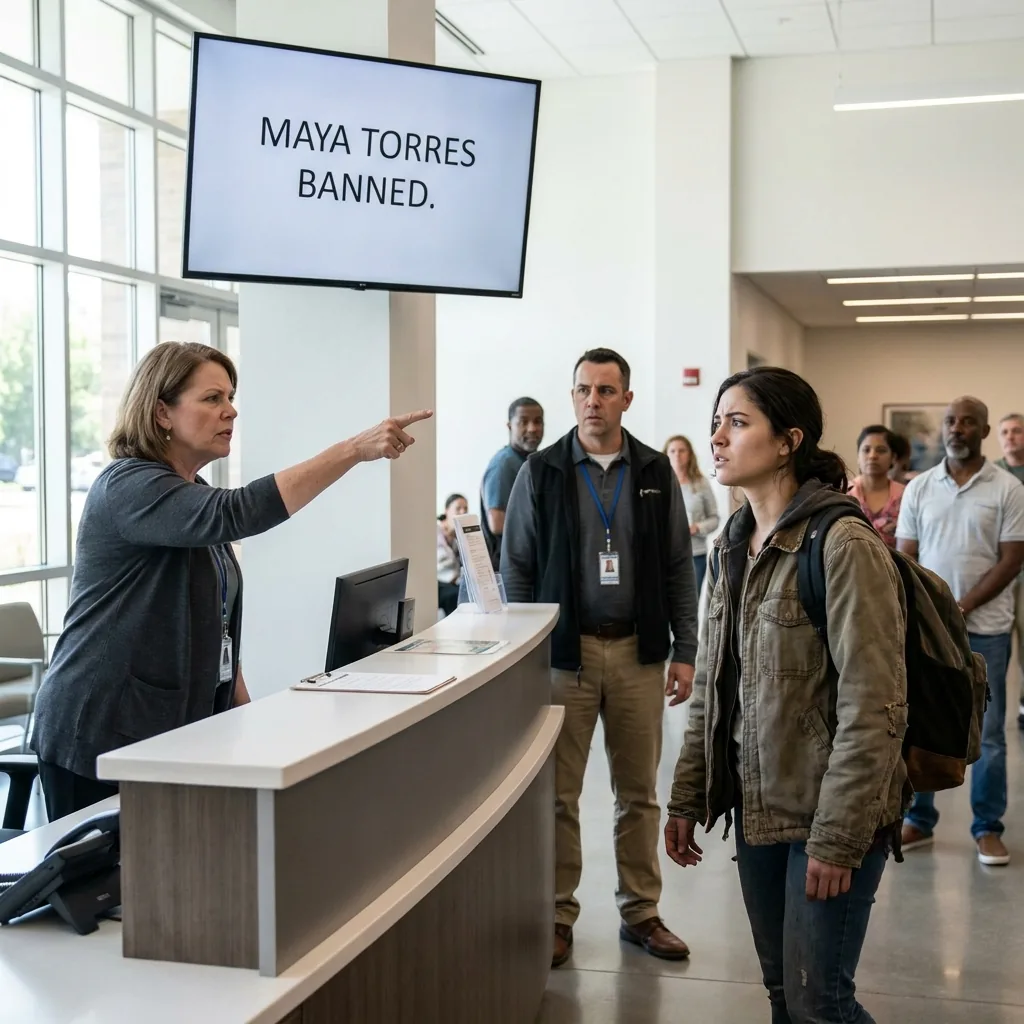
Kendra Walsh put Maya Torres’s full name on the announcement screen above the front desk and told a busy lobby she was banned before Maya had even finished walking up to the counter. Kids were cutting through the Riverton Community Center hallway with basketballs, two seniors were checking the daily activity listings, and everybody could see the blue slide switch to a white block of text that said MEMBER ACCESS HOLD – MAYA TORRES – DO NOT ADMIT TO PROGRAM ROOMS. Kendra said it out loud like it had always been there.
That was the first problem. The second was simpler: nobody in the room could produce the rule she claimed Maya had broken.
I was there long enough to watch the whole thing start in ordinary motion. Denise Park was at the front desk scanning cards and answering the usual questions about room numbers. The schedule board beside her showed ceramics in Room 3, open walking club in the gym, and the evening language class signing in near the hallway seating. Maya came in with a tote bag, checked the screen once, and then looked back up when her own name appeared where the pickleball reminder had been a second earlier.
Kendra was already turning from the desk computer when she said, “You need to leave the program area. Your center access is suspended under participant conduct screening.”
Maya stopped at the counter and kept her voice level. “What conduct screening?”
Kendra pointed up at the screen instead of at any paper or posted rule. “The center has authority to deny access when a participant is flagged.”
“Where is that posted?” Maya asked.
Kendra’s answer came fast. “It doesn’t need to be posted in this format. It’s center policy.”
That landed badly because the whole building runs on posted formats. The front desk had printed room use rules in acrylic stands. The bulletin wall had fee notices and sign-up deadlines. The screen itself rotated through reminders, closures, and program changes. When a place lives by visible instructions, saying a rule exists somewhere but can’t be shown is its own kind of spectacle.
Denise glanced from Maya to the monitor at her station. She clicked twice, then stopped with one hand still on the mouse. “I don’t see a suspension code on her account,” she said, not loudly, but not quietly either.
Kendra did not lower her voice. “It’s not a desk code issue. It’s a program restriction. She cannot enter any activity rooms today.”
Maya asked the question that should have ended it if the rule was real. “Which activity rooms?”
Kendra said, “All of them.”
That widened the scene immediately. Two people who had only been waiting to check in now looked up at the screen again. One man at the schedule board stepped closer so he could read Maya’s name for himself. Maya did not raise her voice, but she also did not step away, which mattered because retreat would have let the screen do all the talking for her.
“If it’s all rooms,” Maya said, “show me the policy, or tell me who can.”
Kendra folded her arms and repeated the phrase exactly: “Participant conduct screening.”
The phrase had the polished sound of something meant to stop questions, but the room kept asking them. Denise picked up the laminated binder that staff use for desk procedures and flipped through the tabs. She checked guest entry, youth pickup, room transfers, late arrivals. Then she looked at Kendra and said, “I don’t have that in here.”
Kendra answered without turning. “Because it isn’t a front-desk decision.”
That might have held if the claim had stayed narrow. It didn’t. Maya asked whether this meant she was barred from the volunteer training in Room 2, from using the walking track entrance by the gym, and from picking up the supply box she had reserved. Kendra said yes to each one, and every yes made the invisible rule larger.
Then Ron Patel, who had been standing in line with a folded yoga mat under one arm, asked the question that shifted the whole lobby.
“Wait,” he said, looking from Kendra to Denise to the room schedule board. “If this is a conduct screening rule and it blocks all program rooms, does that apply to everyone in a flagged group, or just whoever’s name you put on the screen?”
Kendra answered too quickly. “Anyone subject to the restriction.”
Ron kept going. “How would any of us know if we’re subject to it if the desk can’t see it and the rule isn’t posted?”
Kendra opened one hand toward the screen like that settled it. But the screen only showed Maya’s name and a command, not a source, not a code, not a policy number, not even a time stamp. The object she had used as proof was starting to look more like a spotlight.
Maya did not move. Denise did not resume check-ins. And Kendra, who had announced a center-wide rule with full confidence, still had not explained how the same rule was supposed to work on anyone else standing three feet away.
Kendra Walsh put Maya Torres’s full name on the announcement screen above the front desk and told a busy lobby she was banned before Maya had even finished walking up to the counter. Kids were cutting through the Riverton Community Center hallway with basketballs, two seniors were checking the daily activity listings, and everybody could see the blue slide switch to a white block of text that said MEMBER ACCESS HOLD – MAYA TORRES – DO NOT ADMIT TO PROGRAM ROOMS. Kendra said it out loud like it had always been there.
That was the first problem. The second was simpler: nobody in the room could produce the rule she claimed Maya had broken.
I was there long enough to watch the whole thing start in ordinary motion. Denise Park was at the front desk scanning cards and answering the usual questions about room numbers. The schedule board beside her showed ceramics in Room 3, open walking club in the gym, and the evening language class signing in near the hallway seating. Maya came in with a tote bag, checked the screen once, and then looked back up when her own name appeared where the pickleball reminder had been a second earlier.
Kendra was already turning from the desk computer when she said, “You need to leave the program area. Your center access is suspended under participant conduct screening.”
Maya stopped at the counter and kept her voice level. “What conduct screening?”
Kendra pointed up at the screen instead of at any paper or posted rule. “The center has authority to deny access when a participant is flagged.”
“Where is that posted?” Maya asked.
Kendra’s answer came fast. “It doesn’t need to be posted in this format. It’s center policy.”
That landed badly because the whole building runs on posted formats. The front desk had printed room use rules in acrylic stands. The bulletin wall had fee notices and sign-up deadlines. The screen itself rotated through reminders, closures, and program changes. When a place lives by visible instructions, saying a rule exists somewhere but can’t be shown is its own kind of spectacle.
Denise glanced from Maya to the monitor at her station. She clicked twice, then stopped with one hand still on the mouse. “I don’t see a suspension code on her account,” she said, not loudly, but not quietly either.
Kendra did not lower her voice. “It’s not a desk code issue. It’s a program restriction. She cannot enter any activity rooms today.”
Maya asked the question that should have ended it if the rule was real. “Which activity rooms?”
Kendra said, “All of them.”
That widened the scene immediately. Two people who had only been waiting to check in now looked up at the screen again. One man at the schedule board stepped closer so he could read Maya’s name for himself. Maya did not raise her voice, but she also did not step away, which mattered because retreat would have let the screen do all the talking for her.
“If it’s all rooms,” Maya said, “show me the policy, or tell me who can.”
Kendra folded her arms and repeated the phrase exactly: “Participant conduct screening.”
The phrase had the polished sound of something meant to stop questions, but the room kept asking them. Denise picked up the laminated binder that staff use for desk procedures and flipped through the tabs. She checked guest entry, youth pickup, room transfers, late arrivals. Then she looked at Kendra and said, “I don’t have that in here.”
Kendra answered without turning. “Because it isn’t a front-desk decision.”
That might have held if the claim had stayed narrow. It didn’t. Maya asked whether this meant she was barred from the volunteer training in Room 2, from using the walking track entrance by the gym, and from picking up the supply box she had reserved. Kendra said yes to each one, and every yes made the invisible rule larger.
Then Ron Patel, who had been standing in line with a folded yoga mat under one arm, asked the question that shifted the whole lobby.
“Wait,” he said, looking from Kendra to Denise to the room schedule board. “If this is a conduct screening rule and it blocks all program rooms, does that apply to everyone in a flagged group, or just whoever’s name you put on the screen?”
Kendra answered too quickly. “Anyone subject to the restriction.”
Ron kept going. “How would any of us know if we’re subject to it if the desk can’t see it and the rule isn’t posted?”
Kendra opened one hand toward the screen like that settled it. But the screen only showed Maya’s name and a command, not a source, not a code, not a policy number, not even a time stamp. The object she had used as proof was starting to look more like a spotlight.
Maya did not move. Denise did not resume check-ins. And Kendra, who had announced a center-wide rule with full confidence, still had not explained how the same rule was supposed to work on anyone else standing three feet away.