Story code: ST-000557
Part 4: She Had To Enter The Restriction For Real Or Admit There Had Never Been One
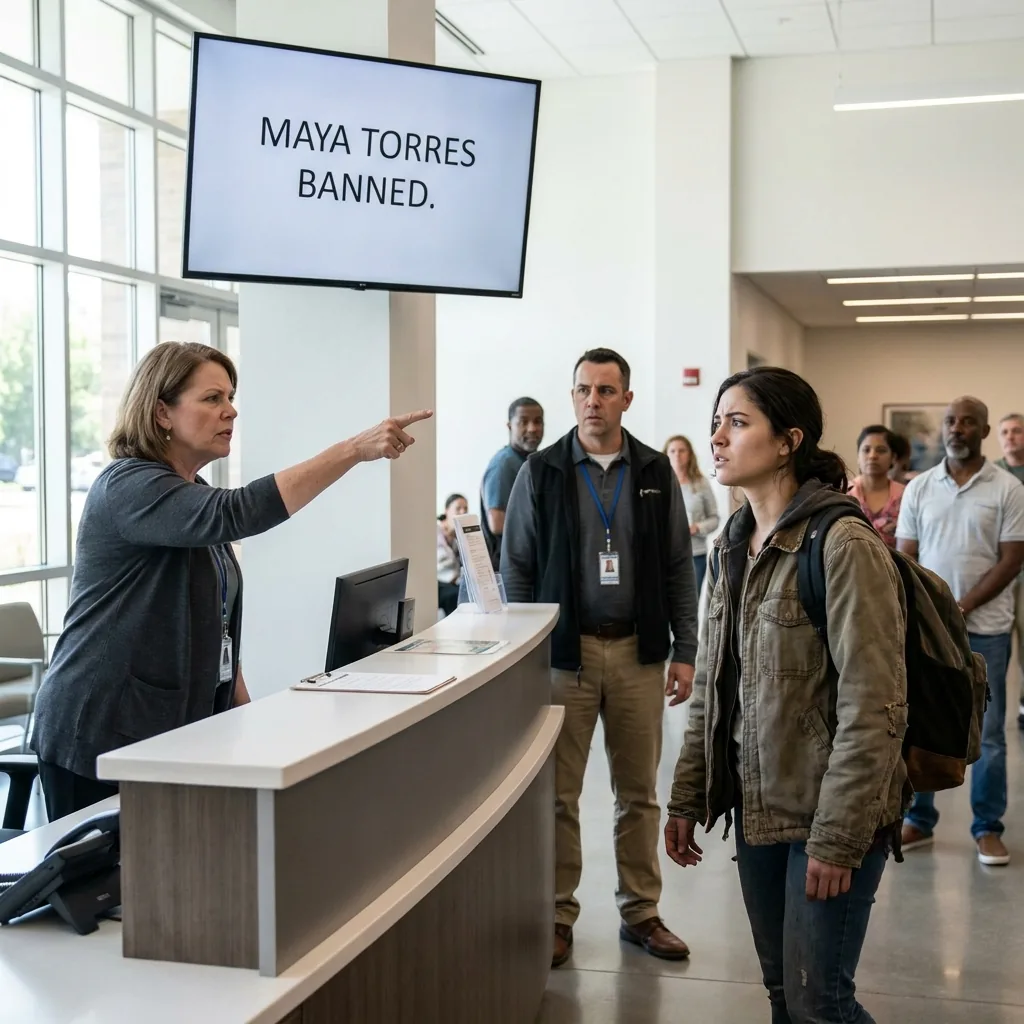
Once Eli Mercer put the incident form in front of Kendra Walsh, the whole scene lost its earlier theater and turned cold.
That shift mattered more than volume ever would have. Nobody was waiting for a speech now. Denise Park moved the check-in scanner aside to clear space on the counter. Eli stood where he could see both the desk monitor and the announcement screen above it. Maya Torres stayed at the counter, close enough to hear each question, far enough back that nobody could claim she was leaning over staff equipment. Ron Patel and the others who had asked cross-application questions did not drift away. They had been told a center-wide rule existed. Now they were watching whether it could survive contact with an actual process.
Eli started with the visible facts. “Time the slide was posted.”
Kendra gave a time.
“Exact wording used.”
She read from the screen: “Member access hold. Maya Torres. Do not admit to program rooms.”
“Source system.”
Kendra’s mouth tightened before she answered. “Announcement rotation.”
“Not display system,” Eli said. “Authorizing system.”
There was no quick reply to that. Denise had the member account/access system open beside the incident form. The account page still showed normal check-in history and nothing else. No restriction flag. No supervisor note. No temporary suspension marker. The difference between what had been said aloud and what the center actually controlled had become impossible to miss.
Eli asked one more time, careful and flat. “What policy or recorded review authorized you to post a public do-not-admit instruction for all program rooms?”
Kendra said, “I was trying to stop access while I sorted out a conduct problem.”
That was the first sentence all morning that did not sound like a rule already backed by the building. It sounded like a person admitting sequence instead of authority.
Eli nodded once, not as agreement but as recognition that the wording had changed. “Then the slide was not backed by a verified restriction when you posted it.”
Kendra looked toward the screen and then toward the hallway seating, where several people were still watching. She did not answer with a yes or no.
Eli did not let it sprawl. “We’re done using the slide as control. Now we correct the record and secure the tools.”
He told Denise to take the announcement rotation off the public accusation immediately after she noted the slide text and timestamp on the incident form. Denise typed, printed the form summary, and removed the slide from rotation. The screen switched back to the daily activity listings: ceramics in Room 3, open walking club in the gym, language class check-in near the hallway. That simple return to routine changed the whole pressure in the lobby.
Then Eli did the part that paid for the rest.
He turned the monitor slightly so Kendra could reach the keyboard. “You created a public access order without support in the system. You are now documenting that no verified restriction existed at posting time, and you are submitting the corrective admin request yourself.”
Kendra said, “What corrective request?”
“Removal of your announcement rotation permissions pending admin review,” Eli said. “And a temporary lock on your ability to place account-level holds from program access tools, if any are assigned to your role. We are not leaving public restriction language in the hands of someone who used it before verification.”
That landed with the kind of finality only process can manage. There was no crowd cheer, no dramatic confession, no rescue speech. Just a screen back on schedule, a form on the counter, and a supervisor requiring the person who had tried to bluff authority into existence to enter the consequence into the same administrative chain she had tried to bypass.
Denise navigated to the staff permissions page. Eli read the fields aloud as Kendra typed under his direction: reason for change, incident reference number, immediate scope, supervisor present. When the page reached the confirmation step, he said, “Read it before you submit.”
Kendra read in a lower voice than she had used when Maya’s name first went up on the screen: temporary removal of slide publishing access, temporary lock on independent restriction requests, review required before reinstatement.
“Submit it,” Eli said.
She clicked.
Denise refreshed the page. Kendra’s publishing privileges disappeared from the list. Eli had her sign the printed incident summary next, then had Denise add a note to Maya’s account stating that no verified access hold was in effect and that the public screen instruction had been removed as unsupported. Denise turned the monitor slightly toward Eli, who checked the note before nodding.
Maya asked the only question that still mattered for her side of the counter. “So I can go to Room 2 and pick up my supply box?”
Eli answered, “Yes. Your account is clear, and the unsupported instruction has been removed.”
That was the earned relief in the room. Not triumph. Not a public apology circle. Just the cold correction of what had actually been controlled. The same system that had shown nothing against Maya now showed something real against Kendra: locked permissions, a formal incident number, and a documented reason nobody in that lobby had to guess at anymore.
Maya adjusted her tote bag, took back the space that had been held against her name, and walked toward the program hallway without hurrying. The screen above the desk kept rotating through ordinary announcements, which was exactly why it mattered that everyone had seen what it looked like when it was used the wrong way.
Some proof only becomes useful when the person who posted it has to clean it up in front of the same people they expected to silence.