Story code: ST-000663
Part 2: Liquidated Leverage
Silas snatched the thick paper from the rim of the rusted drum just as the edge began to curl and brown from the intense heat. The cardstock felt uncomfortably heavy, expensive, completely alien against his rough, calloused thumb. He squinted at the crisp, black text in the dim dawn light. There were no columns of numbers. There were no clauses about machinery guards, back pay, or healthcare premiums.
There were only three short paragraphs, followed by a blank line for a signature.
*Notice of Permanent Closure and Voluntary Release of Claims.*
Silas’s chest tightened, the frigid air suddenly catching in his throat like shattered glass. He read the rest of the words, his eyes darting frantically across the page as the reality of the black ink stripped away the last forty-one days of freezing, starving, and fighting. The document was a complete and unconditional surrender. It offered a flat, insulting sum-barely enough to cover two months of rent-in exchange for the immediate forfeiture of their pensions, their union rights, and any legal recourse regarding the mill’s sudden closure.
They weren’t here to negotiate. They were here to liquidate.
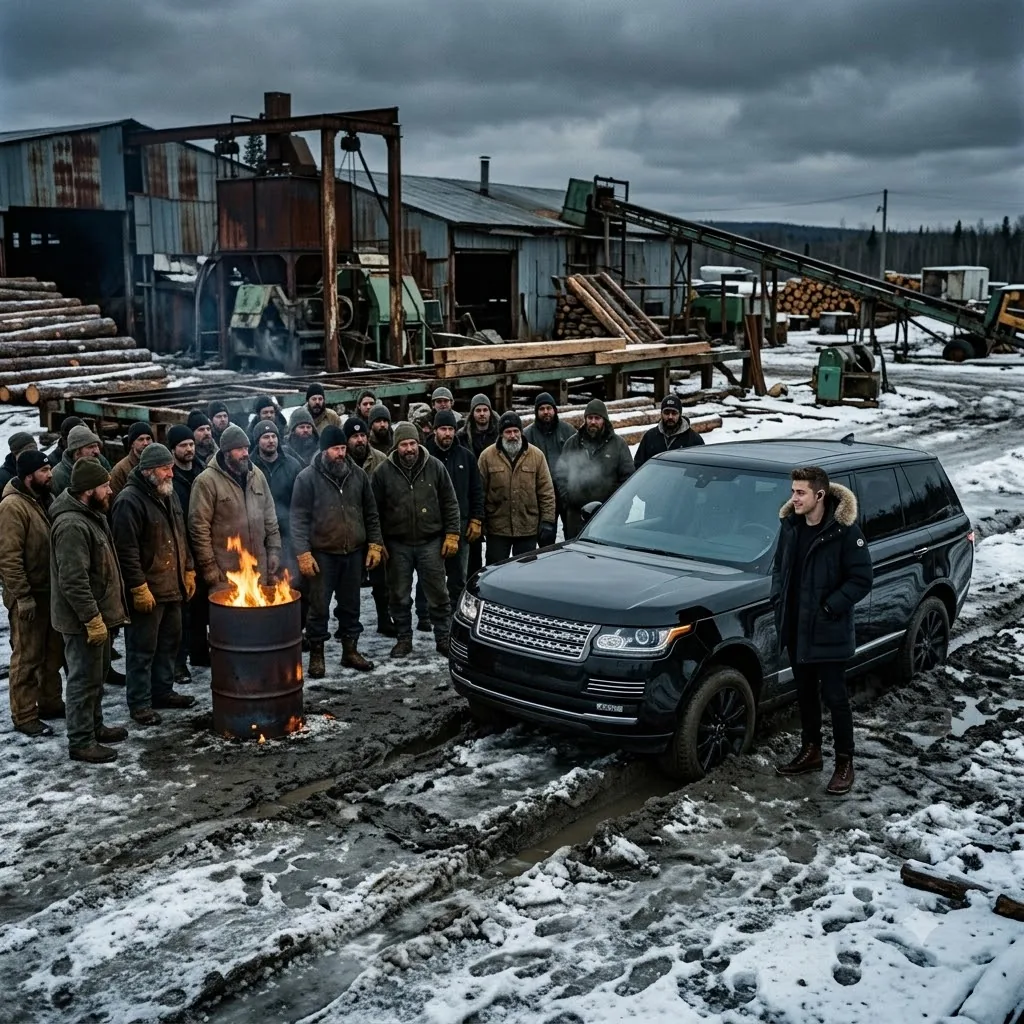
“What does it say, Si?” Miller’s voice was a low, dangerous rumble over the crackle of the burning pine pallets. The massive shop steward took another heavy step forward, his broad shadow falling over the pristine white snow.
The fifty men behind him went deathly quiet. The metallic clinking of thermoses and the crunching of shifting boots completely stopped.
Silas looked up from the paper, his jaw locked so tight his teeth ached. He looked at the kid, who was currently brushing a microscopic speck of ash from the sleeve of his charcoal cashmere coat, utterly oblivious to the impending explosion.
“It’s a closure notice,” Silas said, his voice carrying just enough to reach the men on the line. He felt sick to his stomach even speaking the words aloud. “They’re shutting the mill down permanently. They want us to sign away our pensions for a flat buyout.”
A stunned, heavy silence dropped over the yard. The wind howled through the skeletal branches of the pines, kicking up a swirl of dry snow. Then, the silence shattered.
It wasn’t a rumble of discontent this time; it was a collective, visceral roar of betrayal. Forty-one days of missing mortgages, of explaining to their kids why Christmas was going to be incredibly light, of standing in the sleet to protect the only livelihood this town had left. Fifty men surged forward as one, closing the gap around the burn barrel. Wooden signposts clattered to the frozen ground, instantly replaced by the white-knuckled grips of men who had spent their entire lives swinging axes, pulling chains, and breaking their backs for the company.
“You little corporate parasite,” Miller snarled, raising a thick, gloved fist as he lunged past the barrel. “I’ll break your jaw!”
“Miller, no!” Silas threw his entire weight in front of the massive steward, slamming his open hands into Miller’s chest to halt his momentum. The brutal impact jolted Silas’s shoulders, but he dug his scuffed steel-toe boots into the slush, physically holding the line against his own best friend. “Hold back! Nobody touches him! Back up!”
“He’s shutting it down, Si!” someone yelled from the back of the mob, the voice cracking with desperation. “He’s burying us!”
“I know!” Silas roared back, his breath pluming in a massive cloud of steam in the sub-zero air. He shoved Miller back another desperate inch, fighting to keep the space between the enraged lumberjacks and the billionaire’s son. “But if you lay a single hand on him, we get nothing! They’ll lock you up, and they won’t pay a dime! That’s what they want!”
Silas risked a terrified glance over his shoulder. The young man hadn’t moved an inch. He hadn’t flinched when Miller lunged. He hadn’t even taken his hands out of his coat pockets. He was standing with his back against the side of his stuck, idling luxury SUV, watching the near-riot with the exact same mild, detached amusement as before.
“He’s right, you know,” the kid said, his voice slicing through the shouting with practiced, effortless volume. He smiled, a thin, perfect curve of white teeth that didn’t reach his eyes. “Assaulting an officer of the parent company voids the severance offer immediately under the gross misconduct clause. It would save my father roughly two point four million dollars in operational losses. So, please. Feel free to take a swing, Mr. Miller. I think my dental plan covers a fractured jaw.”
Miller’s face flushed dark purple under his frost-covered beard. He strained against Silas’s grip, his massive chest heaving with exertion and fury. Silas gripped the man’s canvas jacket tighter, silently pleading with him to hold steady. The air felt suffocatingly charged, crackling with a violence that was only one slipped boot away from erupting into a bloodbath.
“Why?” Silas demanded, turning his focus back to the kid, desperately trying to keep the conversation going to defuse the physical tension. “The mill is profitable. We’re asking for pennies on the dollar compared to what we produce. Why shut it down now?”
The young man let out a short, breathy laugh. He reached into his coat and produced a sleek, silver smartphone, casually tapping the screen to check the time.
“Profitable? Sure. The margins were acceptable. But this land?” The kid gestured vaguely at the sprawling, snow-covered yard, the rusting silos, and the dense timberline beyond. “The land is an absolute goldmine. We rezoned it on Tuesday. A major national logistics company bought the footprint for a new regional distribution hub. The heavy machinery inside your beloved mill was sold to a buyer in Brazil yesterday morning. The cargo ships are already booked out of Seattle.”
Silas felt the remaining blood drain from his face. The cold suddenly pierced right through his heavy jacket, settling deep into his bones. They had been standing out here freezing for weeks, fiercely guarding the gates to a factory that was already dead. The strike hadn’t been their leverage; it had been a highly convenient delay for the board. It kept the angry workers outside while the company finalized the liquidation behind closed doors.
“You let us freeze out here for over a month,” Silas said, his voice dropping to a harsh, trembling whisper. “You let families go hungry.”
“I let you exercise your legal right to strike,” the young man corrected smoothly, sliding his phone back into his coat. He glanced down at the single sheet of paper Silas was still crushing in his left hand. “But now the clock is up. I have a flight to catch, and my tow truck will be here in approximately twelve minutes.”
The kid stepped forward, completely ignoring the fifty murderous glares burning into him. He reached out and tapped the edge of the crumpled paper in Silas’s hand with one manicured finger.
“Here is the reality of your situation, Silas,” the young man said, his eyes finally meeting Silas’s with a cold, terrifying emptiness that confirmed he felt absolutely nothing for the lives he was ruining. “You sign that paper right now, and your men get their two months of severance. It’s a courtesy. If my tow truck arrives and you haven’t signed it, I get in the cab, I leave, and the severance offer is withdrawn completely. You get zero. Your pensions vanish into the bankruptcy filing of a subsidiary shell company you cannot afford to sue.”
Silas stared into the kid’s eyes, realizing with a sickening drop in his stomach that it wasn’t an empty bluff. The kid wasn’t just arrogant; he was fully insulated by a fortress of high-priced lawyers and offshore accounts.
“Twelve minutes,” the kid repeated softly, stepping back and leaning against the hood of his trapped Mercedes. “Tick tock.”