Story code: ST-000663
Part 4: The Hollow Victory
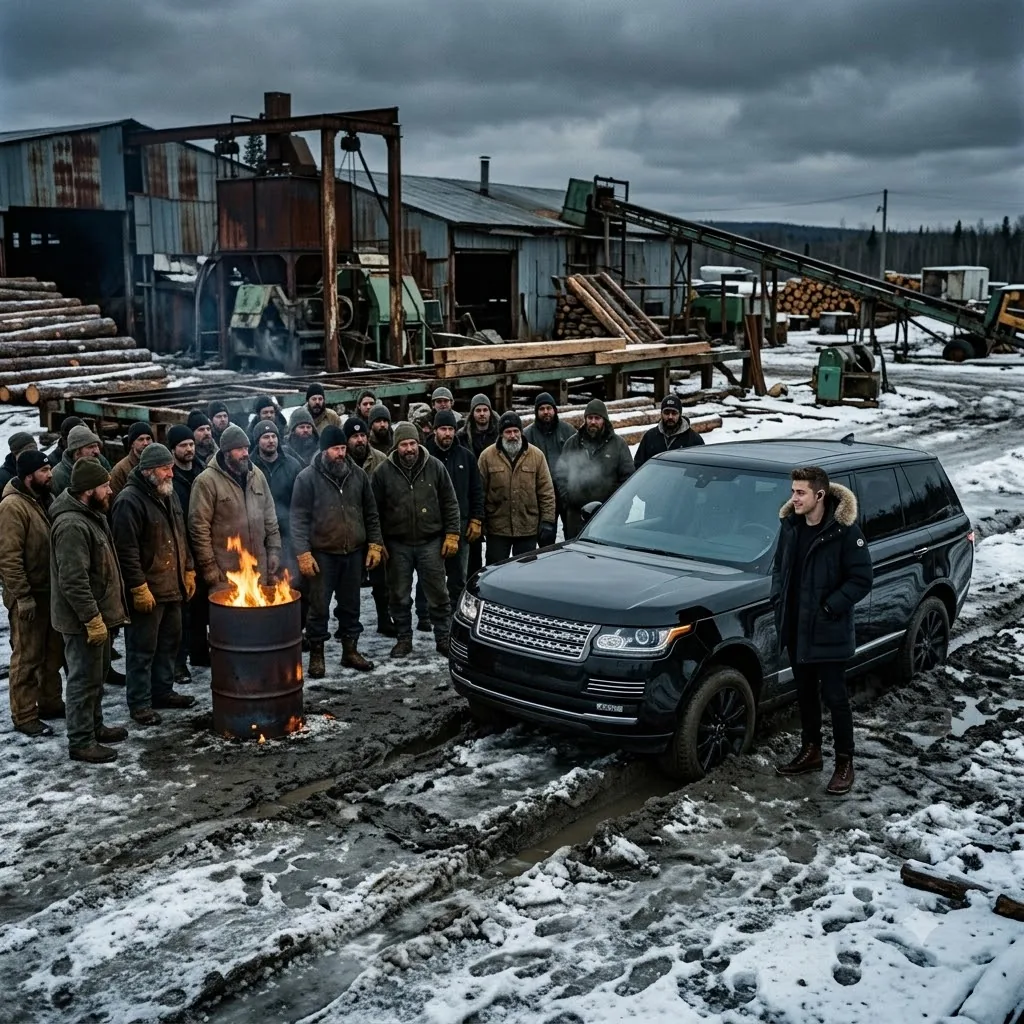
The amber lights of the tow truck vanished into the gray mountain fog, taking Julian’s last ounce of leverage with them. Silas stood by the burn barrel, the crackling pine masking the profound silence that had settled over the fifty men on the picket line.
Julian stared down the empty logging road, his chest rising and falling in rapid, shallow jerks. The freezing slush had already soaked through his tailored trousers, turning the pristine cuffs black. He frantically jammed a hand into his cashmere coat, ripping out his silver smartphone. He stabbed at the screen, holding it in front of his face with trembling fingers.
“Dad,” Julian choked out as the line connected, jabbing the speaker button in his sheer panic. His voice cracked violently. “Dad, they won’t let me leave!”
“Julian. What are you talking about?” The father’s voice was crisp, echoing with boardroom irritation in the frigid mountain air.
“The tow truck left,” Julian whimpered, the sound tearing out of his throat. Tears of genuine terror welled in his eyes, spilling over his cheeks and freezing in the wind. “They know about the scrap crew at three, Dad. They have the gates blocked and I’m stuck in the mud. I’m freezing.”
Silence hung on the line, heavier than the falling snow.
“Silas,” the billionaire’s voice crackled through the tiny speaker, instantly recognizing the shift in power. “What is your number?”
“Full release of the pension funds,” Silas said, stepping right up to the hood of the trapped Mercedes, projecting his voice over the speaker. “Eighteen months of severance for every man on this line. Healthcare premiums covered through the end of next calendar year. You agree to that, and we pack up our signs. The gates will be wide open for your copper salvage crew at three o’clock.”
“That is twelve million dollars,” the father snapped. “Absolutely not.”
“Then the salvage contract defaults,” Silas replied, his voice a flat, unyielding hammer. “Your scrap buyer sues you for breach of contract, your liquidation fails, and your son freezes to death in a mud puddle. You have thirty seconds to decide, or we throw this phone in the burn barrel.”
Julian broke completely. He leaned over the hood of his luxury tank, weeping openly, his shoulders shaking with violent, ugly sobs. “Please, Dad! Just pay them! I’m freezing! They’re animals, Dad, just pay them so I can go home!”
The fifty timber workers watched in stony silence as the heir to the parent company cried over his muddy Italian leather shoes. There was no joy in it for Silas. He felt no triumphant thrill watching a spoiled boy humiliate himself. It just felt pathetic.
“Amend the contract,” the father finally hissed through the speaker, the disgust in his voice aimed entirely at his weeping son. “Email me the photo for verbal execution, then get out of my sight.”
The line went dead.
Silas handed Julian the heavy gold pen. “Page three. Write it exactly as I said.”
Shivering so hard he could barely grip the metal, Julian flattened the thick cardstock against the frost-covered hood of his Mercedes. He crossed out the insulting buyout paragraph with jagged, frantic strokes, scribbling the new terms in the margins. He signed his name at the bottom, his cursive completely illegible, and shoved the paper into Silas’s chest before snapping a photo with his phone.
Silas read over the handwritten amendments. It was sloppy, stained with muddy fingerprints and drops of melting sleet, but it was binding. The pensions were safe. The men wouldn’t lose their homes this winter.
“Pack it up!” Silas yelled, turning to the line. “We’re done!”
A roar of absolute relief erupted from the freezing men. Wooden signposts were tossed onto the burn barrel, sending up a massive shower of orange sparks. Men embraced, laughing and crying, clapping each other on the shoulders. The grueling, freezing forty-one-day war was finally over.
Julian scrambled into the driver’s seat of his SUV, locking the doors and turning the heater on full blast. He stared straight ahead, refusing to look at Silas through the mud-splattered window as the workers began parting to clear a path.
Miller walked over, his massive face split into a wide grin. He threw a heavy arm around Silas’s shoulder, shaking him gently. “You did it, Si. You broke ’em. We’re getting paid.”
“Yeah,” Silas said softly. He folded the amended contract and slid it into the breast pocket of his heavy canvas jacket.
He looked past Miller, past the cheering men, and stared at the towering, rusted gates of the timber mill. The massive saws inside were quiet. The loading bays were completely empty. By tomorrow morning, a crew of strangers would rip the copper out of the walls, leaving a hollow, useless shell.
He had won the battle. He had secured the money. But as Silas watched the snow begin to fall over the silent timber silos, a terrifying, heavy residue settled deep in his chest. The victory check would keep the lights on through the winter, but the mill was dead. Tomorrow, he still had fifty families to feed, and absolutely nowhere to lead them.