Story code: ST-000226
Part 1: The Awning
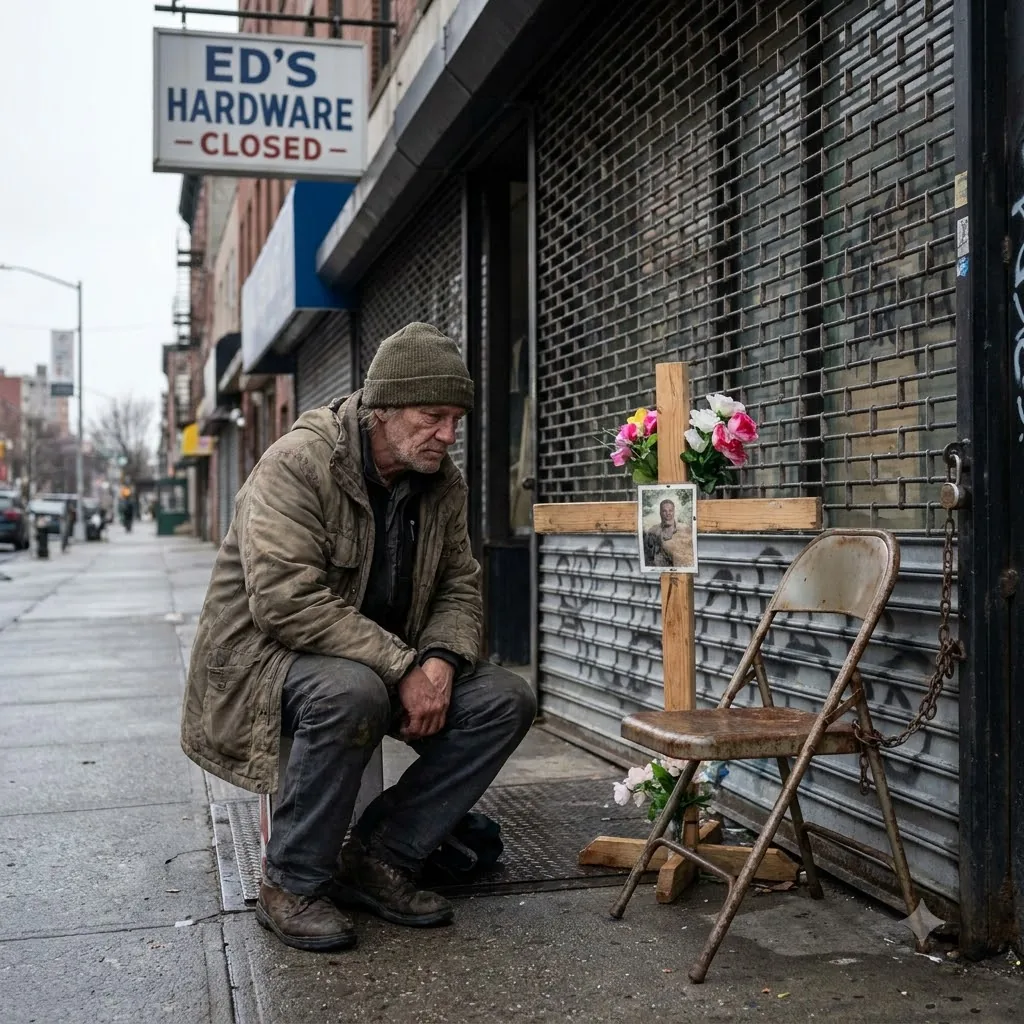
Elias shoved his entire weight against the rusted iron crank, but the corrugated security awning above the storefront only screeched and locked tight. He traced the taut steel cable down to the mechanical housing, where a heavy wooden cross rested against the brick wall. A thick, industrial bicycle chain wrapped around the memorial and snaked directly through the gears, secured with a heavy brass padlock. Sarah sat on a folding canvas chair right beneath it, her hands neatly folded in her lap, staring blankly at the morning traffic rolling past the gun shop.
Elias wiped the black grease from his palms onto his heavy work apron. He checked his watch, feeling a cold drop of sweat slide down his spine. He had exactly ten minutes until the procurement executives from Vanguard Corrections arrived for their final site inspection. If those black corporate SUVs rolled up and saw a grieving mother chained to his storefront, Vanguard would cancel the regional supply contract without ever stepping foot inside. That single signature was the exact difference between survival and the bank foreclosing on the business his grandfather built eighty years ago.
He crouched down, forcing himself to meet Sarah at eye level. He kept his voice low and steady, begging her to unlock the chain just for the afternoon. He told her he was deeply sorry about her teenage son, that he never wanted to see any harm come to anyone in their neighborhood, but he was going to lose his home and his livelihood. Sarah tightened her grip on the framed photograph resting against her knees. She stared right through Elias, informing him in a flat monotone that his grandfather’s legacy was drenched in her family’s blood.
Elias reached out to touch her shoulder, desperate to reason with her one last time, but the low, menacing hum of a high-end engine cut him off.
A sleek black SUV pulled aggressively against the curb, its tires rolling over the faded yellow line of the loading zone. The heavily tinted back window slid down just an inch to reveal a dark interior. Elias scrambled backward, his heart hammering against his ribs as a tall woman in a tailored slate-gray suit stepped out onto the pavement. Two enormous men followed her, both wearing blank black tactical vests and carrying thick utility belts loaded with unmarked equipment.
The woman completely ignored Elias’s outstretched hand and walked directly toward the jammed awning. She stared down at the wooden cross, the rusted bicycle chain, and then locked her unblinking eyes on Sarah. Elias rushed forward to apologize, stammering out a frantic promise to call the local city police dispatch to have the woman cited for trespassing and removed.
The woman in the gray suit raised a single finger to silence him. She pulled a flat, metallic device from her jacket pocket and pointed the dark screen at Sarah. A brief flash of red light swept across Sarah’s face. The device emitted a sharp, authoritative chirp.
The executive read off Sarah’s full legal name, her current home address, and a twelve-digit identification number Elias did not recognize from any state or federal database.
Sarah stood up. The stoic defiance she had worn for three consecutive weeks vanished, instantly replaced by an expression of raw, unadulterated terror. She fumbled in her jacket pocket for the small brass key to the padlock, suddenly frantic to tear down her own protest installation and flee.
The executive gave a brief, sharp nod. The two tactical guards lunged forward.
In one fluid, practiced motion, the first guard grabbed Sarah’s arms and pinned them violently behind her back. The second guard whipped a thick plastic zip-tie around her wrists, pulling it tight with a loud, sickening zip that echoed down the quiet street.
Elias stumbled back against the brick wall, throwing his hands up in defense. He shouted for them to stop, insisting this was just a local zoning dispute and he did not want anyone getting hurt over a locked awning.
The executive turned her head slowly, fixing Elias with a dead, hollow stare. She informed him that Sarah was no longer classified as a civilian protestor. The woman stated that under the terms of Section 4 of the regional code, Sarah had violated a newly privatized buffer zone mandate.
Sarah thrashed against the massive men, screaming for Elias to help her, begging someone on the street to call the real police. The second guard casually pulled a black fabric hood from his utility belt and forced it over Sarah’s head, cutting off her frantic pleas mid-sentence. They dragged her toward the SUV, tossing her into the back seat like a sack of unwanted industrial cargo.
Elias stood completely frozen on his own sidewalk, his chest tight, unable to draw a breath. He watched the heavy armored doors slam shut, locking away a woman he had known since childhood.
The executive turned her attention back to the jammed crank. She unclipped a pair of heavy mechanical shears from her belt, clamped them around the thick steel bike chain, and severed the metal with a single crushing snap. The wooden memorial clattered into the dirty gutter.
She stepped over the broken cross, adjusted the pristine cuffs of her suit, and instructed Elias to roll up his awning.
Elias gripped the iron handle, his hands shaking so hard he could barely hold the metal, as the woman unzipped her leather portfolio to reveal the contract.
Elias shoved his entire weight against the rusted iron crank, but the corrugated security awning above the storefront only screeched and locked tight. He traced the taut steel cable down to the mechanical housing, where a heavy wooden cross rested against the brick wall. A thick, industrial bicycle chain wrapped around the memorial and snaked directly through the gears, secured with a heavy brass padlock. Sarah sat on a folding canvas chair right beneath it, her hands neatly folded in her lap, staring blankly at the morning traffic rolling past the gun shop.
Elias wiped the black grease from his palms onto his heavy work apron. He checked his watch, feeling a cold drop of sweat slide down his spine. He had exactly ten minutes until the procurement executives from Vanguard Corrections arrived for their final site inspection. If those black corporate SUVs rolled up and saw a grieving mother chained to his storefront, Vanguard would cancel the regional supply contract without ever stepping foot inside. That single signature was the exact difference between survival and the bank foreclosing on the business his grandfather built eighty years ago.
He crouched down, forcing himself to meet Sarah at eye level. He kept his voice low and steady, begging her to unlock the chain just for the afternoon. He told her he was deeply sorry about her teenage son, that he never wanted to see any harm come to anyone in their neighborhood, but he was going to lose his home and his livelihood. Sarah tightened her grip on the framed photograph resting against her knees. She stared right through Elias, informing him in a flat monotone that his grandfather’s legacy was drenched in her family’s blood.
Elias reached out to touch her shoulder, desperate to reason with her one last time, but the low, menacing hum of a high-end engine cut him off.
A sleek black SUV pulled aggressively against the curb, its tires rolling over the faded yellow line of the loading zone. The heavily tinted back window slid down just an inch to reveal a dark interior. Elias scrambled backward, his heart hammering against his ribs as a tall woman in a tailored slate-gray suit stepped out onto the pavement. Two enormous men followed her, both wearing blank black tactical vests and carrying thick utility belts loaded with unmarked equipment.
The woman completely ignored Elias’s outstretched hand and walked directly toward the jammed awning. She stared down at the wooden cross, the rusted bicycle chain, and then locked her unblinking eyes on Sarah. Elias rushed forward to apologize, stammering out a frantic promise to call the local city police dispatch to have the woman cited for trespassing and removed.
The woman in the gray suit raised a single finger to silence him. She pulled a flat, metallic device from her jacket pocket and pointed the dark screen at Sarah. A brief flash of red light swept across Sarah’s face. The device emitted a sharp, authoritative chirp.
The executive read off Sarah’s full legal name, her current home address, and a twelve-digit identification number Elias did not recognize from any state or federal database.
Sarah stood up. The stoic defiance she had worn for three consecutive weeks vanished, instantly replaced by an expression of raw, unadulterated terror. She fumbled in her jacket pocket for the small brass key to the padlock, suddenly frantic to tear down her own protest installation and flee.
The executive gave a brief, sharp nod. The two tactical guards lunged forward.
In one fluid, practiced motion, the first guard grabbed Sarah’s arms and pinned them violently behind her back. The second guard whipped a thick plastic zip-tie around her wrists, pulling it tight with a loud, sickening zip that echoed down the quiet street.
Elias stumbled back against the brick wall, throwing his hands up in defense. He shouted for them to stop, insisting this was just a local zoning dispute and he did not want anyone getting hurt over a locked awning.
The executive turned her head slowly, fixing Elias with a dead, hollow stare. She informed him that Sarah was no longer classified as a civilian protestor. The woman stated that under the terms of Section 4 of the regional code, Sarah had violated a newly privatized buffer zone mandate.
Sarah thrashed against the massive men, screaming for Elias to help her, begging someone on the street to call the real police. The second guard casually pulled a black fabric hood from his utility belt and forced it over Sarah’s head, cutting off her frantic pleas mid-sentence. They dragged her toward the SUV, tossing her into the back seat like a sack of unwanted industrial cargo.
Elias stood completely frozen on his own sidewalk, his chest tight, unable to draw a breath. He watched the heavy armored doors slam shut, locking away a woman he had known since childhood.
The executive turned her attention back to the jammed crank. She unclipped a pair of heavy mechanical shears from her belt, clamped them around the thick steel bike chain, and severed the metal with a single crushing snap. The wooden memorial clattered into the dirty gutter.
She stepped over the broken cross, adjusted the pristine cuffs of her suit, and instructed Elias to roll up his awning.
Elias gripped the iron handle, his hands shaking so hard he could barely hold the metal, as the woman unzipped her leather portfolio to reveal the contract.