Story code: ST-001393
Part 1: The Sweetheart Deal
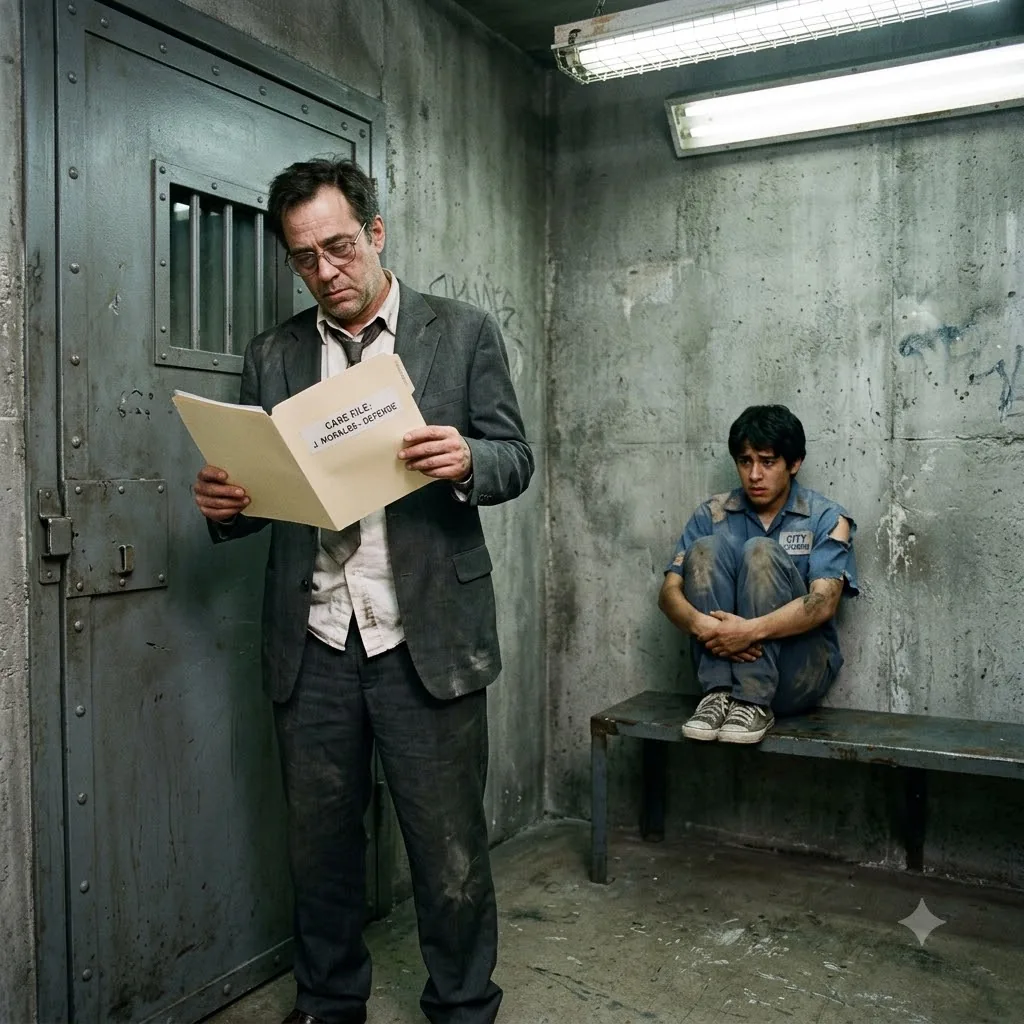
The fluorescent hum of the holding pen buzzed against the cinderblock walls. Marcus sat on the edge of the bolted steel bench, running his finger down a police report that felt aggressively sanitized. The document detailed a “hostile vehicle ramming,” describing a malicious property attack orchestrated by the teenager shivering three feet to his left. It was a narrative of unprovoked vandalism, typed up with pristine efficiency.
That was the first red flag. Elite prosecutors did not hand out sweetheart plea deals before lunch on a Tuesday unless the narrative had structural rot. Marcus glanced at his client. Leo was nineteen, employed by a gig-economy delivery app, and currently radiating a profound, paralytic terror. The kid had not spoken a single syllable since Marcus walked into the cell twenty minutes ago. He stared at a patch of peeling gray paint above the toilet, his jaw locked shut.
Marcus turned the page of the complaint. Ten other detainees crowded the opposite wall, giving Marcus and his client a wide berth. The officer painted a picture of a rage-fueled delivery driver violently backing a sedan through a wrought-iron residential gate. The estimated property damage pushed the charge into a felony tier. Yet, the narrative omitted any mention of the homeowner’s actions leading up to the crash. It presented the scene as a vacuum where Leo simply lost his mind, reversed his car into a barricade, and sat there waiting to be cuffed.
Marcus tapped his cheap ballpoint pen against his legal pad. He read the prosecutor’s attached note again. It offered a gross misdemeanor plea with zero jail time, provided Leo signed the confession by one o’clock. A phenomenal deal for a felony ramming charge. A terrifyingly fast deal.
Prosecutors hoarded felony convictions like gold. They did not discount them out of charity. They discounted them when a case file held a radioactive anomaly they needed buried under a quick guilty plea before defense counsel could file discovery motions.
Marcus leaned closer to the teenager. The boy was a stiff board of raw panic. His cheap polyester delivery shirt hung off a terribly skinny frame. The official report claimed Leo had fought the officers, necessitating a physical takedown. But Leo had the muscle mass of a malnourished track runner. His hands were tucked firmly between his knees, shaking violently enough to rattle the fabric of his dark work trousers.
“Look at me, Leo,” Marcus said, keeping his voice strictly level.
The boy did not blink. His focus remained anchored to the peeling paint.
Marcus looked back at the paperwork. The homeowner was listed as the sole victim. A prominent local figure, judging by the address in the ultra-wealthy gated hills on the north side. The narrative flowed entirely from this homeowner’s statement. *Subject became irate regarding delivery instructions. Subject weaponized his vehicle.* The phrasing was far too rehearsed. Cops on a midnight shift wrote in fragmented, exhausted shorthand. This report read like a sterilized press release dictated by a crisis management team.
The court officer called a two-minute warning for the next batch of arraignments. The clock was bleeding out. Marcus had less than ninety seconds to decide whether to let the kid take the miracle deal or risk the prosecutor tearing them apart in trial. Taking the deal meant closing the book. It meant ignoring the glaring omissions in the text and moving on to the next file.
Marcus hated pristine paperwork. Real life was hopelessly sloppy. A hostile vehicle ramming meant crushed glass, deployed airbags, concussive force, and chaotic aftermaths. The report noted minor rear-end damage to the delivery car and a destroyed gate. It completely ignored the human element inside the steel box. It ignored whatever caused a nineteen-year-old with no criminal record to ram a multi-ton vehicle into a billionaire’s fortress.
He shifted on the bench to block the line of sight from the rest of the room. He needed a physical assessment of his client before the guard opened the door. If Leo had bruising from the reported scuffle, Marcus needed it documented.
“Turn your head,” Marcus told the boy.
Leo flinched away from the voice. The sudden, violent movement pulled his collar sideways.
Marcus froze, his hand suspended in the stale air.
The fluorescent lights overhead cast a harsh, unforgiving glare on the boy’s exposed neck and shoulder. The bright orange polyester of the delivery shirt was torn near the left clavicle. A jagged rip exposed a patch of pale skin and the white fabric of a cheap cotton undershirt.
Marcus leaned in, his pulse spiking as he narrowed his eyes at the frayed edges of the tear.
The damage to the clothing was not from a scuffle with police. It was not a friction tear from being wrestled to the asphalt by an overzealous patrolman. The edges of the polyester were melted, scorched into hardened black beads that dug into the skin. And beneath that jagged, burned rim, the white undershirt was not just stained with dirt or grease.
It was peppered with perfectly round circles of dark, oxidized blood. Dozens of them, arranged in a terrifyingly specific spray pattern.
Marcus stared at the geometric precision of the bloody stippling, the true nature of the violence clicking into place like a loaded bolt.
The heavy steel door of the holding cell slammed open.
The fluorescent hum of the holding pen buzzed against the cinderblock walls. Marcus sat on the edge of the bolted steel bench, running his finger down a police report that felt aggressively sanitized. The document detailed a “hostile vehicle ramming,” describing a malicious property attack orchestrated by the teenager shivering three feet to his left. It was a narrative of unprovoked vandalism, typed up with pristine efficiency.
That was the first red flag. Elite prosecutors did not hand out sweetheart plea deals before lunch on a Tuesday unless the narrative had structural rot. Marcus glanced at his client. Leo was nineteen, employed by a gig-economy delivery app, and currently radiating a profound, paralytic terror. The kid had not spoken a single syllable since Marcus walked into the cell twenty minutes ago. He stared at a patch of peeling gray paint above the toilet, his jaw locked shut.
Marcus turned the page of the complaint. Ten other detainees crowded the opposite wall, giving Marcus and his client a wide berth. The officer painted a picture of a rage-fueled delivery driver violently backing a sedan through a wrought-iron residential gate. The estimated property damage pushed the charge into a felony tier. Yet, the narrative omitted any mention of the homeowner’s actions leading up to the crash. It presented the scene as a vacuum where Leo simply lost his mind, reversed his car into a barricade, and sat there waiting to be cuffed.
Marcus tapped his cheap ballpoint pen against his legal pad. He read the prosecutor’s attached note again. It offered a gross misdemeanor plea with zero jail time, provided Leo signed the confession by one o’clock. A phenomenal deal for a felony ramming charge. A terrifyingly fast deal.
Prosecutors hoarded felony convictions like gold. They did not discount them out of charity. They discounted them when a case file held a radioactive anomaly they needed buried under a quick guilty plea before defense counsel could file discovery motions.
Marcus leaned closer to the teenager. The boy was a stiff board of raw panic. His cheap polyester delivery shirt hung off a terribly skinny frame. The official report claimed Leo had fought the officers, necessitating a physical takedown. But Leo had the muscle mass of a malnourished track runner. His hands were tucked firmly between his knees, shaking violently enough to rattle the fabric of his dark work trousers.
“Look at me, Leo,” Marcus said, keeping his voice strictly level.
The boy did not blink. His focus remained anchored to the peeling paint.
Marcus looked back at the paperwork. The homeowner was listed as the sole victim. A prominent local figure, judging by the address in the ultra-wealthy gated hills on the north side. The narrative flowed entirely from this homeowner’s statement. *Subject became irate regarding delivery instructions. Subject weaponized his vehicle.* The phrasing was far too rehearsed. Cops on a midnight shift wrote in fragmented, exhausted shorthand. This report read like a sterilized press release dictated by a crisis management team.
The court officer called a two-minute warning for the next batch of arraignments. The clock was bleeding out. Marcus had less than ninety seconds to decide whether to let the kid take the miracle deal or risk the prosecutor tearing them apart in trial. Taking the deal meant closing the book. It meant ignoring the glaring omissions in the text and moving on to the next file.
Marcus hated pristine paperwork. Real life was hopelessly sloppy. A hostile vehicle ramming meant crushed glass, deployed airbags, concussive force, and chaotic aftermaths. The report noted minor rear-end damage to the delivery car and a destroyed gate. It completely ignored the human element inside the steel box. It ignored whatever caused a nineteen-year-old with no criminal record to ram a multi-ton vehicle into a billionaire’s fortress.
He shifted on the bench to block the line of sight from the rest of the room. He needed a physical assessment of his client before the guard opened the door. If Leo had bruising from the reported scuffle, Marcus needed it documented.
“Turn your head,” Marcus told the boy.
Leo flinched away from the voice. The sudden, violent movement pulled his collar sideways.
Marcus froze, his hand suspended in the stale air.
The fluorescent lights overhead cast a harsh, unforgiving glare on the boy’s exposed neck and shoulder. The bright orange polyester of the delivery shirt was torn near the left clavicle. A jagged rip exposed a patch of pale skin and the white fabric of a cheap cotton undershirt.
Marcus leaned in, his pulse spiking as he narrowed his eyes at the frayed edges of the tear.
The damage to the clothing was not from a scuffle with police. It was not a friction tear from being wrestled to the asphalt by an overzealous patrolman. The edges of the polyester were melted, scorched into hardened black beads that dug into the skin. And beneath that jagged, burned rim, the white undershirt was not just stained with dirt or grease.
It was peppered with perfectly round circles of dark, oxidized blood. Dozens of them, arranged in a terrifyingly specific spray pattern.
Marcus stared at the geometric precision of the bloody stippling, the true nature of the violence clicking into place like a loaded bolt.
The heavy steel door of the holding cell slammed open.