Story code: ST-000889
Part 1: Exhibit F
The mahogany table in the Capitol Hill holding room felt cold under Marcus’s wrists as he lined up his highlighters. Beyond the frosted glass door, a congressional committee was waiting to crucify his client. Marcus tapped his silver pen against a printed transcript of the morning session, crossing out the opposition’s most inflammatory adjectives with precise, ruthless strokes. They were relying on panic. He was relying on Section 230, precedent, and the sterile, indisputable math of user agreements.
“They are leaning heavily into the emotional harm angle,” his co-counsel, David, said from the corner of the room, adjusting his tie in the reflection of a dark monitor. “Senator Vance spent ten minutes on a monologue about our duty of care.”
Marcus did not look up from his document. “Let them. Emotional harm is subjective. We stick to the mechanics of the algorithm. The platform serves content based on user engagement metrics. It does not possess intent. If they want to regulate algorithms, they have to prove our engineers actively coded malice into the recommendation engine.”
He struck a line through a senator’s quote about digital toxins. The rhetoric was exhausting, but easy to dismantle. Marcus had spent the last decade defending tech giants from moral panics. He knew how to turn righteous fury into an argument over statutory definitions.
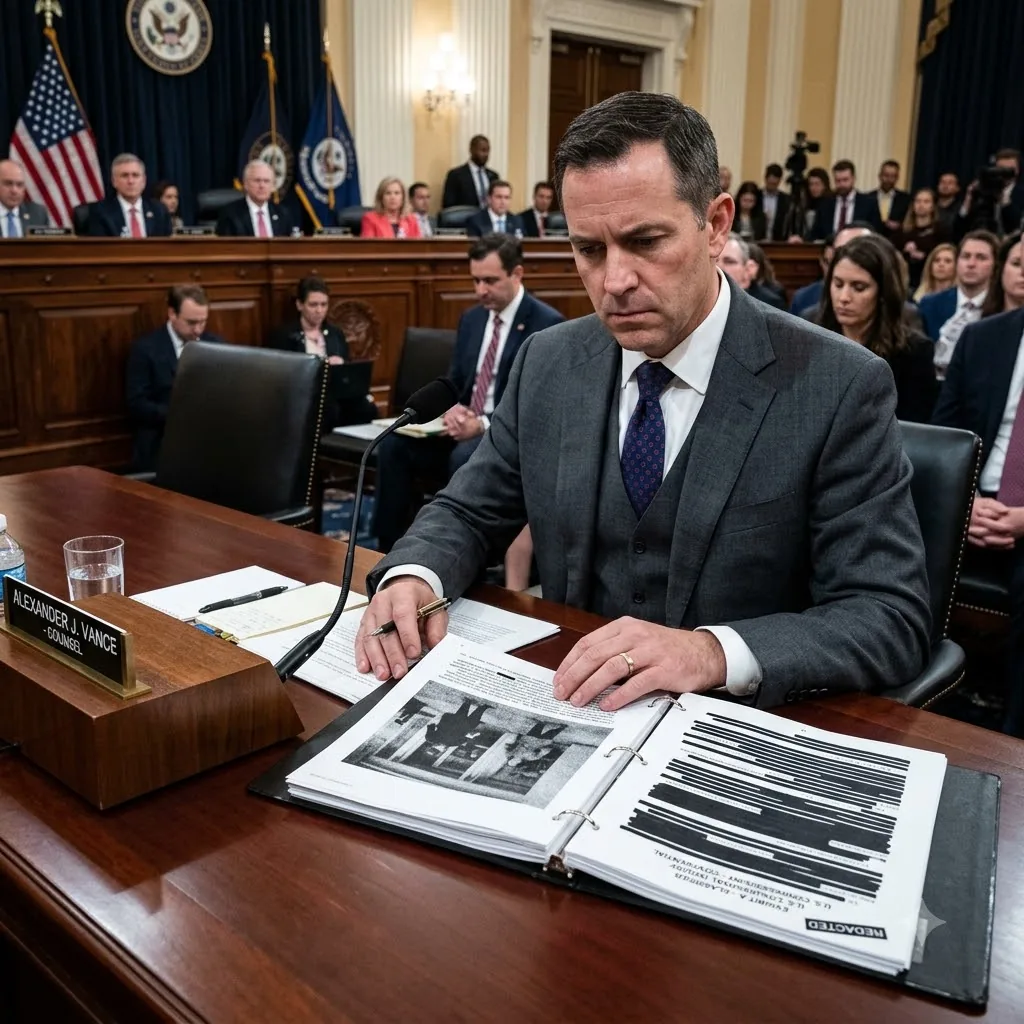
The heavy oak door swung open, disrupting the climate-controlled silence. Chloe, his junior aide, hurried in. She was breathing hard, her heels clicking rapidly against the parquet floor. She carried a thick, comb-bound stack of paper. The cover was stamped with a red congressional seal and a heavy black block of redaction ink.
“Surprise exhibit,” Chloe said, sliding the dossier across the polished mahogany. It came to a stop perfectly aligned with Marcus’s legal pad. “Opposing counsel just filed it into the record under seal. They are bringing it out after the recess.”
Marcus set his silver pen down. He stared at the thick stack of paper. Ambush tactics were standard procedure, but a sealed exhibit of this size meant the opposition thought they had a silver bullet to derail his entire defense.
“What is it,” Marcus said, phrasing it as a flat demand rather than a query.
“A complete backend scrape,” Chloe said, her voice unusually tight. “An unredacted engagement log. It details the exact content sequence served to an anonymous fourteen-year-old girl over a span of seventy-two hours. They are calling it a spiral. The opposition claims the algorithm detected a vulnerability in her profile and aggressively fed her self-harm ideation content to spike her engagement.”
Marcus pulled the dossier closer. “They have to prove the algorithm recognized the vulnerability. A chronological feed dump only proves she clicked on things. The platform reacts to user inputs. We will find the exact timestamps where she actively searched for the initial content and break their chain of causation.”
He opened the heavy cover. The first few pages were standard metadata. User ID strings, IP addresses, session durations. The user’s name and location were blacked out with thick, impenetrable marker. Marcus uncapped his pen, ready to circle the user-initiated search queries. He needed to build the timeline of her agency. He needed to show that she sought out the darkness first, and the machine merely obliged her requests.
He flipped to the third page. The layout shifted from raw data to a visual timeline. The opposition had reconstructed the visual feed frame by frame. A grid of thumbnails showed the descent. Harmless makeup tutorials gave way to diet tips. Diet tips transitioned into fasting trackers. Fasting trackers dissolved into shadowed, bleak imagery and text overlays about isolation.
Marcus kept his breathing slow and even. He dragged the tip of his pen down the margin, looking for the legal loopholes. He needed a break in the chain. A moment where the user scrolled past a positive video and deliberately lingered on a negative one. The defense relied entirely on placing the burden of choice back onto the user.
He turned to page four. The metadata at the top indicated a late-night session. Three in the morning, local time.
The central image on the page was a screenshot of a user-uploaded photo. It was heavily blurred, standard practice for sensitive evidence involving minors. Marcus scanned the caption data below the image, searching for copyright violations or terms of service breaches he could use to get the entire exhibit tossed on a procedural technicality.
His eyes drifted back up to the blurred image. It was a mirror selfie. The girl’s face was obscured by a digital privacy overlay, a flat gray oval hovering in the center of the frame. The room around her was dimly lit by the glow of a ring light.
Marcus brought his pen down to circle the timestamp. His hand stopped.
The silver tip of the pen hovered a quarter inch above the paper.
He stared at the background of the bedroom in the photo. The resolution was terrible, degraded by multiple prints and scans, but the shapes were entirely distinct. In the upper left corner of the mirror frame, there was a jagged tear in a sticker. A vintage band logo, half-scraped away, leaving a white crescent of adhesive residue.
To the right of the mirror, the corner of a framed poster intruded into the shot. A deep-blue constellation map with a distinct, triangular chip in the bottom-left corner of the black wooden frame.
Marcus felt the air in the room suddenly turn to ice. His pulse hammered a violent rhythm against his jaw.
His silver pen slipped from his fingers and clattered loudly against the polished mahogany.
Chloe stepped forward. “Marcus. Are you seeing a defense in there.”
Marcus did not answer. He pressed his palms flat against the edges of the dossier, his eyes locked on the flat gray oval hiding the girl’s face.
The mahogany table in the Capitol Hill holding room felt cold under Marcus’s wrists as he lined up his highlighters. Beyond the frosted glass door, a congressional committee was waiting to crucify his client. Marcus tapped his silver pen against a printed transcript of the morning session, crossing out the opposition’s most inflammatory adjectives with precise, ruthless strokes. They were relying on panic. He was relying on Section 230, precedent, and the sterile, indisputable math of user agreements.
“They are leaning heavily into the emotional harm angle,” his co-counsel, David, said from the corner of the room, adjusting his tie in the reflection of a dark monitor. “Senator Vance spent ten minutes on a monologue about our duty of care.”
Marcus did not look up from his document. “Let them. Emotional harm is subjective. We stick to the mechanics of the algorithm. The platform serves content based on user engagement metrics. It does not possess intent. If they want to regulate algorithms, they have to prove our engineers actively coded malice into the recommendation engine.”
He struck a line through a senator’s quote about digital toxins. The rhetoric was exhausting, but easy to dismantle. Marcus had spent the last decade defending tech giants from moral panics. He knew how to turn righteous fury into an argument over statutory definitions.
The heavy oak door swung open, disrupting the climate-controlled silence. Chloe, his junior aide, hurried in. She was breathing hard, her heels clicking rapidly against the parquet floor. She carried a thick, comb-bound stack of paper. The cover was stamped with a red congressional seal and a heavy black block of redaction ink.
“Surprise exhibit,” Chloe said, sliding the dossier across the polished mahogany. It came to a stop perfectly aligned with Marcus’s legal pad. “Opposing counsel just filed it into the record under seal. They are bringing it out after the recess.”
Marcus set his silver pen down. He stared at the thick stack of paper. Ambush tactics were standard procedure, but a sealed exhibit of this size meant the opposition thought they had a silver bullet to derail his entire defense.
“What is it,” Marcus said, phrasing it as a flat demand rather than a query.
“A complete backend scrape,” Chloe said, her voice unusually tight. “An unredacted engagement log. It details the exact content sequence served to an anonymous fourteen-year-old girl over a span of seventy-two hours. They are calling it a spiral. The opposition claims the algorithm detected a vulnerability in her profile and aggressively fed her self-harm ideation content to spike her engagement.”
Marcus pulled the dossier closer. “They have to prove the algorithm recognized the vulnerability. A chronological feed dump only proves she clicked on things. The platform reacts to user inputs. We will find the exact timestamps where she actively searched for the initial content and break their chain of causation.”
He opened the heavy cover. The first few pages were standard metadata. User ID strings, IP addresses, session durations. The user’s name and location were blacked out with thick, impenetrable marker. Marcus uncapped his pen, ready to circle the user-initiated search queries. He needed to build the timeline of her agency. He needed to show that she sought out the darkness first, and the machine merely obliged her requests.
He flipped to the third page. The layout shifted from raw data to a visual timeline. The opposition had reconstructed the visual feed frame by frame. A grid of thumbnails showed the descent. Harmless makeup tutorials gave way to diet tips. Diet tips transitioned into fasting trackers. Fasting trackers dissolved into shadowed, bleak imagery and text overlays about isolation.
Marcus kept his breathing slow and even. He dragged the tip of his pen down the margin, looking for the legal loopholes. He needed a break in the chain. A moment where the user scrolled past a positive video and deliberately lingered on a negative one. The defense relied entirely on placing the burden of choice back onto the user.
He turned to page four. The metadata at the top indicated a late-night session. Three in the morning, local time.
The central image on the page was a screenshot of a user-uploaded photo. It was heavily blurred, standard practice for sensitive evidence involving minors. Marcus scanned the caption data below the image, searching for copyright violations or terms of service breaches he could use to get the entire exhibit tossed on a procedural technicality.
His eyes drifted back up to the blurred image. It was a mirror selfie. The girl’s face was obscured by a digital privacy overlay, a flat gray oval hovering in the center of the frame. The room around her was dimly lit by the glow of a ring light.
Marcus brought his pen down to circle the timestamp. His hand stopped.
The silver tip of the pen hovered a quarter inch above the paper.
He stared at the background of the bedroom in the photo. The resolution was terrible, degraded by multiple prints and scans, but the shapes were entirely distinct. In the upper left corner of the mirror frame, there was a jagged tear in a sticker. A vintage band logo, half-scraped away, leaving a white crescent of adhesive residue.
To the right of the mirror, the corner of a framed poster intruded into the shot. A deep-blue constellation map with a distinct, triangular chip in the bottom-left corner of the black wooden frame.
Marcus felt the air in the room suddenly turn to ice. His pulse hammered a violent rhythm against his jaw.
His silver pen slipped from his fingers and clattered loudly against the polished mahogany.
Chloe stepped forward. “Marcus. Are you seeing a defense in there.”
Marcus did not answer. He pressed his palms flat against the edges of the dossier, his eyes locked on the flat gray oval hiding the girl’s face.